MBIFL 2025: 'The Tamils: A portrait of a community' and the 2 girls on the cover
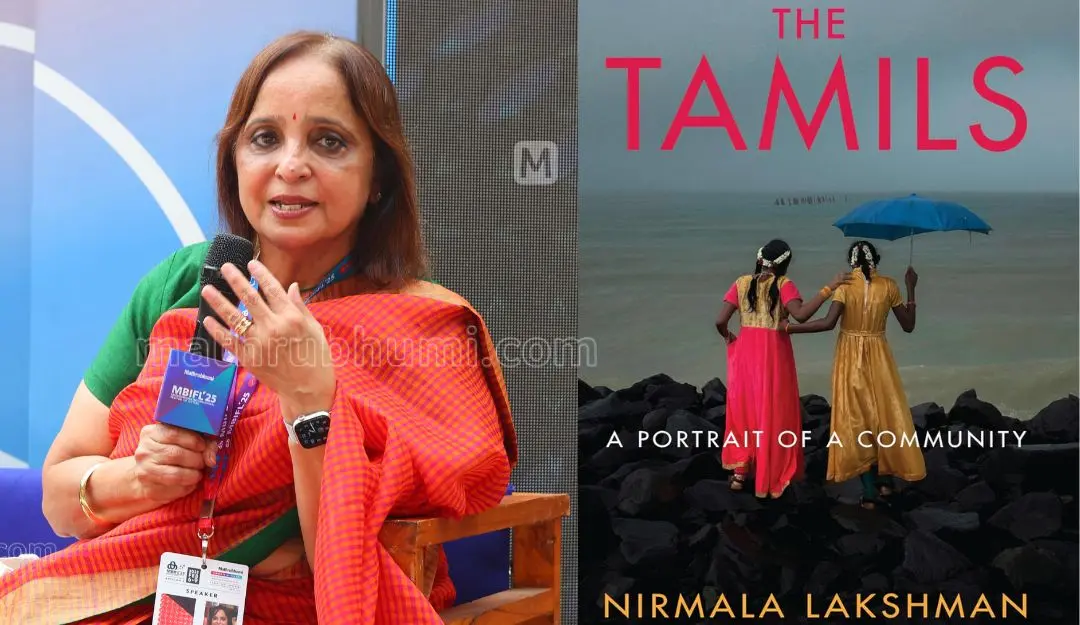
The session titled 'The Tamils: A Portrait of a Community' -- the title of the newly-launched book authored by The Hindu Publishing Group Chairperson Nirmala Lakshman -- at the sixth edition of the Mathrubhumi International Festival of Letters -- saw the author not only share her research and passion for Tamil culture but also the deeply-personal memories that shaped her writing.
The book, which took four years to complete, offers an insightful exploration of Tamil culture’s evolution, but for Lakshman, it is also a heartfelt tribute to her mother and the values she instilled in her.
Interacting with novelist and journalist Nirmala Govindarajan, Lakshman spoke fondly of her mother, a woman who came from a Gandhian family. "The book is dedicated to my mother, who faced the ups and downs of national politics," she shared, her voice filled with emotion.
Lakshman’s mother was part of a family deeply involved in India’s independence movement. Her grandfather was a staunch supporter of Mahatma Gandhi. Her grandfather participated in the Vedaranyam March that replicated the Dandi March to show their support for the freedom struggle.
Lakshman recalled with a smile, "As India dawned on independence, it was a day of celebration at my mother’s home. But my mother and her sister were more than happy for the reason that they didn’t want to wear khadi any longer and could wear colours finally."
This anecdote finds its way onto the cover of Lakshman’s book, with an image of two young girls standing at the shore, symbolising the freedom her mother and her sister experienced.
"It took four years to put out the book," she said, explaining the amount of time and effort it took to weave together the historical, cultural, and personal elements that fill its pages.
The book itself offers a chronological exploration of Tamil history, starting with the early days of the Sangam period (300 BCE to 300 CE), moving through the influence of the Pallavas, Pandyas, and Cholas, and touching on the arrival of Christianity and Islam.
Lakshman’s writing brings to life the evolution of Tamil culture as it interacted with different religions, dynasties, and foreign influences. Yet, as much as the book celebrates the richness of Tamil heritage, Lakshman is unflinching in acknowledging the challenges faced by the community.
"As much as the language and culture of Tamil are appreciated and applauded, it’s not to say that there still doesn’t exist Dalit oppression and other problems," she said while answering a question, addressing the complexities that persist in Tamil society.