Reimagining India in MBIFL 2025: Amitabh Kant on nation's journey to be a $30 trillion economy
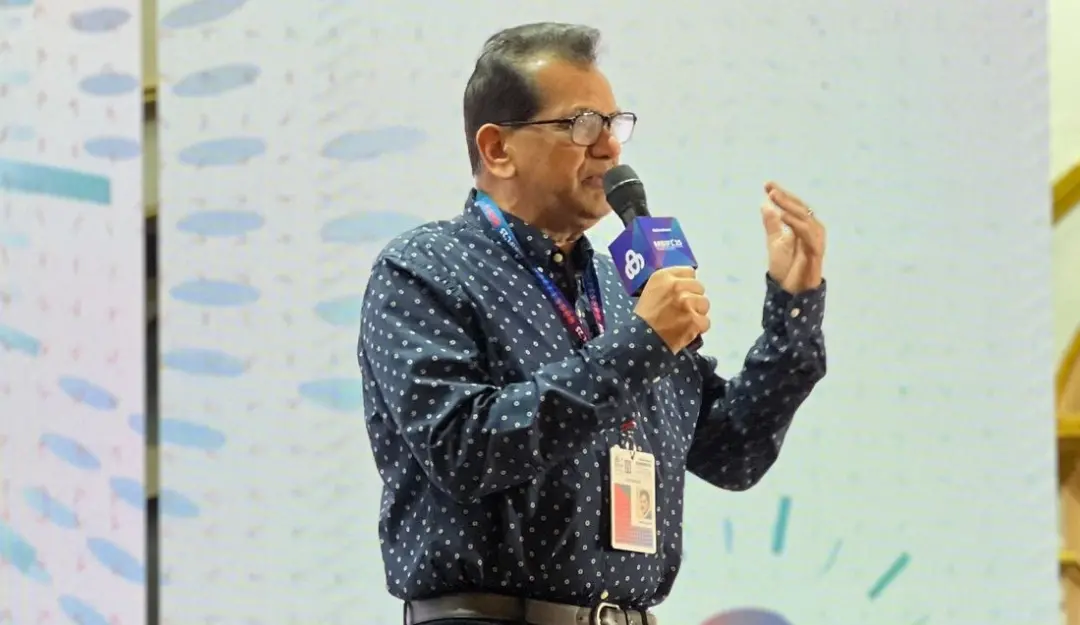
Amitabh Kant, India’s G20 Sherpa and former CEO of NITI Aayog, delivered a session titled “Reimagine India: Positioning India on the Global Stage” at the Mathrubhumi International Festival of Letters (MBIFL) 2025 at Kanakakunnu Palace, Thiruvananthapuram, wherein he laid out India’s economic trajectory, highlighting the Narendra Modi government’s reforms and vision for making India a developed nation by 2047.
India’s economic rise and policy reforms
Kant began by referencing American writer Mark Twain, who once called India the 'cradle of the human race' and the 'grandmother of tradition'. He noted that before colonisation, India’s share of the global GDP was around 30%, which fell to 5% by independence in 1947. He described how, after independence, India went through a period of 'license raj' until 1991, when economic liberalisation brought the first wave of reforms.
He emphasised that India’s economic standing has changed drastically in the last decade: “From being one of the fragile economies of the world, we have moved to the top five economies of the world. The prime minister’s vision is that by 2047, India should be a developed country with a per capita income of $15,000, up from $2,800 now. This means our economy must grow from $4 trillion to $30 trillion.”
Kant credited the government’s structural reforms for this transformation. He pointed to the introduction of GST as a “cashless, paperless” tax system and highlighted the Insolvency and Bankruptcy Code (IBC) as a measure to ensure financial discipline. He also mentioned that the government had “scrapped 1,700 obsolete laws” to improve the ease of doing business and had lowered corporate taxes to be “on par with the best regimes in the world.”
A major focus of Kant’s talk was digitalisation, which he described as a key factor in India’s rapid transformation.
"India does 50% of the world’s real-time digital transactions. China is next, with 20%," he said.
He credited the linking of Aadhaar, bank accounts, and mobile numbers for enabling direct benefit transfers and financial inclusion.
"Between 2017 and now, we have opened 550 million bank accounts. The percentage of women with bank accounts has gone from 18% to 81%,” he said, noting that these developments have allowed rapid digital payments and financial services to reach rural areas.
“I have not been to a physical bank branch or used a cheque in the last four and a half years," Kant remarked, highlighting how digital banking has replaced traditional financial transactions.
Infrastructure expansion and green energy
Discussing infrastructure, Kant outlined the government’s achievements in building roads, houses, and utilities. He said, "In the last seven to eight years, India has built 40 million houses -- more than the population of Australia. We have provided electricity to over 120 million people and piped water connections to 110 million citizens, more than the population of Brazil."
He also focused on India’s push towards renewable energy.
"We have created 200 gigawatts of renewable energy and brought the price of solar energy down from ₹22 to ₹1.99 per unit. We are the only country in the world to have achieved its climate commitments nine years ahead of schedule," he claimed.
Challenges and india’s path forward
While discussing India’s future economic growth, Kant identified major challenges:
1. Global instability – "When Japan, Korea, and China grew, the world was stable. Today, we have a war in Europe, a crisis in the Middle East, and geopolitical tensions around Taiwan."
2. Disruptions to global trade – "Global supply chains are breaking. The US has imposed 100% tariffs on Chinese cars and 45% duties on other imports. China has retaliated. We are witnessing a trade war like never before."
3. Regional disparities – "The southern and western parts of India are growing, but the eastern region is not. Without equitable growth, some parts of India will progress while others will be left behind."
4. Manufacturing sector – "India cannot grow on the back of services alone. Manufacturing must rise to 25% of GDP. We need lower electricity costs, better logistics, and more large-scale manufacturing units."
Kant also addressed concerns about automation and artificial intelligence replacing jobs. "Technology has always created jobs, but the nature of jobs changes. India faces a shortage of AI engineers and data scientists. Our institutions must realign to prepare students for new opportunities," he said.
An optimistic vision for 2047
Despite these challenges, Kant maintained an optimistic outlook. He argued that India’s young population, expanding infrastructure, and digital advancements give it a unique advantage.
"The average age in India is 29. Even in 2047, it will be 35, while the US, Europe, and China will have ageing populations. No country has failed to create wealth when it was young."
He concluded by reiterating the Modi government’s vision for India in 2047: "By the time we become a developed country, our GDP will be over $30 trillion, per capita income will exceed $15,000, and every Indian will lead a happier and more prosperous life."