Yemen conflict escalates: Houthis seize Mokha Port as 80000 flee
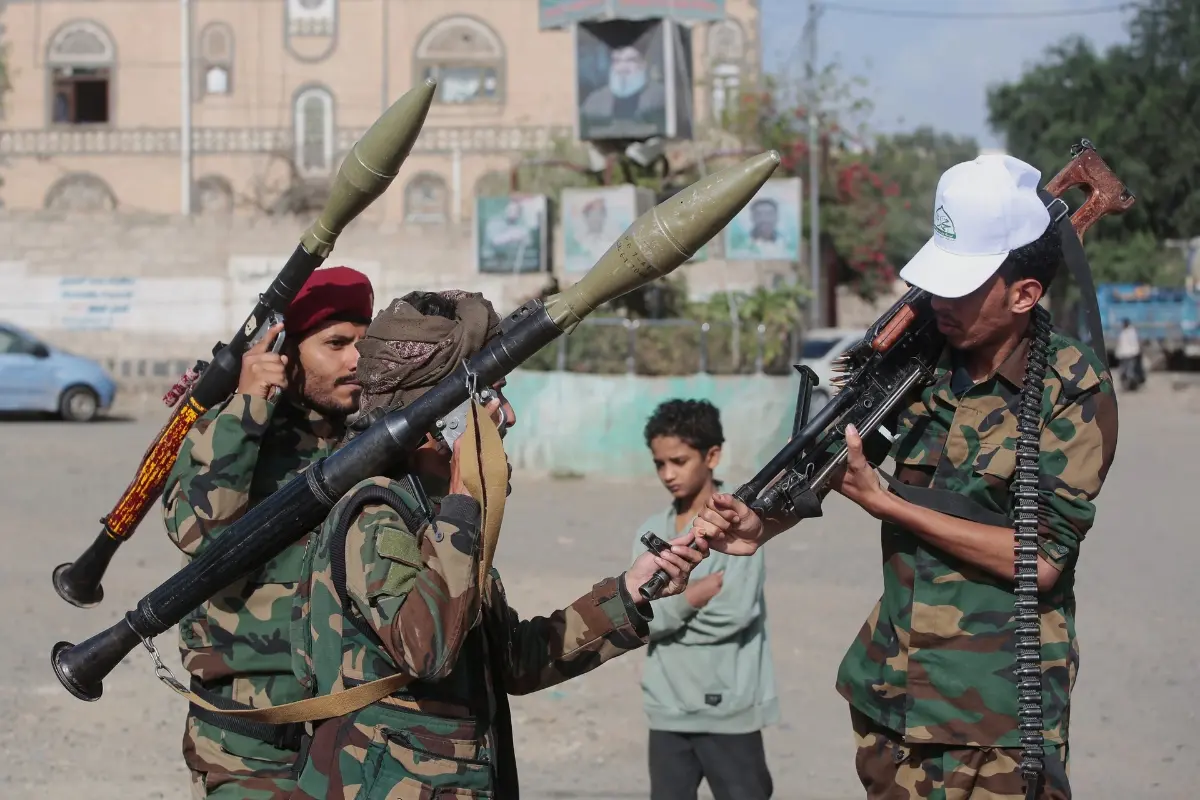
Aden: The conflict in Yemen intensified on Sunday as government forces launched attacks against Iran-backed Houthi rebels along the Red Sea, whilst Houthis fired into neighbouring Saudi Arabia, which supports the Yemeni government.
The Yemeni government pledged to deploy additional forces to the Red Sea coast after conceding a "painful" defeat last week when Houthis captured the port city of Mokha and an island on the Bab el-Mandeb Strait, a vital maritime corridor serving as an alternative to the Strait of Hormuz.
As the impoverished nation faces the risk of sliding back into full-scale civil war, the United Nations estimated that more than 80,000 people have been displaced by the fighting since the beginning of September.
One woman described a mortar shell landing nearby as she fled in the middle of the night from the town of Khawkha in Hodeida province along the Red Sea, shortly before it fell to Houthi control.
“I saw with my own eyes cars and buses burning, and bodies of children and women were lying on the road in a horrific scene,” said the woman, who spoke on condition of anonymity out of concern for her and her family’s safety.
Saudi authorities activated warning sirens Sunday afternoon in the southern city of Abha and Khamis Mushait province, advising residents to seek cover from potential incoming fire. Both regions have faced repeated Houthi attacks in recent weeks.
The Houthis claimed to have used drones and missiles to target positions in Saudi Arabia, including a military base located near the border with Yemen. Houthi military spokesperson Brig. Gen. Yahya Saree provided no evidence nor specified when the strike occurred.
Saudi civil defence authorities stated overnight that a projectile struck a separate area near the border along the Red Sea, injuring two people and damaging a mosque alongside several other structures. The statement attributed the attack to the Houthis.
Saudi Arabia announced no new military strikes targeting Houthi positions.
The Houthis have been targeting Saudi energy infrastructure and shipping lanes as part of a declared blockade. Although the Houthis asserted they do not intend to threaten neutral commercial shipping, energy markets remain volatile, driving crude oil prices higher.
The National Resistance, a government-aligned force that previously controlled coastal regions, reported that more than 500 government fighters had been killed along the west coast over the past four weeks — its first comprehensive casualty assessment. The group added that approximately 1,500 others had been wounded in action since 9 August.
Its statement claimed more than 1,000 Houthis had been killed in Hodeida and Taiz provinces. A Houthi spokesperson did not respond to requests for comment.
Yemen is home to more than 40 million people who fear a resurgence of the civil war that claimed 150,000 lives and pushed millions toward famine during one of the world’s most severe humanitarian crises. Yemen’s internationally recognised government and Saudi Arabia have been engaged in conflict against the Houthis for 12 years. A ceasefire instituted in 2022 had largely halted major combat operations.
A senior Yemeni government official stated that military forces will return to the Red Sea coast to launch a counter-offensive. Civilians escaping the Houthi advance told The Associated Press that retreating forces urged residents to flee the area.
Sultan al-Arada, a member of the ruling presidential council, described the retreat of government forces in Mokha and across Yemen’s western coast as “painful and regrettable.”
Speaking during a televised interview broadcast late Saturday, al-Arada said forces “are currently regrouping and will return to the battle in one form or another.”
On Sunday, the Yemeni military confirmed it launched airstrikes on Houthi positions in Mokha, the coastal town of Dhubab, and other areas within Taiz province. Rebel forces also reported incoming strikes by Saudi-backed units in the province, as well as artillery bombardment in Saada province, the Houthi stronghold along Yemen's northern border with Saudi Arabia.
The Houthi advance places rebel forces just 20 miles (32 kilometres) from the U.S. military installation in Djibouti across the Bab el-Mandeb Strait. The facility serves as the primary U.S. military base in Africa alongside bases hosted by China, France, and Japan.
The small Horn of Africa country is already receiving displaced Yemenis making the sea crossing. More than 2,000 Yemenis have arrived in Djibouti, the International Organisation for Migration reported Sunday.
Djibouti's Economy and Finance Minister Ilyas M. Dawaleh posted on X that the nation's navy, coast guard, and emergency services were conducting maritime rescues and dispensing aid.
The U.N. migration agency reported Sunday that over 82,000 individuals in Yemen have been displaced since early September.
“The displaced people are in a very bad condition,” said Ahmad al-Masawi, director of the Al Salam camp in the southern port city of Aden, who issued an urgent appeal for international aid. “They left their homes quickly without any clothing or anything. They are crammed in camps, houses and even on roads."
Hussein Haydara sat outside a shelter at the camp as his children waited for tent assignments, expressing concern regarding the distance to schools, hospitals, and markets.
Haydara previously fled his home in Hodeida when the Houthis seized the area in 2015, but noted the current displacement feels more precarious.
“With the first displacement, we had time to plan things, but this time we were forced to escape all of a sudden. One could hardly take their children and the lightest stuff possible,” he said.
AP