World’s oldest president re-elected in Cameroon: How long can Paul Biya hold on to power?
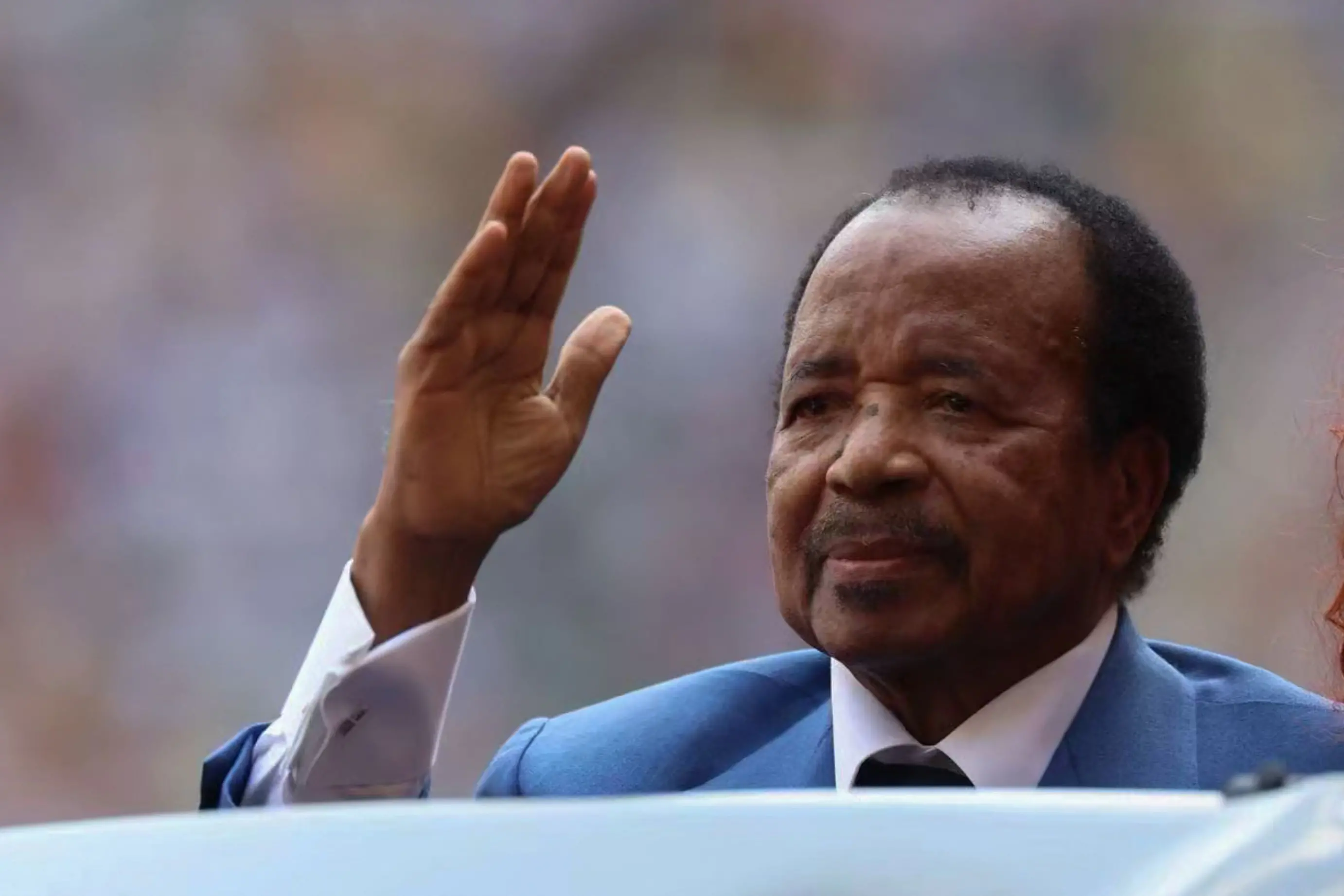
Yaounde, Cameroon: Cameroon’s 92-year-old President Paul Biya, the world’s oldest head of state, has been declared the winner of the recent presidential election, the country’s top court confirmed on Monday. The announcement comes after days of clashes between protesters and security forces that left at least four people dead as opposition supporters demanded credible results.
Who is Paul Biya?
Biya, who has led the central African nation since 1982, has ruled longer than most Cameroonians have been alive. More than 70% of the country’s nearly 30 million population are under the age of 35. The October 12 election highlighted growing tensions between Africa’s youth and its ageing leadership.
The Constitutional Council reported that Biya received 53.66% of the votes, while former ally Issa Tchiroma Bakary secured 35.19%. Voter turnout was 57.7%.
Following the announcement, Tchiroma accused security forces of killing civilians in his hometown of Garoua.
“Shooting point-blank at your own brothers — I can’t help but wonder if you’re mercenaries,” he wrote on social media. “Kill me if you want, but I will liberate this country by any means necessary. What blatant impunity.”
Tchiroma had earlier claimed victory, citing results collected by his party, though members of Biya’s party dismissed the assertion.
In a statement on Monday, Biya said his “first thoughts are with all those who have unnecessarily lost their lives, as well with their families, as a result of the post-election violence.”
Biya’s decision to seek another term has angered young people and the opposition, who accuse him of manipulating the election and disqualifying his strongest rival using state resources.
What triggered the deadly protests?
The four protesters were shot dead on Sunday in Douala, Cameroon’s economic capital, as hundreds took to the streets in multiple cities. Videos circulated online showed clashes with security forces, who fired tear gas and attempted to disperse crowds blocking roads in Douala, Garoua, and Maroua.
Samuel Dieudonne Ivaha Diboua, governor of the Littoral Region, said several security personnel were injured and at least 105 protesters were arrested. Dozens of opposition supporters, activists, and leaders were detained in recent days, including some accused of plotting violent attacks, according to Paul Atanga Nji, minister of territorial administration.
Oumarou Bouba, a 27-year-old trader in Maroua, told reporters, “I am ready to stake my life to defend my vote. I voted for Tchiroma because I want change.”
Meanwhile, 28-year-old hotel worker Sani Aladji, also from Maroua, said, “Nothing will change. I expected that Issa Tchiroma would bring change, which is why I voted for him. There’s rampant corruption under Biya’s regime. We are tired of that.”
Supporters of Biya, however, praised his leadership. Flicia Feh said, “Our president campaigned on hope. He started so many projects, like the Yaoundé-Douala motorway, and it’s just normal that he is given more time to complete what he started.”
Cameroon’s government reported that over 5,000 national and international observers monitored the election. A group of eight local civil society organisations noted irregularities, including deceased voters on electoral lists, unequal ballot distribution, and attempts at ballot box-stuffing. The African Union mission stated the vote was “conducted largely in accordance with regional, continental and international standards.”
Corruption allegations abound
Biya first came to power in 1982 following the resignation of Cameroon’s first president. He later benefited from a constitutional amendment abolishing term limits. His health has been a topic of speculation as he spends much of his time in Europe, leaving governance to party officials and family members.
While Cameroon produces oil and has seen modest economic growth, many young people claim the benefits have been concentrated among elites. According to World Bank data, the unemployment rate is 3.5%, but 57% of the workforce aged 18–35 is employed informally.
Emile Sunjo, senior lecturer in international relations at the University of Buea, said, “Many young people across the country and in the diaspora had hoped for change, but that their hopes have been dashed. It feels like a missed opportunity. Cameroon could potentially slide into anarchy.”
Critics also accuse Biya of steering Cameroon from relative stability into ongoing conflict. In recent years, the country has faced Boko Haram attacks in the north and a secessionist insurgency in the English-speaking North West and South West regions, triggered by government attempts to impose French in schools and courts. The crisis has killed nearly 7,000 people, displaced over one million, and forced thousands to flee to Nigeria.
Christopher Fomunyoh, regional director at the National Democratic Institute for International Affairs, commented that Cameroon’s Constitutional Council “boxed themselves into a corner” and had little choice but to declare Biya the winner. He warned that, “All those who were involved should brace themselves for the inevitable consequences and backlash.”
There are numerous global leaders aged over 80. At 79, Donald Trump is the oldest president ever sworn in in the United States.
AP