India, 60 countries join UK-led effort to end Iran’s blockade of Hormuz
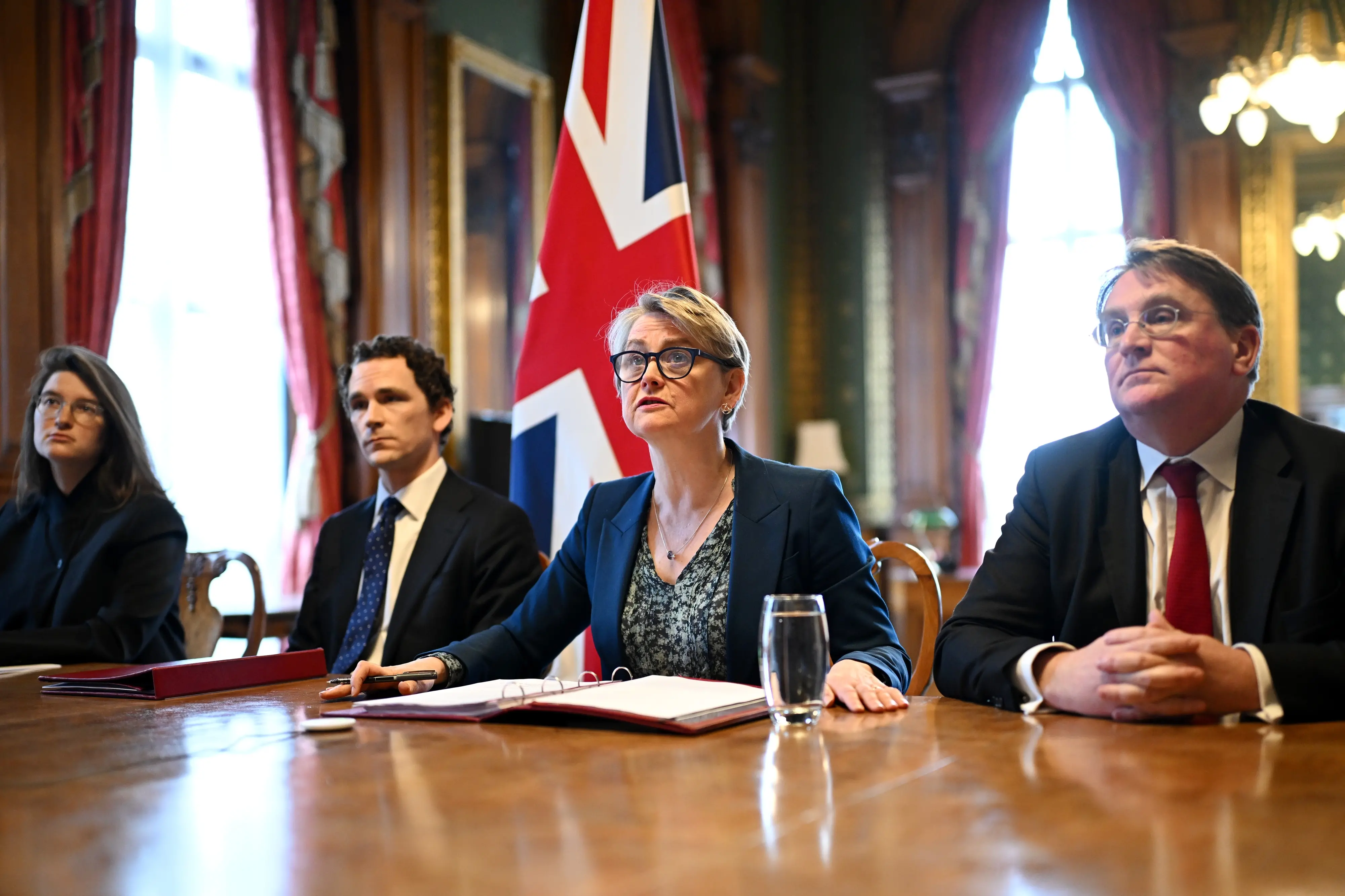
India has joined more than 60 nations in a growing international effort to restore safe passage through the Strait of Hormuz, as Iran’s closure of the vital waterway continues to rattle global energy markets and disrupt shipping lanes. The virtual meeting, convened by the United Kingdom, came amid intensifying geopolitical tensions and worsening supply shocks triggered by the ongoing U.S.-Israeli war against Iran.
The United States was notably absent from the discussions, a decision underscored by President Donald Trump’s insistence that protecting the strait is no longer Washington’s responsibility. His stance, coupled with renewed criticisms of NATO allies, has heightened anxieties among European and Asian nations that depend heavily on energy shipments through the Gulf.
Britain accuses Iran of holding global economy hostage
Opening the meeting, U.K. Foreign Secretary Yvette Cooper sharply criticised Tehran, saying Iran had effectively taken control of an international shipping artery.
“We have seen Iran hijack an international shipping route to hold the global economy hostage,” Cooper said, warning that surging energy and food prices were “hitting households and businesses in every corner of the world.”
Officials from more than 40 countries attended the talks, seeking political and diplomatic solutions to reopen the channel without military escalation. Despite widespread alarm, no nation appears willing to attempt a forceful reopening while Iran retains the ability to target ships with missiles, drones, fast-attack craft and naval mines.
Attacks disrupt shipping; oil prices spike
Since the conflict erupted on February 28, commercial traffic has drastically declined. According to Lloyd’s List Intelligence, there have been 23 direct attacks on merchant vessels, leaving 11 crew members dead. Remaining activity is dominated by sanctions-evading tankers carrying Iranian oil under Tehran’s vetting system.
Analysts warn that the near-shutdown of a passage responsible for 20% of the world’s energy supply has triggered global price shocks, particularly for oil, fertiliser and food.
Military solution ‘unrealistic’
French President Emmanuel Macron, speaking during a trip to South Korea, cautioned that reopening the waterway by force is “unrealistic.” He argued that any long-term solution must involve negotiations with Iran following a ceasefire.
France is advocating an international escort mission, comprising European and other nations, to protect tankers once fighting subsides. Military planners from several countries will meet next week to consider future mine-clearing operations and assurance measures for commercial shipping, the British government said.
India highlights energy security, loss of Indian mariners
India participated in the meeting at the invitation of the U.K., represented by Foreign Secretary Vikram Misri. New Delhi stressed the strategic importance of unimpeded passage for its energy supplies, citing severe national exposure to disruptions in the Gulf.
After the meeting, the Ministry of External Affairs said Misri had underlined India’s position, “He emphasised the impact of the crisis on India's energy security and the fact that India remains the only country to have lost mariners in attacks on merchant shipping in the Gulf. He also underlined that the way out of the crisis consisted of de-escalation and a return to the path of diplomacy and dialogue among all concerned parties.”
The ministry noted that six Indian ships had managed to cross the strait safely in recent days after New Delhi engaged in dialogue with Iran and other regional actors.
Trump’s volte-face deepens allies’ alarm
In a shift from earlier commitments, President Trump declared on Wednesday that the U.S. would no longer prioritise reopening the strait, instead urging allies to secure their own energy supplies.
In a post on Truth Social, he wrote, "All of those countries that can't get jet fuel because of the Strait of Hormuz, like the United Kingdom, which refused to get involved in the decapitation of Iran, I have a suggestion for you: Number 1, buy from the US, we have plenty, and Number 2, build up some delayed courage, go to the Strait, and just TAKE IT."
"You'll have to start learning how to fight for yourself, the USA won't be there to help you anymore, just like you weren't there for us. Iran has been, essentially, decimated. The hard part is done. Go get your own oil! President DJT"
Trump’s remarks, alongside fresh threats to withdraw from NATO, have spurred European governments to accelerate independent security initiatives, including the Hormuz coalition-building effort.
Although Thursday’s talks underscored broad international concern, participants announced no specific joint measures. Discussions included possible economic pressure on Tehran, coordination with the International Maritime Organization, and efforts to assist the estimated 2,000 ships and 20,000 stranded seafarers in the region.
(With AP inputs)