Woman in China speaks daily to ‘AI’ son, unaware he died over a year ago
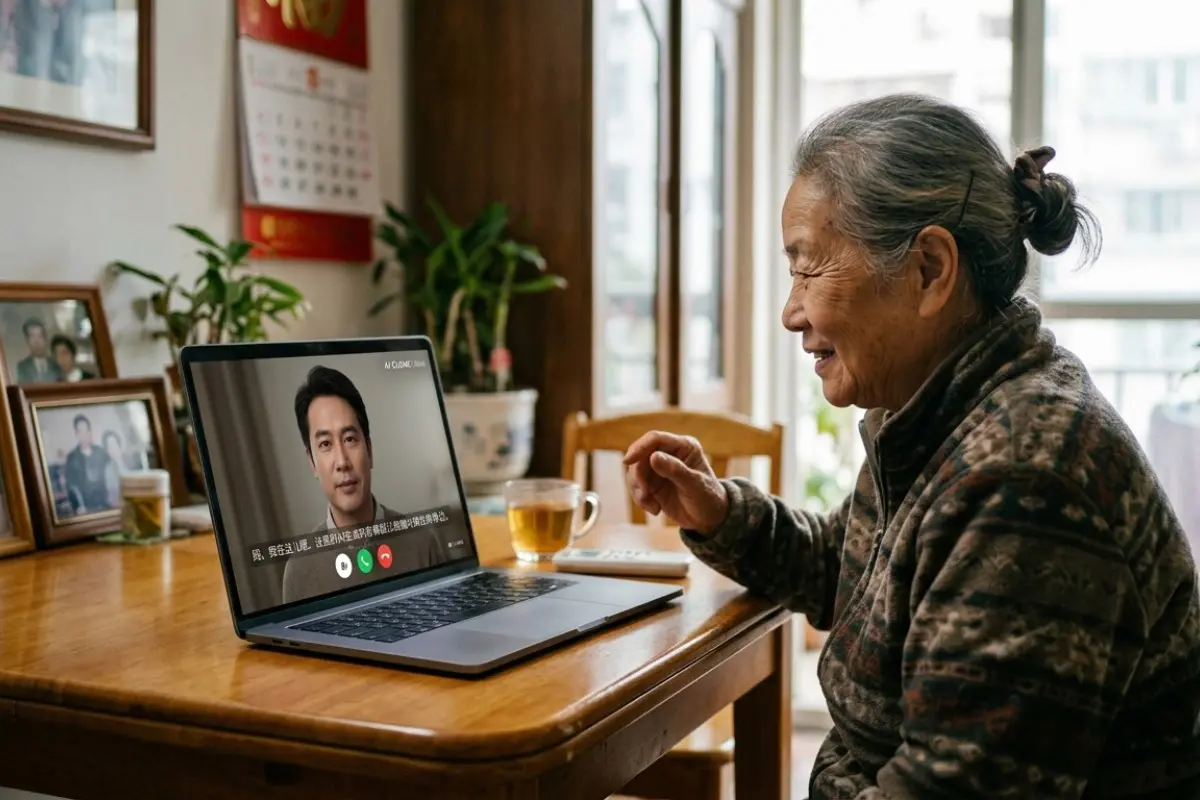
An extraordinary case from China’s Jiangsu province has sparked widespread discussion about grief, technology and truth. An elderly woman in her eighties has been speaking daily to an AI-generated version of her deceased son, unaware that he passed away in a road accident more than a year ago.
The story, reported by the South China Morning Post via Litchi News, has raised difficult questions about whether artificial intelligence can be used to soften loss or whether it deepens emotional deception.
Daily conversations with an AI version of her son
The elderly woman communicates every day with what she believes is her son through a video chat application. In reality, she is interacting with an AI clone created to replicate his personality and behaviour.
According to reports, the digital version not only resembles him visually but also reproduces his mannerisms in detail, including subtle actions such as leaning forward while speaking. The illusion is so carefully constructed that the woman continues to treat the AI as her real son.
In her conversations, she often expresses parental concern, asking him to eat properly, dress warmly and take care of his safety. On occasions when she asks him to visit, the AI responds that he is working in another province and cannot return.
One of her emotional messages reportedly included: “You should call me more often so that I know whether you live well or not in another city. I am missing you so much.
I feel so sorry that I cannot see you in person," the mother reportedly said in one of the conversations.
The AI version reassures her by telling her that he will return once he has earned enough money.
Family’s decision to hide the truth
The arrangement was initiated by the woman’s family, who chose not to inform her about her only son’s death. They reportedly feared that the news would be too distressing given her advanced age and existing heart condition.
Instead, they opted to maintain the illusion that he was still alive, using artificial intelligence to recreate his presence in her life in a controlled way.
Creation of the AI clone
The AI system was developed by engineer Zhang Zewei, who has reportedly been offering such services for around three years. In this case, he was approached by a relative of the deceased man, who requested the creation of a digital replica of his father to provide comfort to the mother.
To build the AI clone, Zhang was given extensive reference material, including photographs, audio recordings and video footage of the man speaking in his local dialect. These materials were used to train the system so that it could replicate not only his appearance and voice but also his behavioural patterns.
Zhang explained in the report that his work involves creating digital replicas that can interact in emotionally familiar ways. He also remarked, “decieves people's emotions”, adding that it is intended to “comfort the living.”
Emotional illusion in everyday interaction
The AI-generated son continues to maintain the illusion of daily life. When asked why he does not return home, the system explains that he is working in another province. This response helps sustain the belief that he is still alive and occupied with work commitments.
The interaction has become part of the woman’s routine, with daily conversations reinforcing the perception that her son is still present in her life.
Public reaction and ethical concerns
The case has triggered mixed reactions among Chinese netizens. Some described it as a “gentle lie”, expressing interest in similar technology that could allow them to speak to AI versions of deceased relatives.
Others, however, strongly criticised the practice, warning that the emotional consequences could be severe if the truth were eventually revealed to the elderly woman.
One commenter expressed concern, stating: “I do not side with this family. The mother has been cheated for a long time. I am afraid once the truth comes to light, it will cause her more harm.”