Who is Sanae Takaichi? How Japan’s ‘China hawk’ became its first female prime minister
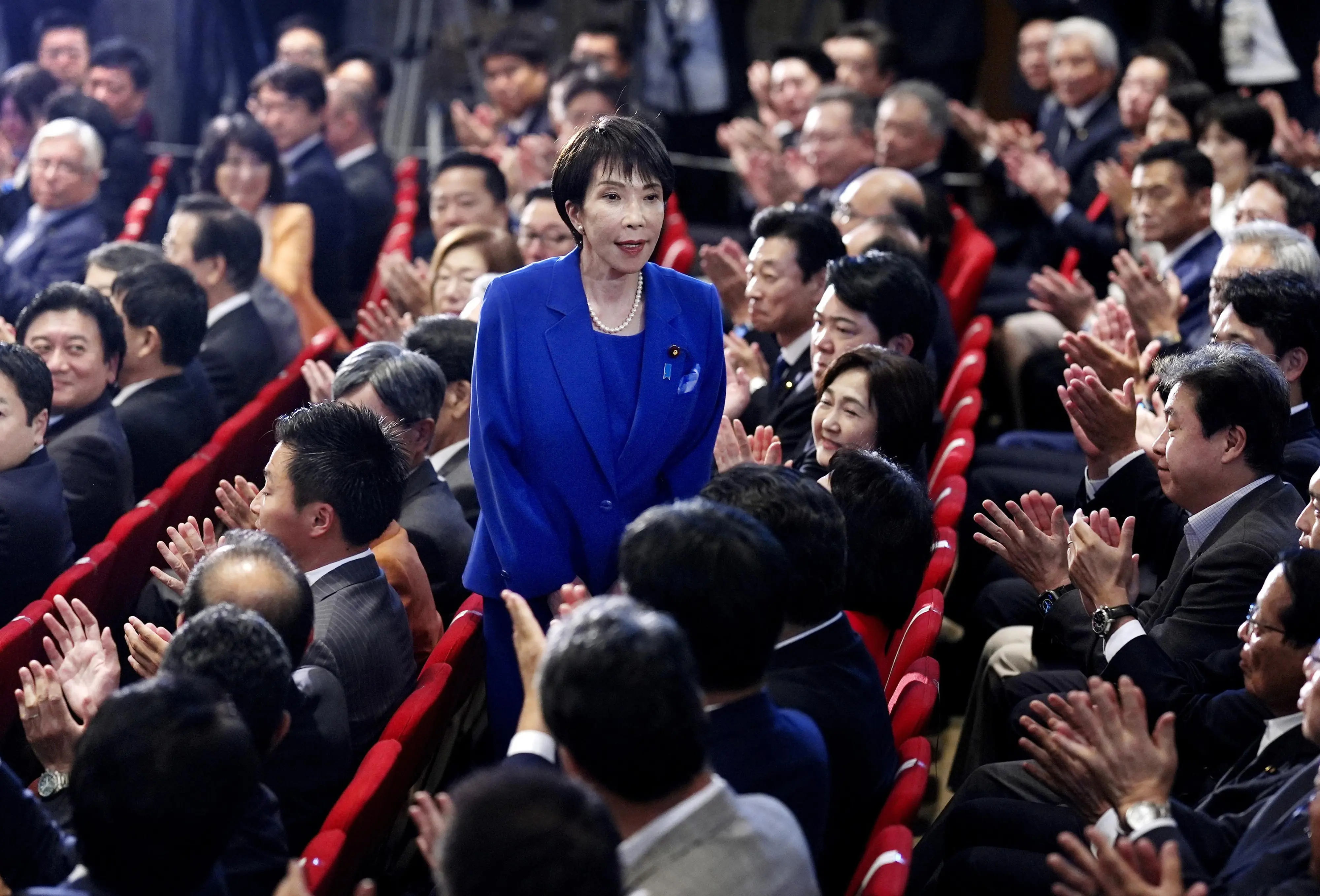
Conservative lawmaker Sanae Takaichi, a self-proclaimed admirer of Margaret Thatcher, has made history by becoming Japan’s first female prime minister after winning the ruling Liberal Democratic Party’s (LDP) leadership race. Her rise signals both continuity and controversy in a politically unsettled Japan.
Who is Sanae Takaichi?
Born in Nara in western Japan, Sanae Takaichi, 64, is a long-time conservative politician known for her hardline nationalist views and uncompromising political style. A former television presenter, motorcycle enthusiast, and heavy metal drummer, she entered politics in 1993 and has since held several cabinet posts, including Minister for Economic Security (2022–2024).
Often describing former British prime minister Margaret Thatcher as her role model, Takaichi has long stood apart from Japan’s male-dominated political establishment. Her election marks a historic milestone — shattering what she once called “Japan’s highest glass ceiling” — even as critics note her policies may not advance women’s rights.
Despite being Japan’s first woman prime minister, she has opposed gender equality reforms, including allowing married couples to retain separate surnames and female succession in the imperial family. Political scholar Yayo Okano of Doshisha University noted, “Takaichi has made no reference to women’s hardships or gender gaps during the leadership contest — this signals no real improvement in gender equality.”
How did she rise to power?
Takaichi’s victory in the LDP leadership race came after she defeated Agriculture Minister Shinjiro Koizumi, son of former Prime Minister Junichiro Koizumi, in a runoff vote on Saturday.
Outgoing premier Shigeru Ishiba resigned after the LDP-led coalition lost its majority in both houses of parliament. The party, which has ruled Japan almost continuously since 1955, has been struggling with declining public support amid corruption scandals, inflation, and a weakening yen.
The contest was initially seen as a generational battle — the 64-year-old Takaichi versus the 43-year-old Koizumi — but her ability to consolidate conservative factions and reassure party elders proved decisive. “Together with so many of you, we have carved a new era for the LDP,” Takaichi said after her win, while acknowledging that “a mountain of work” lay ahead to restore voter confidence.
Her political ideology and policies
Takaichi is widely regarded as a national security hawk and a protégé of the late Prime Minister Shinzo Abe. She supports a more assertive defence posture to counter China and North Korea, calling for constitutional reform to strengthen Japan’s military capabilities.
She has also echoed Abe’s “Free and Open Indo-Pacific” vision, aligning closely with the United States while advocating for Japan’s “first national interest.” On China, she has toned down her rhetoric during the campaign but is expected to take a firm stance on territorial and trade issues.
Domestically, Takaichi proposes a revival of “Abenomics 2.0” — a blend of fiscal stimulus, aggressive monetary easing, and deregulation — to boost Japan’s sluggish economy. She supports tax credits and cash benefits for low-income earners while calling for fiscal discipline.
However, her views on immigration have drawn criticism. Takaichi has claimed that Japan should “reconsider policies that allow in people with completely different cultures and backgrounds,” reflecting a rightward shift that analysts say echoes populist movements elsewhere.
Foreign policy outlook
Takaichi’s tenure will test Japan’s alliance with Washington, particularly with the return of former U.S. president Donald Trump to the global stage. She has suggested that she may seek renegotiation of a $550 billion U.S.–Japan investment deal if it is found to “harm Japan’s national interest.”
While she supports cooperation with the United States, South Korea, and the Philippines to counter regional threats, experts caution that her nationalist leanings could strain ties with neighbours. “Japan could end up isolated if it adopts a confrontational stance with China while the U.S. reduces its regional presence,” warned Tetsuo Kotani, a security expert at Meikai University.
A symbolic milestone — but will it change Japan?
Takaichi’s victory is historic, yet analysts view it as a continuation of Japan’s conservative tradition rather than a social revolution. Though she pledged to include more women in her cabinet and senior party roles, her policies suggest ideological continuity rather than reform.
As she assumes office amid an ageing population, political disillusionment, and economic headwinds, Japan faces both a symbolic first and a familiar uncertainty. “Rather than feeling happy, I truly feel that the real work begins now,” she said after her election — a statement that may define her premiership in the months ahead.
(With AFP inputs)