Ghost of the hills: World’s 1st white Iberian Lynx caught on camera | WATCH
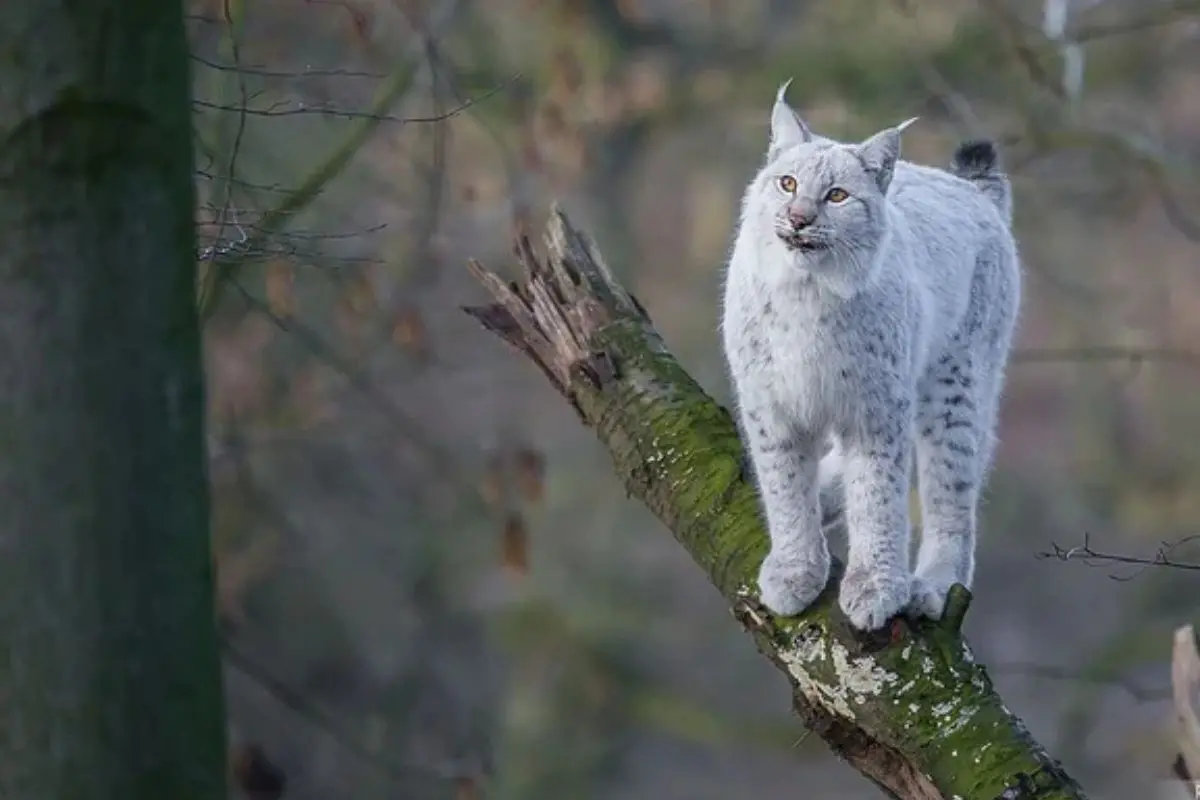
In a breathtaking moment for wildlife enthusiasts, a Spanish nature photographer has captured what experts believe is the world’s first-ever white Iberian lynx — a sight so rare it borders on the mythical.
The stunning footage, shot by photographer Ángel Hidalgo in the rugged mountains of Jaén, southern Spain, shows a lynx with a creamy white coat, dark ear tufts, and bright, clear eyes — features that distinguish it from an albino animal.
A photographer in Spain has documented the nation’s first white Iberian lynx, a rare stunning leucistic specimen. pic.twitter.com/J2OupqKeMk
— Open Source Intel (@Osint613) October 29, 2025
Experts have confirmed that the lynx is leucistic, meaning it has a partial loss of pigmentation rather than a total absence of colour.
The Iberian lynx (Lynx pardinus) is already one of the rarest wild cats in existence — a species once teetering on the edge of extinction. The emergence of a leucistic individual is being hailed as both a biological marvel and a symbol of hope for conservation.
Wildlife researchers say the lynx’s ghostly white appearance is a genetic fluke, but also a testament to the species’ improving genetic diversity, following decades of intensive conservation efforts.
The sighting location has been deliberately kept secret to protect the animal, which has now achieved viral fame across social media.
Local folklore in Andalusia tells of “ghost cats” that roamed the hills — spectral lynxes seen only in moonlight. Hidalgo’s discovery, it seems, has given those legends a living form.
“I’ve spent years setting up cameras, waiting in silence, and often failing,” Hidalgo said. “This time, nature rewarded me with something truly extraordinary.”
Once reduced to just two isolated breeding populations by 2002, the Iberian lynx has staged one of the world’s most dramatic wildlife recoveries.
Thanks to sustained conservation measures — from habitat restoration to captive breeding — its population has rebounded to about 2,000 individuals by 2025.
For conservationists, the white lynx is more than a curiosity — it’s a genetic milestone, proof that one of nature’s most fragile success stories continues to thrive.