Vietnam sees US as ‘belligerent’ power, leaked defence paper reveals
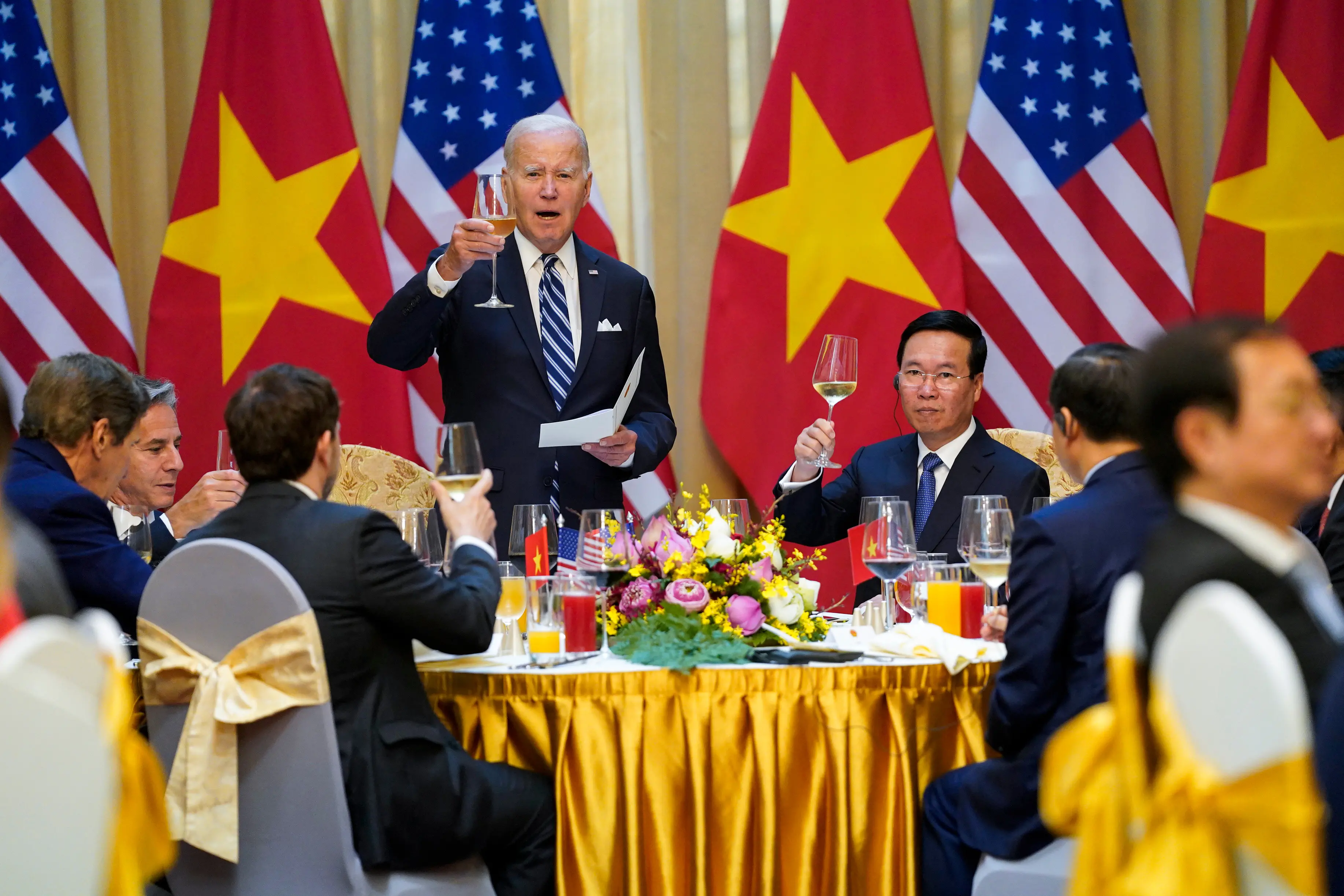
Hanoi: Fresh revelations from internal Vietnamese military documents have cast doubt on Hanoi’s embrace of Washington, despite the two countries elevating relations to their highest diplomatic level just over a year ago.
A report released on Tuesday by The 88 Project, a human rights organisation, highlights a Ministry of Defence paper titled “The 2nd US Invasion Plan”, completed in August 2024. The document warns that the United States remains a “belligerent” power and could exploit unconventional warfare or “colour revolutions” to destabilise Vietnam’s Communist leadership. While acknowledging little immediate risk of war, the planners urged vigilance against any pretext for invasion.
Although the paper acknowledged that “currently there is little risk of a war against Vietnam”, it stressed that “given the US’s belligerent nature, vigilance is required to prevent the US and its allies from creating a pretext to invade our country”.
US strategy part of broader push to contain China
The latest analysis traced what it described as a steady progression across three American administrations – Barack Obama, Donald Trump’s first term, and Joe Biden – with Washington increasingly cultivating military and strategic partnerships across Asia to “form a front against China”.
Further, the analysis suggests a duality in Vietnam’s foreign policy: outwardly deepening ties with Washington through a Comprehensive Strategic Partnership signed in 2023, while internally fearing US attempts to impose democratic values and undermine the socialist system. “It shows that far from viewing the US as a strategic partner, Hanoi sees Washington as an existential threat and has no intention of joining its anti-China alliance,” said Ben Swanton, co-director of The 88 Project.
Fear of ‘colour revolutions’ drives military skepticism
Experts note that the military’s scepticism reflects long-standing anxieties. Nguyen Khac Giang of Singapore’s ISEAS–Yusof Ishak Institute said the Communist Party’s conservative faction has been wary of closer US ties, while Zachary Abuza of the National War College argued that fears of “colour revolutions” outweigh concerns about Chinese aggression.
Tensions within Vietnam’s leadership spilled into public view in June 2024 when an army television report accused the US-linked Fulbright University of attempting to foment a “colour revolution”. The Foreign Ministry swiftly defended the institution, which had been showcased by both US and Vietnamese officials as a symbol of strengthened ties when relations were upgraded.
Cuts to the US Agency for International Development under President Donald Trump’s administration further strained trust between Washington and Hanoi, disrupting key projects. Among those affected were initiatives to clean up soil contaminated with toxic dioxin from the military’s Agent Orange defoliant, as well as efforts to clear unexploded American ordnance and land mines.
Despite ongoing disputes between China and Vietnam over South China Sea territorial claims, the documents depict Beijing as a regional competitor rather than a threat on the scale of the United States.
Official silence from Hanoi as Washington defends strategic partnership
The US State Department declined to comment on the leaked document but stressed that the partnership “promotes prosperity and security” for both nations. Vietnam’s Foreign Ministry did not respond to requests for comment.
The disclosures underline the balancing act Hanoi faces: China remains its largest trading partner, while the US is its biggest export market. Yet internal divisions persist, with some leaders welcoming American investment while others remain deeply suspicious of Washington’s intentions.