New video shows walkie-talkie involved in recent explosions in Lebanon
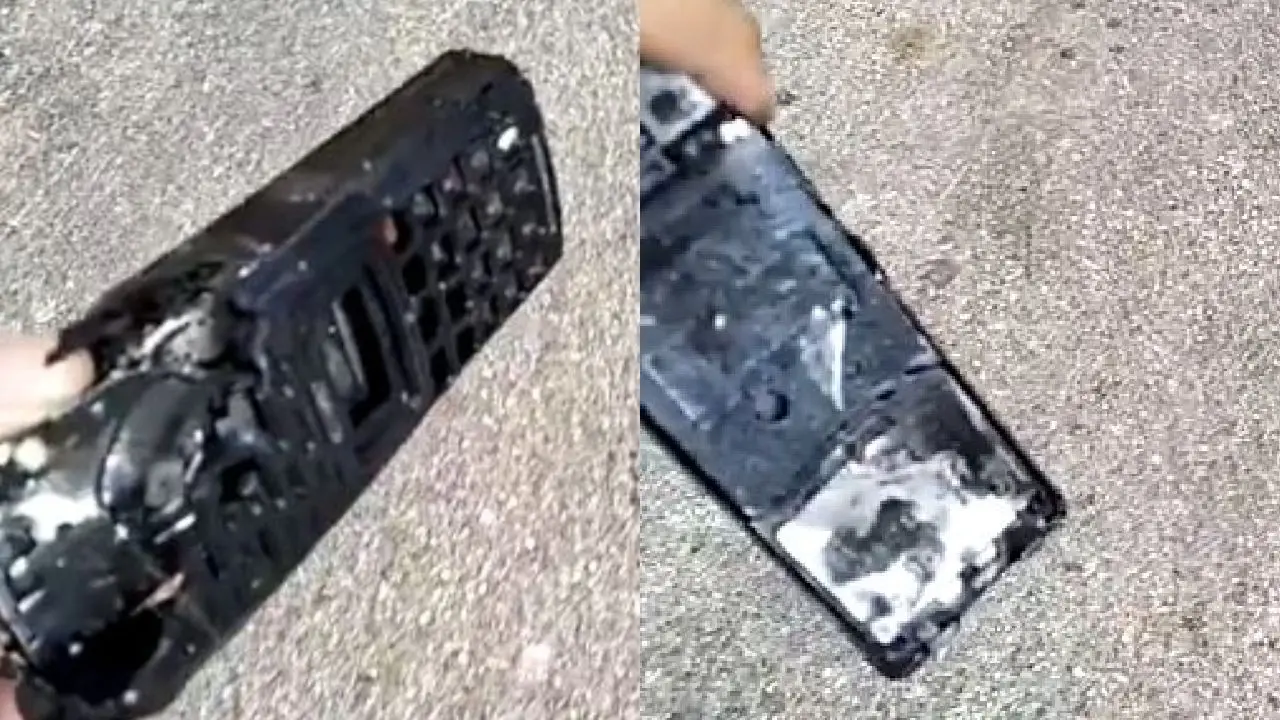
A series of explosions have been reported across Beirut and other parts of Lebanon on Wednesday, this time involving walkie-talkie devices.
According to the New York Times' Christiaan Triebert, the walkie-talkie device involved in the blast was the ICOM IC-V82 model. In a post shared on X, Triebert revealed that the IC-V82 is a handheld VHF transceiver commonly used for amateur (ham) radio communication and operates primarily in the 2-meter band (144-148 MHz). Along with the post, he shared a photo of a walkie-talkie with a marking MADE IN JAPAN.
He also shared a video of one of the walkie-talkies that exploded in Lebanon on Wednesday. In the video, a person can be seen examining what remains of a damaged device.
The AR-924 pagers used in Tuesday's attack were manufactured by BAC Consulting KFT, which is based in the Hungarian capital of Budapest, according to a statement released by Gold Apollo, a Taiwanese firm that authorized the use of its brand on the pagers.
Gold Apollo's chair, Hsu Ching-kuang, told journalists Wednesday the firm has had a licensing agreement with BAC for the past three years.
Meanwhile, the death toll in the recent blasts has increased to nine, with injuries to 300 people. Several blasts were heard at the funeral in Beirut for three Hezbollah members and a child killed by exploding pagers the day before, according to Associated Press journalists at the scene. An AP photographer in the southern coastal city of Sidon saw a car and a mobile phone shop damaged after devices exploded inside of them.
A Hezbollah official told the AP that walkie-talkies used by the group exploded. The official spoke on condition of anonymity because he was not authorized to speak to the media. Lebanon’s official news agency reports that solar energy systems exploded in homes in several areas of Beirut and in southern Lebanon, wounding at least one girl.
The new blasts hit a country still thrown into confusion and anger after Tuesday's pager bombings, which appeared to be a complex Israeli attack targeting Hezbollah members that caused civilian casualties, too. At least 12 people were killed, including two children, and some 2,800 people wounded as hundreds of pagers used by Hezbollah members began detonating wherever they happened to be — in homes, cars, at grocery stores and in cafes.