US to release Jeffrey Epstein files by December 19 under transparency law
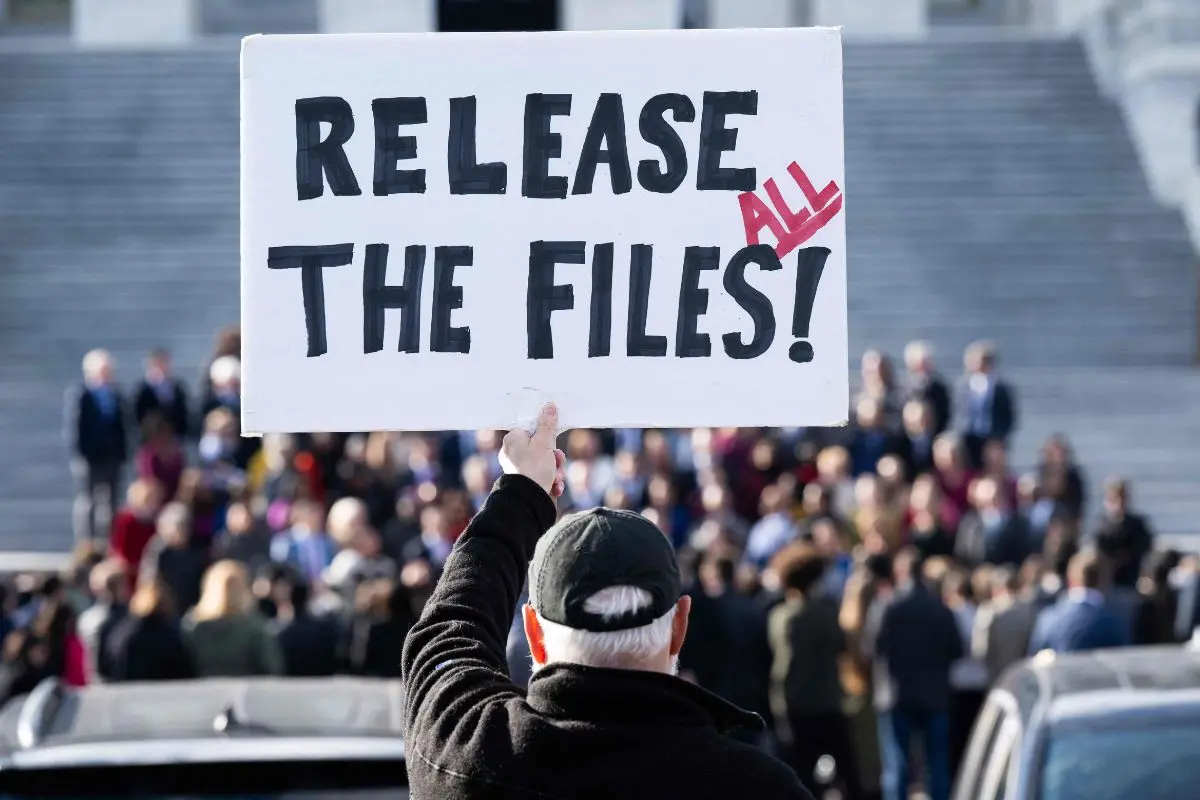
Washington: The Trump administration faces a Friday deadline to release decades of government records on notorious sex offender Jeffrey Epstein, marking a key moment in the long-running effort to uncover the full extent of his network.
Under the Epstein Files Transparency Act, the Department of Justice must disclose by December 19 its vast archive of documents related to Epstein's sex-trafficking empire, which allegedly involved underage girls and implicated some of the world’s most influential figures.
For the public, the release provides perhaps the clearest opportunity yet to lift the veil on one of the century’s most enduring scandals. However, transparency advocates caution that key details could still be withheld under government claims of legal constraints.
For Trump, who has faced questions over his past friendship with Epstein, the disclosure could prove awkward.
Who was Jeffrey Epstein and who was involved?
Epstein, who died in custody after his 2019 arrest, moved in elite circles for years. He cultivated ties with tycoons, politicians, academics and celebrities to whom he was accused of trafficking hundreds of girls and young women for sex.
Trump and his allies have long claimed that powerful Democrats and Hollywood figures were being shielded from accountability, framing the case as proof of how power hides behind lawyers and money.
The president, however, dismissed the transparency push as a "Democrat hoax" when he returned to office and acquired the unilateral authority to release the files. He appeared to change his stance in November, signing the act into law after it passed Congress almost unanimously, seemingly accepting that disclosure was inevitable.
What will the files reveal?
The files’ release could shed light on how Epstein operated, who assisted him, and whether influential figures received protection. Survivors are hopeful but cautious about the changing stances adopted by Trump, who broke off his friendship with Epstein years ago and is not accused of wrongdoing in the case.
"I can't help to be skeptical of what the agenda is," Haley Robson, who was recruited at 16 to massage Epstein, told a recent news conference.
The law requires officials to open a substantial archive of internal correspondence, investigative material and court records that were previously sealed or inaccessible. This includes victim statements, flight logs, seized electronic devices and correspondence regarding charging decisions, as well as documentation of Epstein’s death in custody.
While many names are already known, the mandate could expose new associates and clarify why prosecutors hesitated for years. The Department of Justice has cautioned that no definitive "client list" exists.
Will there be redactions?
Disclosure applies only to records that do not identify victims or jeopardise active investigations or national security. This gives the DOJ latitude to black out victims' names, classified intelligence and litigation-sensitive material.
Observers expect heavy redactions, although the law forbids censorship for "embarrassment" or "political sensitivity."
Trump recently ordered probes into Democrats linked to Epstein, fuelling speculation that prosecutors might cite those inquiries to withhold files.
Why does the case remain so explosive?
The Epstein scandal continues to attract attention because it sits at the intersection of wealth, power and impunity. Epstein maintained luxury properties where prosecutors say he trafficked underage girls, and he secured a 2008 plea bargain that may have shielded unnamed co-conspirators.
His arrest and subsequent death in a New York jail, ruled a suicide, reignited scrutiny of how he operated for so long with so little accountability.
Oregon Senator Ron Wyden, the top Democrat on the powerful finance committee, expressed doubts that Attorney General Pam Bondi would allow a comprehensive disclosure. He is leading his own investigation into institutions he claims shielded Epstein by failing to report suspicious financial activities.
"We need both lanes, because I don't trust Bondi and following the money is how, in our country, we've had a long history of catching and rooting out corrupt behavior," he said.
AFP inputs