US rolls out fresh trade measures, slaps 26% discounted reciprocal tariff on India
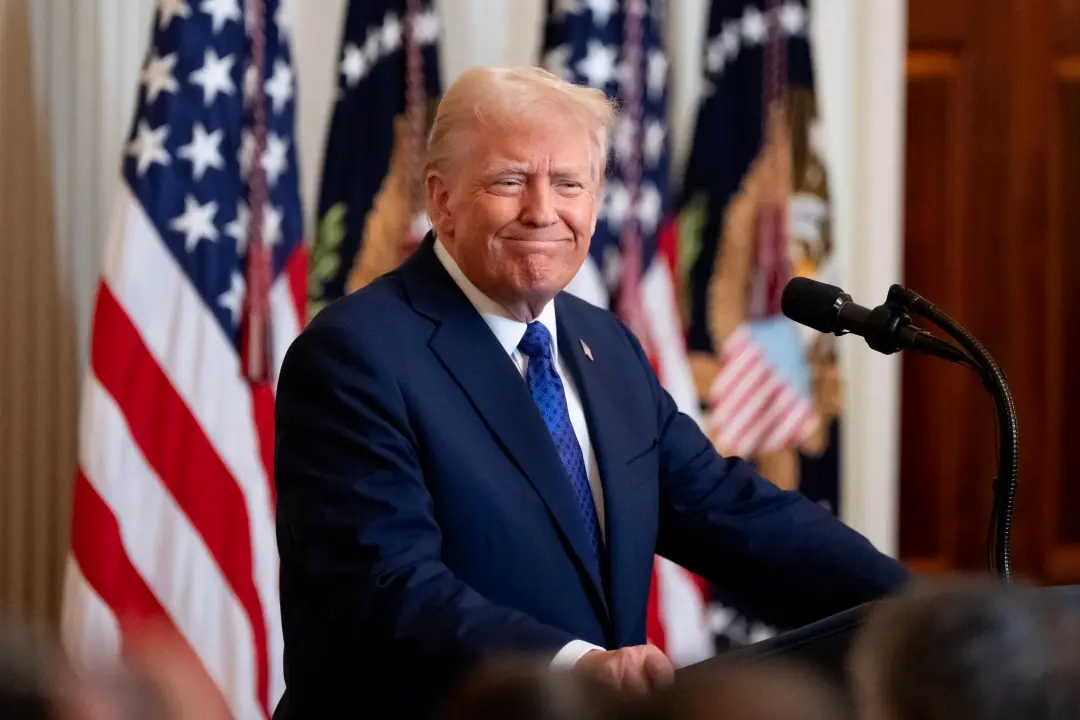
Washington: US President Donald Trump has imposed sweeping new tariffs on nearly all trading partners, introducing a 34 per cent tax on imports from China, 20 per cent on the European Union, and various other levies. India has been hit with a 26 per cent tariff, which Trump described as a “discounted reciprocal tariff,” claiming it is half of what New Delhi charges the US.
Declaring it a historic move, Trump described India as “very, very tough” and accused foreign nations of unfair trade practices.
“This is Liberation Day, a day we've been waiting for a long time. April 2, 2025, will forever be remembered as the day American industry was reborn, the day America's destiny was reclaimed, and the day we began to make America wealthy again,” Trump said in the Rose Garden at the White House on Wednesday.
Justification for tariffs
During his nearly hour-long speech on a cold Wednesday afternoon, Trump listed multiple countries and their tariffs on US goods, claiming that for decades, American workers had suffered due to unfair trade policies.
“For decades, our country has been looted, pillaged, raped, and plundered by nations near and far, both friend and foe alike. American steelworkers, auto workers, farmers, and skilled craftsmen… They really suffered gravely,” Trump said. “They watched in anguish as foreign leaders stole our jobs. Foreign cheaters ransacked our factories, and foreign scavengers tore apart our once-beautiful American dream.”
Joined by factory and automotive workers, as well as members of his Cabinet, Trump signed what he called a “historic Executive Order” instituting reciprocal tariffs on countries worldwide.
“Reciprocal. That means they do it to us and we do it to them. Very simple. Can't get any simpler than that,” he stated, drawing applause from the audience.
India's tariff policies criticised
Trump highlighted what he described as unfair trade barriers imposed by other nations, including India. He noted that the US charges a 2.4% tariff on motorcycles, while Thailand and others impose rates as high as 60%. “India charges 70 per cent, Vietnam charges 75 per cent, and others are even higher than that,” he said.
He further pointed out that the US has charged only a 2.5% tariff on foreign-made automobiles for decades, while the European Union imposes more than 10%, and India levies a 70% tariff. “Perhaps worst of all are the non-monetary restrictions imposed by South Korea, Japan, and very many other nations,” he added.
Trump displayed a chart listing tariffs imposed by India, China, the European Union, Japan, Taiwan, South Korea, Bangladesh, Sri Lanka, and Pakistan on US products. The chart indicated that India charged 52% in tariffs, including “currency manipulation and trade barriers.” As a response, the US would now impose a “discounted reciprocal tariff” of 26% on India.
“India, very, very tough. Very, very tough,” Trump remarked. He recalled a recent meeting with Prime Minister Narendra Modi, who visited Washington DC in February, just weeks after Trump began his second term as US President. “The Prime Minister just left. He's a great friend of mine, but I said, ‘You're a friend of mine, but you're not treating us right.’ They charge us 52%. You have to understand, we charge them almost nothing, for years and years and decades,” he said.
Trade deficit and future negotiations
Trump has previously called India the “tariff king” and a “big abuser.” During a joint press conference with Modi at the White House on February 13, he criticised India’s trade policies, saying, “India has been very strong on tariffs. I don’t blame them, necessarily, but it’s a different way of doing business. It’s very hard to sell into India because they have trade barriers, very strong tariffs.”
He further stated that the US trade deficit with India is nearly $100 billion. “Modi and I agreed that we’ll begin negotiations to address the long-running disparities that should have been taken care of over the last four years—but they didn’t do that—in the US-India trading relationship, with the goal of signing an agreement,” Trump said. “We want a certain level playing field, which we really think we're entitled to, and he does also, in fairness, so we're going to work on that very hard.”
Partial reciprocity in tariffs
Trump said the US was being “very kind” by not imposing full reciprocal tariffs. “For nations that treat us badly, we will calculate the combined rate of all their tariffs, non-monetary barriers, and other forms of cheating. And because we are being very kind, we're a kind people, very kind… we will charge them approximately half of what they are and have been charging us,” he said.
“The tariffs will not be fully reciprocal. I could have done that, yes, but it would have been tough for a lot of countries who didn’t want to do that,” he added.
Concluding his remarks, Trump declared the new tariffs as a turning point in US trade policy. “It's going to be Liberation Day in America, and it's going to be a day that hopefully you're going to look back in years to come and say, ‘You know, he was right. This has turned out to be one of the most important days in the history of our country,’” he said.
Import tariffs on other major countries
The import tariffs on other major countries are China (34 per cent), European Union (20 per cent), Vietnam (46 per cent), Taiwan (32 per cent), Japan (24 per cent), India (26 per cent), United Kingdom (10 per cent), Bangladesh (37 per cent), Pakistan (29 per cent), Sri Lanka (44 per cent), Israel (17 per cent).