Strait of Hormuz blockade: US Navy seizes Iranian vessel ‘Touska’ after ‘blowing hole in engineroom’
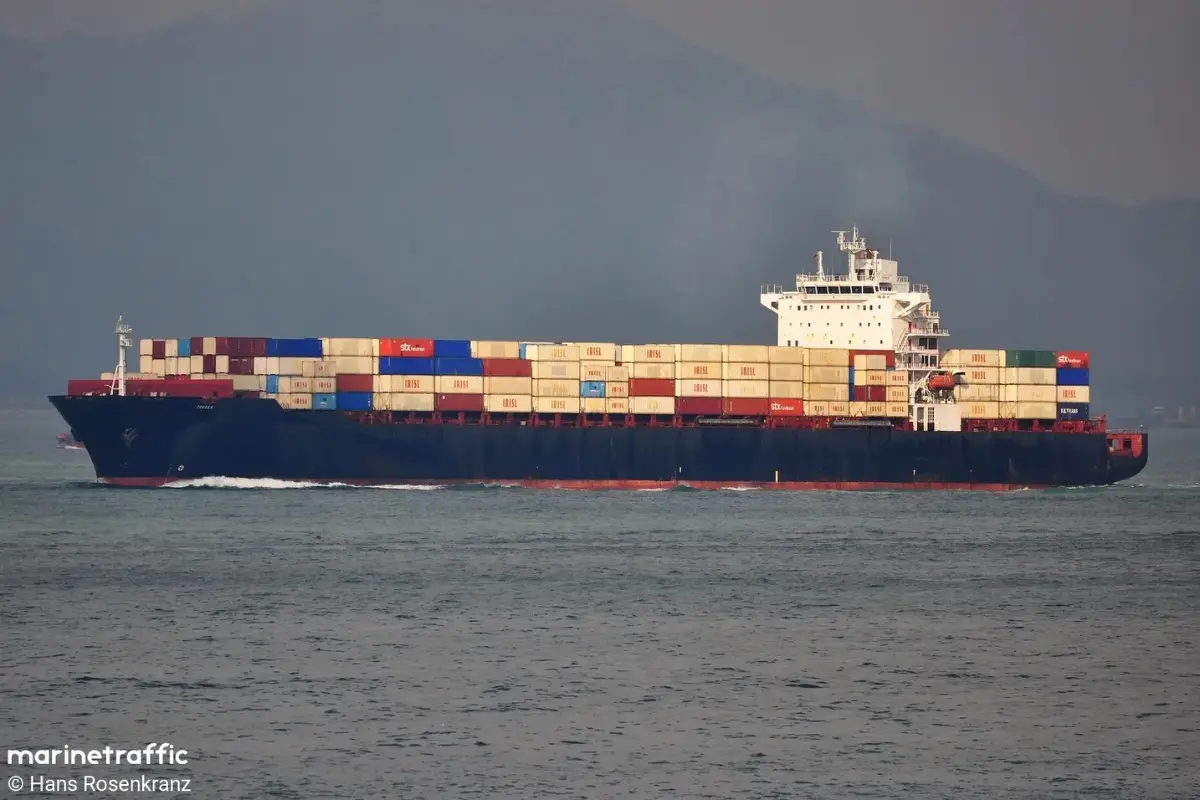
Washington: The United States Navy seized an Iranian-flagged cargo vessel near the Strait of Hormuz on Sunday (Monday IST), a move that triggered vows of retaliation from Tehran and cast doubt on a fragile ceasefire just days before its scheduled expiration.
The interception of the Touska marks the first such seizure since the U.S. began its naval blockade of Iranian ports last week. While the Iranian joint military command denounced the boarding as an act of "piracy" and a violation of the current truce, the White House framed the action as a necessary enforcement of sanctions.
On social media, President Donald Trump stated that a U.S. Navy guided-missile destroyer in the Gulf of Oman had issued warnings to the vessel before taking kinetic action. The ship was "stopped right in their tracks by blowing a hole in the engineroom," the president wrote, adding that U.S. Marines were currently "seeing what’s on board!"
U.S. Central Command confirmed the destroyer provided six hours of repeated warnings prior to the strike. It remains unclear if the engagement resulted in casualties.
Diplomatic Uncertainty
The escalation comes at a precarious moment for regional diplomacy. Though President Trump previously announced that American negotiators would travel to Pakistan on Monday for a second round of direct talks, the status of that mission is now in question.
Iranian state media outlets, citing unnamed sources, suggested the negotiations might be abandoned. These reports followed a Sunday phone call between Iranian President Masoud Pezeshkian and Pakistani Prime Minister Shehbaz Sharif, during which Pezeshkian expressed deep suspicion of American "bullying" and "unreasonable behavior." The Iranian leader reportedly warned that the U.S. appeared ready to "betray diplomacy."
In a separate exchange, Iranian Foreign Minister Abbas Araghchi told his Pakistani counterpart, Ishaq Dar, that Washington’s recent rhetoric demonstrated "bad intentions and lack of seriousness."
Despite the tension, preparations in Islamabad appeared to continue. Security has been tightened in the Pakistani capital, and a regional official, speaking on the condition of anonymity, noted that U.S. advance security teams were already on the ground. Vice President JD Vance is slated to lead the American delegation, alongside envoys Steve Witkoff and Jared Kushner.
Economic and Humanitarian Stakes
The renewed friction sent global oil prices climbing as markets reacted to the potential deepening of a multi-decade energy crisis. The Strait of Hormuz, which facilitates roughly 20% of the world’s oil trade and essential supplies of natural gas and fertiliser, remains a primary theatre of conflict.
Hundreds of vessels are currently anchored at either end of the waterway, awaiting clearance that has been stalled by the competing pressures of the U.S. blockade and Iran’s retaliatory restrictions.
Mohammad Reza Aref, Iran’s first vice president, warned Monday that the economic pain would persist until military and economic pressures on Tehran were lifted. "The choice is clear: either a free oil market for all, or the risk of significant costs for everyone," Aref wrote in a social media post.
The Path to War
The conflict, now entering its eighth week, was initiated on Feb. 28 by U.S. and Israeli forces during disputes over Tehran’s nuclear enrichment program. The humanitarian toll has been severe, with at least 3,000 deaths reported in Iran and more than 2,290 in Lebanon.
While a 10-day truce between Israel and Hezbollah in Lebanon took hold Friday, the broader U.S.-Iran standoff has only sharpened. President Trump has reiterated threats to "knock out every single Power Plant, and every single Bridge" in Iran if a deal is not reached.
Tehran’s Supreme National Security Council maintains that it will continue to enforce oversight of the strait—including the collection of fees and issuance of transit certificates—until the war concludes, citing the need to monitor supplies reaching U.S. military bases in the region.
With inputs from AP