US Lawmakers meet Dalai Lama, China criticises visit
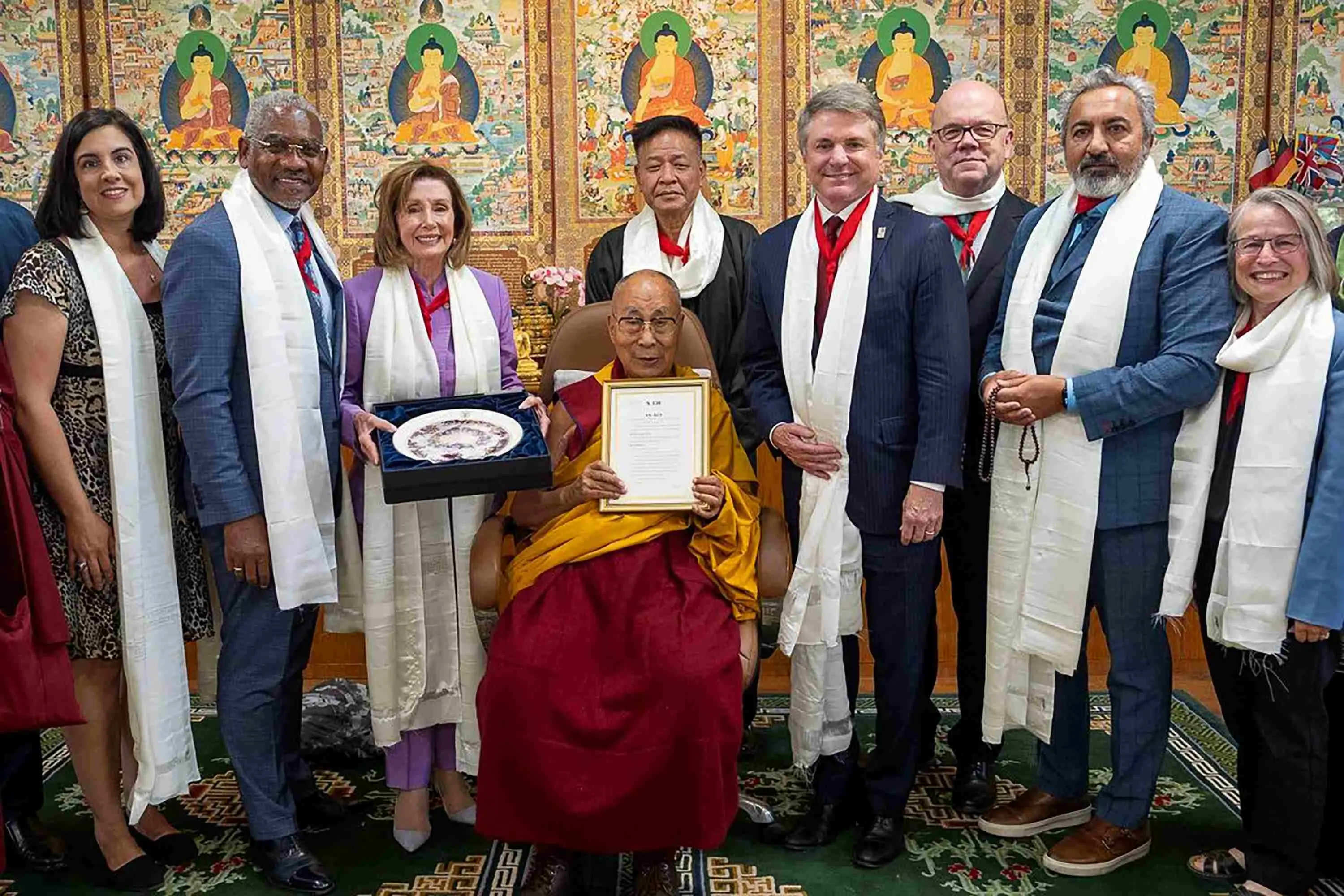
New Delhi: A delegation of senior US lawmakers, including former House speaker Nancy Pelosi, held talks with the Dalai Lama and Tibetan leaders in India on Wednesday, triggering strong reactions from China.
Led by Congressman Michael McCaul and Pelosi, the bipartisan group visited the 88-year-old Buddhist spiritual leader at his residence in Dharamsala, a town in northern India. The lawmakers' visit comes after the US Congress passed a bill urging China to resume talks with Tibetan leaders, stalled since 2010, amid efforts by Washington to ease tensions with Beijing. Pelosi also mentioned that President Joe Biden is expected to sign the bill soon. "This bill is a message to the Chinese government, that we have clarity in our thinking and understanding in the issue of the freedom of Tibet," she said.
China, which asserts Tibet as its integral part, condemned what it termed as "external interference," emphasising that Tibetan affairs are "purely China's domestic affairs.” Before the visit, the Chinese embassy in New Delhi criticised the meeting, describing the Dalai Lama not only as a religious figure but also as a political exile involved in activities against China's interests, veiled under religious pretext.
Many Tibetan exiles are concerned that China might appoint its own Dalai Lama successor to tighten control over the region, which Chinese troops entered in 1950.
The Dalai Lama fled Lhasa, Tibet's capital, at the age of 23 after Chinese forces suppressed an uprising, crossing the Himalayas to seek refuge in India.
"The whole world, we are same human beings, we all have same right -- and this world belongs to humanity," the Dalai Lama told the delegates, dressed in red robes and a yellow wrap. "People of the world should be peaceful, happy," he said.
In 2011, he relinquished his political role to a democratically chosen Tibetan government, led by Penpa Tsering, known as the sikyong, which advocates the "Middle Way" policy seeking autonomy and aims to resolve differences with China through dialogue.
However, China's foreign ministry accused the Tibetan administration of aiming for separation from China.
AFP