Locations deep inside 'occupied territories' could be added to Iran's target list: Report
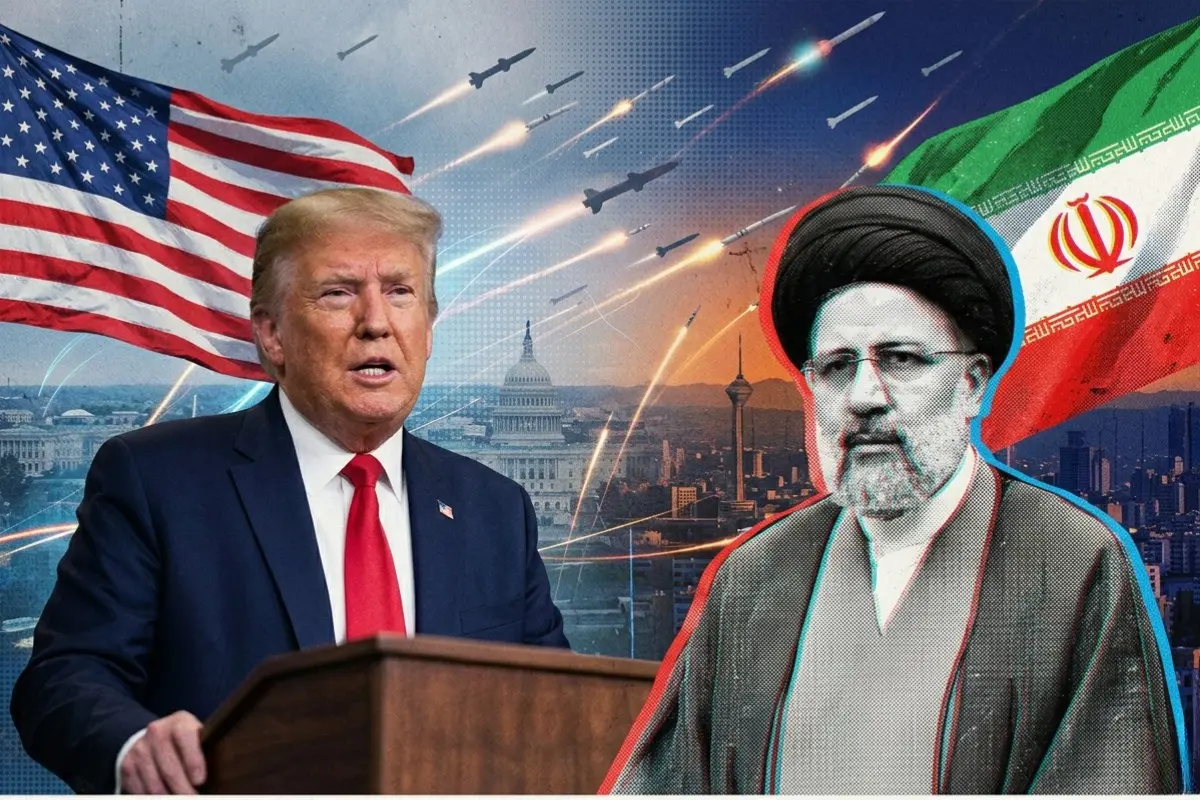
New York: A dramatic escalation in the long-running shadow conflict between the United States and Iran has been reported in the Persian Gulf, following claims that the US Navy targeted an Iranian oil tanker in the Strait of Hormuz and struck a communications tower on Qeshm Island.
According to the account, the Iranian armed forces responded rapidly and on a wider scale than expected. Rather than limiting action to a direct equivalent response, Iran is said to have struck multiple hostile targets across five countries aligned with the United States.
The response has been described as faster, broader and strategically asymmetric, marking a sharp departure from earlier patterns of contained retaliation.
End of “tit-for-tat” conflict model, says analysis
The report argues that the long-standing pattern of limited exchanges between the two sides, where each action was met with a closely matched response, has now effectively ended.
Instead, Iran is said to have adopted a new doctrine of “qualitative asymmetry”, where the scale and location of retaliation are no longer directly tied to the original incident.
This shift is presented as a major strategic change, removing predictability from escalation calculations and increasing uncertainty for US planners.
Wider regional targeting and expanded operational scope
The Iranian response is described as having expanded beyond maritime retaliation to include land-based facilities across five allied countries.
The message, according to the analysis, is that potential targets are no longer restricted to the point of origin of an attack. Instead, any location linked to perceived aggression could be considered valid.
The report further claims that future escalation could even extend to areas in and around Israel if hostilities continue.
Axis of Resistance coordination across multiple fronts
The narrative also highlights coordinated messaging from what is described as the “Axis of Resistance”, including Iran, Hezbollah in Lebanon, and Yemen’s Houthi movement.
It claims that this alignment is increasingly acting in a unified operational manner, rather than through separate regional conflicts.
Warnings were reportedly issued by Iran’s military command following threats against Beirut and its suburbs. These were later framed as part of a broader coordinated posture involving regional allies.
The report also states that Yemeni forces have suggested potential action involving the Bab al-Mandab Strait, one of the world’s most critical shipping routes, including missile and drone operations if the conflict expands further.
Economic warfare linked to military response doctrine
A key element of the reported Iranian strategy is the merging of economic and military retaliation into a single framework.
Under this approach, described as “economy for economy and security for security”, economic pressure on Iran is said to potentially trigger economic consequences for countries aligned with the United States in the region.
This includes possible risks to ports, shipping routes, energy infrastructure and financial systems across Gulf states hosting US forces.
The report warns that military agreements with regional governments are now viewed through the lens of neutrality, with bases considered potential targets if used in operations against Iran.
Pressure on US allies and regional security implications
The analysis suggests Gulf states face increasing pressure to choose between neutrality and alignment with US policy, with claims that passive cooperation with sanctions could carry security risks.
It also argues that the presence of US troops in the region is now directly linked to broader regional vulnerability, according to Iran’s stated posture.
Claims of paralysis in US decision-making
The report further alleges that recent developments have created hesitation within US and allied leadership circles.
It claims that warnings linked to Iranian and allied responses have contributed to delays or reconsideration of planned military actions in the region, including reported discussions involving Israel and potential strikes on Beirut.
Former US President Donald Trump and Israeli Prime Minister Benjamin Netanyahu are referenced in the analysis as part of these reported discussions, with claims that proposed actions were reconsidered due to escalation risks.
Strategic balance shifts in the Middle East
Overall, the report describes a shift in regional balance, arguing that coordinated positioning by Iran and its allies has increased deterrence pressure on the United States and its partners.
It concludes that the combined posture of Iran, Hezbollah and allied regional forces has changed the perceived rules of engagement, replacing earlier segmented conflicts with a more interconnected and geographically expanded security environment.
The result, according to the analysis, is a more complex and volatile escalation landscape across the Middle East, with multiple theatres now linked into a single strategic framework.