Markets plunge globally as China retaliates against US tariffs, triggering fears of global recession
New York: A worldwide market sell-off escalated on Friday, with Wall Street suffering its worst losses since the COVID crash. The S&P 500 tumbled 6 per cent, the Dow Jones Industrial Average fell 5.5 per cent and the Nasdaq composite dropped 5.8 per cent.
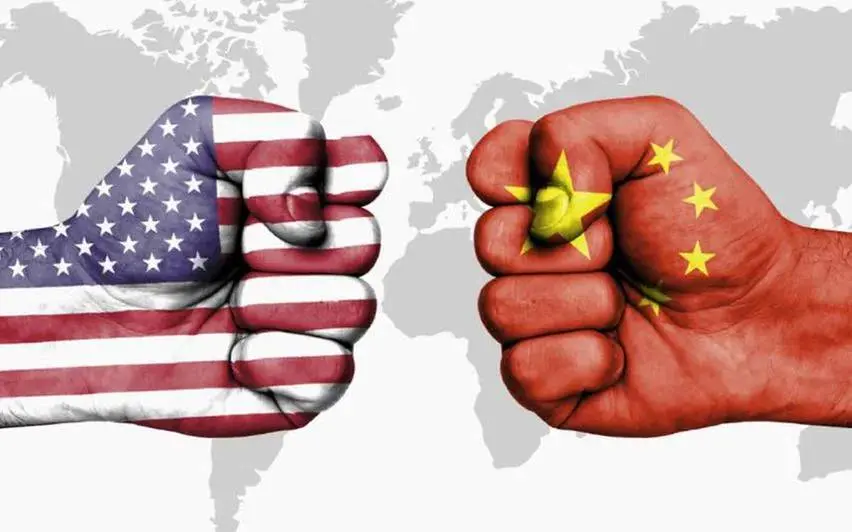
The trigger was China’s decision to match US President Donald Trump’s steep tariff hike, deepening the trade war. A better-than-expected US jobs report did little to stem the sell-off. Crude oil prices fell to their lowest levels since 2001, and European markets also recorded sharp losses of around 5 per cent. Copper prices, considered a barometer of global economic health, declined on fears of weakening growth.
China retaliates with tariffs on all US imports
Beijing’s Commerce Ministry announced a 34 per cent tariff on all US imports, effective from April 10, in response to the US imposing the same tariff rate on Chinese goods. The announcement caused a fresh wave of losses across global markets. China and the United States are the world’s two largest economies.
US jobs data offers brief respite
Markets briefly pared their losses after a strong US jobs report suggested resilient hiring. However, economists noted that the report reflects past performance and does not address looming concerns about the potential global fallout of the escalating trade conflict.
“The world has changed, and the economic conditions have changed,” said Rick Rieder, chief investment officer of global fixed income at BlackRock.
Fears of recession mount
The S&P 500 is now down roughly 17 per cent from its February peak, with investors fearing that the trade war may trigger a global recession. Despite these concerns, Donald Trump appeared undeterred. From Mar-a-Lago, he headed to a nearby golf course and posted on social media: “THIS IS A GREAT TIME TO GET RICH.”
Interest rate dilemma for the Fed
The US Federal Reserve is under pressure to cushion the economic impact of tariffs by cutting interest rates. However, Fed Chair Jerome Powell warned that tariffs could elevate inflation expectations, potentially worsening the economic outlook.
“Our obligation is to keep longer-term inflation expectations well anchored and to make certain that a one-time increase in the price level does not become an ongoing inflation problem,” Powell said, suggesting the Fed may be reluctant to cut rates too quickly.
Global response and market impact
The extent of future economic damage may depend on the duration of Trump's tariffs and retaliatory responses from other nations. Some investors remain hopeful that the tariffs may be rolled back if the US secures favourable outcomes through negotiations.
Trump acknowledged the pain caused by tariffs but likened it to a necessary operation. “For investors looking at their portfolios, it could have felt like an operation performed without anesthesia,” said Brian Jacobsen, chief economist at Annex Wealth Management.
He added that a speedy resolution could surprise markets: “The speed of recovery will depend on how, and how quickly, officials negotiate.”
Trump targets China, touts Vietnam
Trump claimed that a Vietnamese official had expressed willingness to eliminate tariffs entirely if a deal with the US could be reached. On his Truth Social platform, he criticised Beijing’s response, stating: “CHINA PLAYED IT WRONG, THEY PANICKED - THE ONE THING THEY CANNOT AFFORD TO DO!”
US companies with China exposure hit hardest
US firms with significant exposure to China suffered steep declines. DuPont shares plunged 12 per cent after China announced an anti-trust investigation into its local subsidiary. GE Healthcare, which earns 12 per cent of its revenue from China, dropped 14 per cent.
Global and bond markets also feel the heat
European stock indices mirrored the rout: Germany’s DAX fell 5 per cent, France’s CAC 40 dropped 4.3 per cent and Japan’s Nikkei 225 lost 2.8 per cent. In the bond market, Treasury yields declined, with the 10-year Treasury yield falling to 4.00 per cent from 4.06 per cent, having dipped below 3.90 per cent earlier in the day.
With AP inputs