Clash of Titans: US and China face off in trade, tech and power struggle
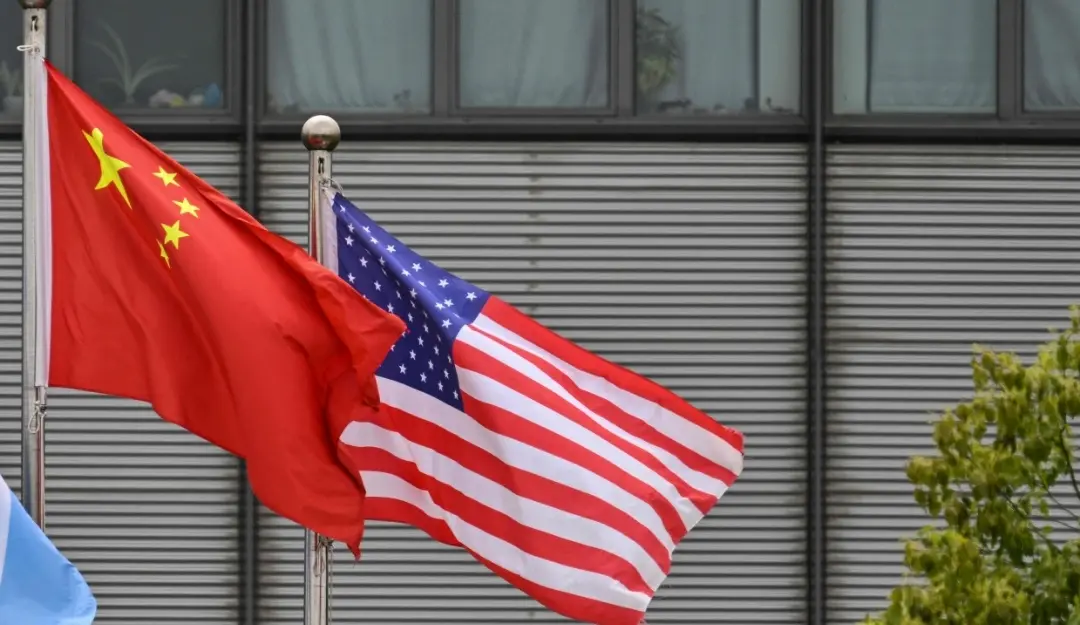
Paris: The ongoing trade war between the United States and China has reignited global attention on the geopolitical, economic, and technological rivalry between the two superpowers.
Both nations are vast in size – each exceeding 9 million square kilometres – and dominate the global economic and political stage. China, with 1.4 billion people, has four times the population of the United States.
According to the International Monetary Fund, the US was the world's largest economy in 2024 with a GDP exceeding $29 trillion, while China followed at over $18 trillion. However, China led global exports with $3.6 trillion, while the US was the largest importer at $3.4 trillion, per World Trade Organization figures. The US posted a $355 billion goods trade deficit with China, based on United Nations data.
President Donald Trump, since returning to office, has imposed 145% tariffs on numerous Chinese imports. China responded with retaliatory tariffs of 125% on US goods, heightening economic tensions.
Climate policy divergence
The two nations are also at odds on climate change. The US is the second-largest emitter of greenhouse gases after China. Despite previously pledging to halve emissions by 2030, Trump has once again withdrawn the US from the Paris climate agreement. China has committed to peak CO2 emissions by 2030 and reach carbon neutrality by 2060.
Tech titans and AI rivalry
The US tech landscape is defined by "GAFAM" – Google, Apple, Meta (Facebook), Amazon and Microsoft – while China’s "BATX" includes Baidu, Alibaba, Tencent and Xiaomi.
AI is a new battleground. Since OpenAI’s ChatGPT launch in 2022, AI innovation has surged in both nations. China’s DeepSeek, established in 2023, made waves with its R1 chatbot, which rivals Western counterparts in performance and cost.
TikTok controversy
TikTok, with over 170 million users in the US, has become a flashpoint. A US law passed in 2024 demands TikTok sever ties with Chinese parent ByteDance or face a ban. Though enforcement began in January, Trump postponed the deadline to 19 June to allow time for a sale. The move stems from US national security concerns over Chinese government influence.
Military and space power
The US outspends all nations on defence, allocating $916 billion in 2023 – three times China’s $296 billion. In nuclear capability, the US and Russia hold the bulk of global warheads, with over 5,000 each. China, by contrast, has significantly fewer.
In space, China has rapidly advanced since sending its first astronaut in 2003. Its 2019 Moon landing and 2021 Mars rover mission showcase its ambitions. China aims for a manned lunar mission by 2030 and plans to build a Moon base.
Meanwhile, NASA’s Artemis programme targets a Moon return in 2027, with private sector collaborations to lower costs and expand future missions to Mars.
The widening chasm between the two nations underscores a defining global rivalry, shaping diplomacy, economics and innovation in the 21st century.
(With AFP inputs