US-Canada trade war: Ottawa hits back with tariffs after talks fail; here’s how relations soured
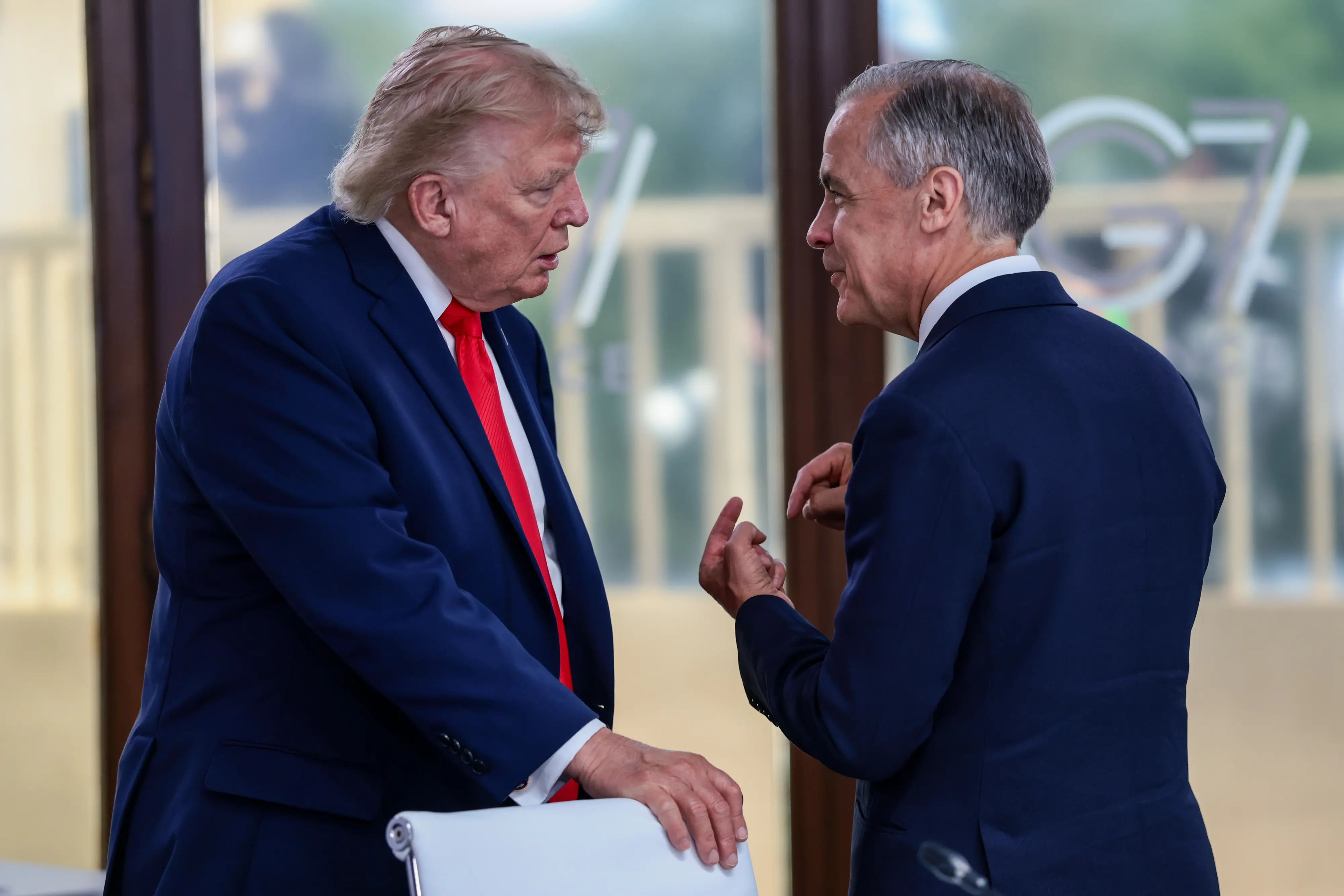
The long-standing economic partnership between the United States and Canada fractured dramatically in Washington on Friday. For decades, these two giant neighbours shared a peaceful, undefended border. Now, they are locked in a fierce, escalating trade war that threatens to raise prices for everyday consumers in both countries.
Following the collapse of high-stakes trade negotiations late on Friday, the United States imposed massive 50-percent tariffs on $20 billion (£15.3 billion) worth of Canadian goods, representing roughly 5.5 percent of Canada's annual exports to its southern neighbour. Canada has vowed to hit back, setting 8 September as the launch date for its own retaliatory duties.
The Breakdown in Washington
For days, Canadian negotiators had been camped out in Washington, hoping to secure relief from US President Donald Trump’s punishing tariffs on steel, aluminium, and cars. Just days earlier, there was hope of a compromise. President Trump had extended an initial Wednesday deadline by three days, stating that Washington "should be able to have a deal with Canada," and pointing to his "good relationship" with Canadian Prime Minister Mark Carney.
But by Friday night, those hopes lay in ruins. US Trade Representative Jamieson Greer stated that Washington had offered "significant tariff reductions on steel, aluminum, autos and lumber" in exchange for concessions from Canada. Yet Prime Minister Carney walked away, rejecting the terms as a "bad deal".
Carney explained that the two nations had seemed close to an agreement earlier in the week. "We believed earlier this week that we were moving towards a mutually beneficial agreement," Carney said in Ottawa on Saturday. "In recent days, the United States proposed new terms that were uneconomic, unfair, and undermined the net benefits for Canada, and called into question the reliability of any deal. In short, they asked too much and they offered too little," he added.
Demands That Canada Rejected
The Prime Minister made it clear that Canada would not be bullied into accepting unfavourable terms. "We cannot accept what they've offered, and we will not give what they've asked," Carney declared.
According to Carney, the United States introduced last-minute demands that would have reduced tariff relief for Canadian-made cars, restricted Canada's freedom to sign trade agreements with other nations, and weakened crucial protections for Canadian language, culture, and sovereignty. He flatly called these terms "unacceptable."
In response, Greer argued that the US administration felt forced to act. “We’ve said enough, and so we’ve taken countermeasures. Our interest is in protecting American workers and protecting American supply chains,” the Trade Representative told "Fox & Friends Weekend". Greer explained that the US had offered to cut tariffs on steel, cars, and lumber—"things that are sensitive for them. And they’ve always had the best deal, and they still would have an even better deal, but they didn’t want that." Consequently, Greer concluded, “We’re moving forward with measures that respond to Canadian retaliation.”
The Language of Warfare
With negotiations dead, Prime Minister Carney adopted a remarkably combative tone, accusing Trump of launching a trade "war." Explaining his stance, Carney said: "You're at war when you get attacked. We got attacked". He reiterated this on Saturday: “You’re at war when you get attacked,” and claimed his country has the financial reserves, resilience, and a solid plan to respond.
Carney accused Washington of using “economic integration as a weapon” and said “its signature was written in pencil.” He said Canada had been willing to scrap its remaining retaliatory tariffs on steel, aluminium, and cars if the US significantly lowered its own, whilst also encouraging Canadian provinces to restore US alcohol sales. However, the American demands went too far. “They asked too much and offered too little,” Carney said.
Canada's populous Ontario province backed the Prime Minister's tough stance. Ontario Premier Doug Ford praised Carney for walking away, noting that the deal would have damaged Ontario's car manufacturing, steel, and manufacturing sectors. Ford urged the nation to use “every tool in our toolbox” to fight the US tariffs.
A Radical Departure Under Trump
This trade war marks a dramatic shift in how the US treats its closest ally. The US and Canada share a 5,525-mile border crossed daily by 330,000 people and $2 billion (£1.5 billion) in goods. Last year, the two allies sold each other a staggering $880 billion in goods and services. Yet bilateral ties have been repeatedly damaged by Trump’s threats to turn Canada into America’s 51st state.
Trump's focus on tariffs is a key part of his economic strategy. To bypass legal challenges, Trump invoked Section 338 of the Tariff Act of 1930—a law dating back to the Great Depression. This law, linked to the notorious Smoot-Hawley tariffs that worsened the global depression nearly a century ago, allows the US president to slap tariffs of up to 50 percent on countries believed to be discriminating against US businesses, without needing an investigation. The White House had previously accused Canada of "discriminatory treatment" against US alcohol, car, and dairy products.
Carney declared that relations with the US have changed forever. He had already irked Trump in January by speaking at the World Economic Forum in Davos about a global "rupture." On Saturday, Carney said: "We've been under no illusions. We recognized from the start that America has changed". He added that the two nations will “not return to our old relationship.”
Impact on the Common Man
Ordinary citizens in both countries are set to feel the pain of this dispute. The 50-percent US tariffs will affect everyday items ranging from hockey sticks and tongue depressors to cement. Meanwhile, Canada’s retaliatory tariffs, starting 8 September, will target US steel, dairy, home appliances, agricultural equipment, pulp and paper, and electronics.
The Canadian public is increasingly hostile. A petition to expel US Ambassador Pete Hoekstra has gained nearly 248,000 signatures since 21 July, accusing him of having “normalized’’ Trump's talk of annexing Canada.
Both countries have strong reasons to avoid a prolonged fight. Nearly 72 percent of Canadian goods exports go to the US, making Canada highly vulnerable. At the same time, Trump’s administration faces pressure ahead of November’s midterm elections, as US importers will likely pass tariff costs onto American consumers already struggling with high living costs.
Ryan Majerus, a trade lawyer and former US commerce official, warned that "both sides will face significant pressure in the coming days to find an off-ramp." Majerus observed: "Canada likely wanted further sector-specific relief than the U.S. was willing to offer, or Canada’s concessions did not go far enough," adding, "Either way, I think both sides will be under immense pressure in the coming days to still find an off-ramp. But if Canada has agreed to also impose tariffs, the off-ramp may be even harder to find.”
Candace Laing, President of the Canadian Chamber of Commerce, called the tariffs “a body blow to North American competitiveness” and warned they would damage small businesses and customers across the continent. With no further talks scheduled, the future of the vital USMCA trade agreement remains highly uncertain.