UN Security Council to hold closed-door talks on India-Pakistan situation today
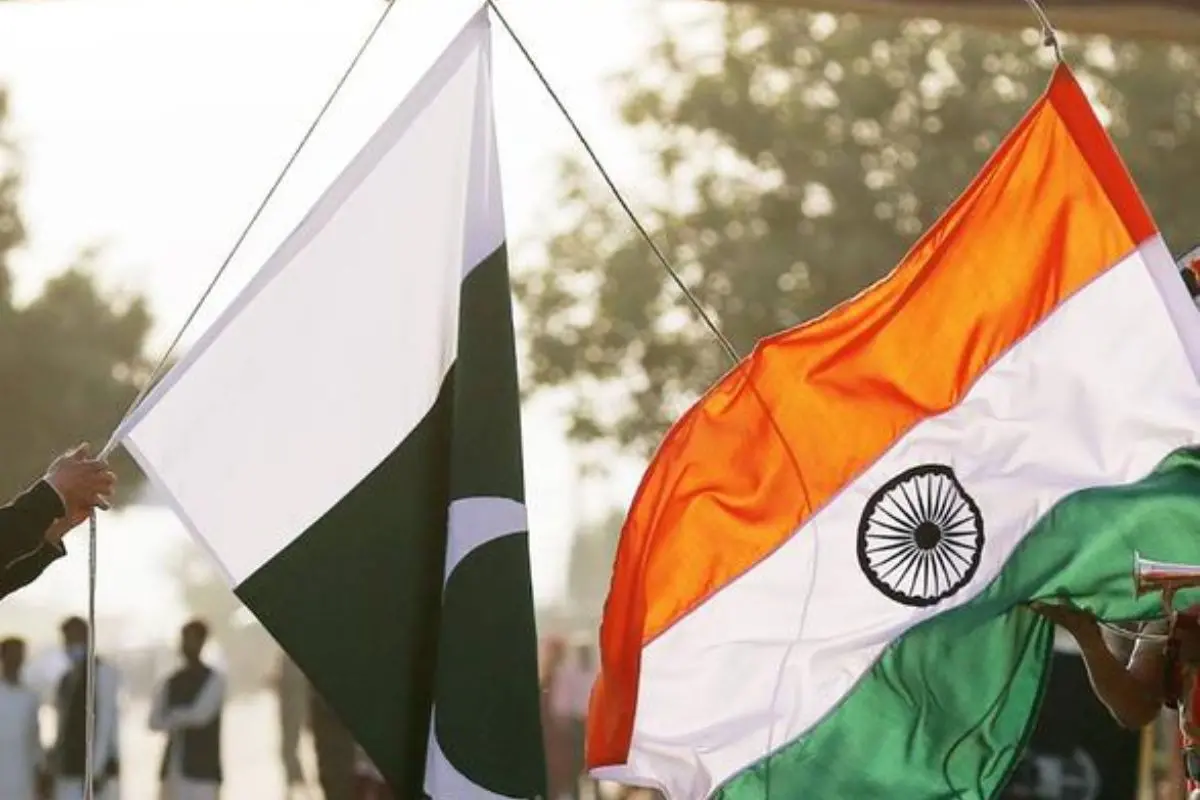
United Nations: The United Nations Security Council is set to hold closed consultations on Monday to discuss the escalating situation between India and Pakistan, following a request from Islamabad for an emergency session.
Pakistan, which currently holds a non-permanent seat on the 15-member Council, sought the meeting in the wake of growing tensions between the two nuclear-armed neighbours. Greece, which holds the presidency of the Security Council for May, has scheduled the meeting for the afternoon of May 5.
The Security Council comprises five permanent members with veto powers — China, France, Russia, the United Kingdom and the United States — and 10 non-permanent members- Pakistan, Greece, Denmark, Algeria, Guyana, Panama, South Korea, Sierra Leone, Slovenia and Somalia.
Tensions have surged following the April 22 terror attack in Pahalgam, Jammu and Kashmir, which claimed 26 civilian lives. In response to Pakistan’s request, the Greek Presidency indicated its openness to facilitating dialogue.
“If a request comes for a meeting to discuss the situation between India and Pakistan, then… I think this meeting should take place because, as we said, maybe it's also an opportunity to have views expressed and this might help to diffuse a bit of tension,” said Ambassador Evangelos Sekeris, Greece’s Permanent Representative to the UN and the current Council President.
He added, “We are in close contact... but this is something which might happen, I would say, sooner rather than later. We will see, we are preparing.”
When asked about India being a victim of cross-border terrorism from Pakistan — which now sits on the Council — Sekeris acknowledged, “It's an issue which is very pertinent.”
“As I said before, as a position of principle, we strongly condemn any act of terrorism and this is what we did” in response to the “heinous terrorist attack” in Pahalgam, he stated. “We express our condolences to the government of India, Nepal and the families of victims. This is a position of principle. We condemn terrorism in all its forms, everywhere it is happening,” he said, also noting the broader concern: “We are concerned about this tension which is mounting in the region. Two very big countries. Of course, India is far bigger.”
In the days after the Pahalgam attack, India’s External Affairs Minister S Jaishankar engaged in diplomatic outreach, speaking to representatives of nearly all Security Council members except China and Pakistan. During these discussions, Jaishankar emphasised that “its perpetrators, backers and planners must be brought to justice”.
He described his talks with Greek Foreign Minister George Gerapetritis as a “good conversation” and said they “discussed the Pahalgam terrorist attack”. Jaishankar also welcomed Greece’s strong stance against cross-border terrorism, saying, “Our Strategic Partnership reflects the depth of our ties.”
In addition, Jaishankar spoke with UN Secretary-General António Guterres and top diplomats from Russia, the US, the UK, France, South Korea, Denmark, Sierra Leone, Algeria, Guyana, Slovenia, Somalia and Panama.
Meanwhile, Pakistan’s Permanent Representative to the UN, Ambassador Asim Iftikhar Ahmad, asserted Islamabad’s right to call for a meeting on the matter.
“We see that all of this that is happening is in the context, in the backdrop of the situation in Jammu and Kashmir,” Ahmad said at a UN press briefing last Friday.
“Here it is evident that there was an incident but now what has evolved in terms of the situation which is a real threat to regional and international peace and security, and we believe that the Security Council, in fact, has the mandate, and it would be very legitimate for any member of the Council, including Pakistan, to request a meeting,” he added.
He noted that Pakistan had held discussions with both the current and previous presidencies of the Council and was closely monitoring developments. “We have the right to convene a meeting when we feel appropriate,” Ahmad emphasised.
Last week, Ahmad also met with UN Secretary-General Guterres to brief him on what he described as the deteriorating security environment in the region.