Why UAE pulled $3.5bn from Pakistan and how Saudi Arabia stepped in
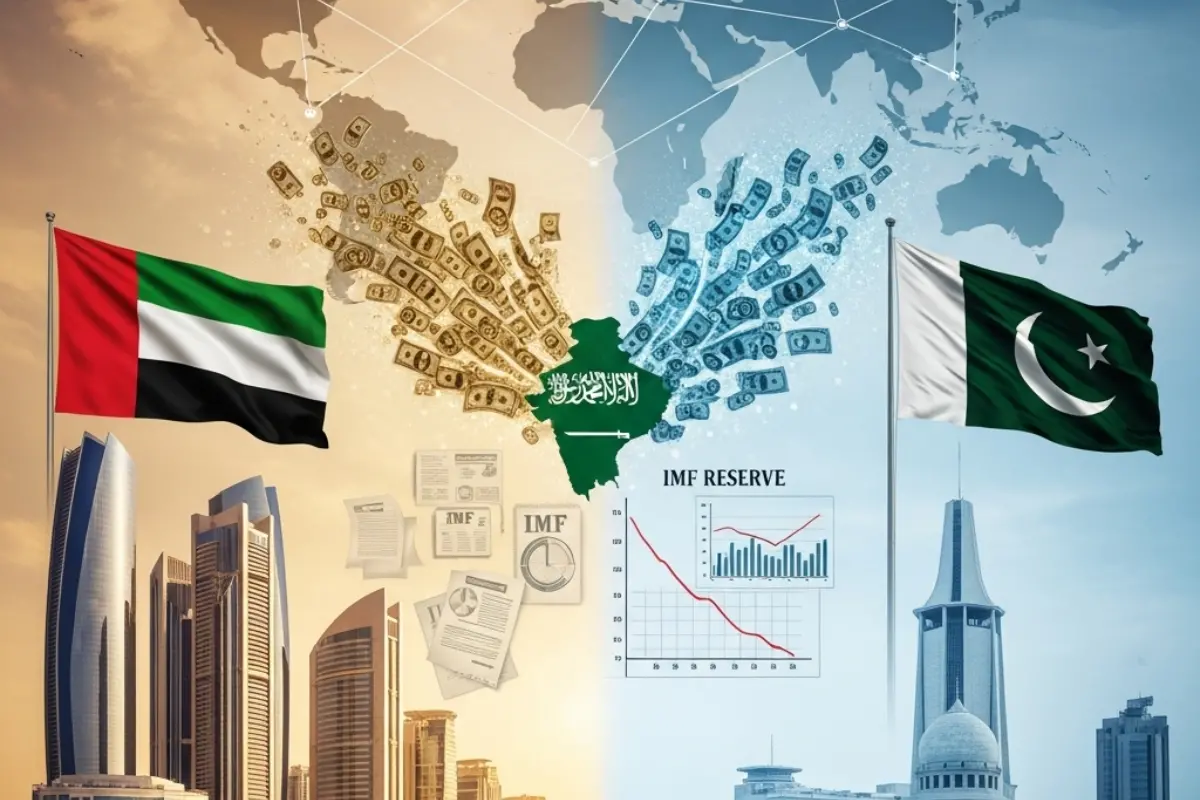
The United Arab Emirates (UAE) has reportedly demanded the return of around $3.5 billion from Pakistan, a move seen as reflecting growing diplomatic unease over Islamabad’s neutral position in the US–Israel–Iran conflict, according to reports cited by the Financial Times.
The decision has raised concerns over Pakistan’s external financing position, as the funds were part of support arrangements helping stabilise its foreign exchange reserves.
Pressure on Pakistan’s reserves and IMF programme
The reported recall of funds is said to have threatened a significant portion of Pakistan’s central bank reserves and created uncertainty around its $7 billion International Monetary Fund (IMF) bailout programme agreed in 2024.
Pakistan’s foreign exchange position remains under strain, and any withdrawal of external financing adds pressure on ongoing stabilisation efforts linked to IMF conditions.
Saudi Arabia steps in to stabilise economy
Following the UAE’s reported move, Saudi Arabia intervened with financial assistance to support Pakistan’s liquidity position.
Riyadh reportedly provided a $3 billion deposit to strengthen central bank reserves and extended an existing $5 billion loan package, helping ease immediate pressure on Islamabad’s external financing gap.
This intervention highlights Pakistan’s continued reliance on Gulf financial support to manage balance-of-payments challenges.
Analysts cited in reports suggest the UAE’s dissatisfaction stems partly from Pakistan’s perceived neutral or mediating stance in the wider Iran-related regional conflict involving the US and Israel.
The UAE is believed to favour a more defined position against Tehran, while Pakistan has attempted to position itself as a mediator, creating differences in diplomatic expectations.
Experts note that Abu Dhabi views neutrality as insufficient in the current geopolitical environment.
Gulf rivalry influencing Pakistan ties
The situation also reflects broader tensions between Gulf powers, particularly the UAE and Saudi Arabia, which have diverging strategic alignments in the region.
While Saudi Arabia has deepened financial and defence cooperation with Pakistan, the UAE has increasingly expanded its economic engagement with India, reshaping regional partnerships.
This evolving alignment has placed Pakistan in a more complex diplomatic balancing act between key Gulf partners.
The reported withdrawal underscores Pakistan’s vulnerability to external financing shifts, especially from Gulf partners that play a crucial role in supporting its reserves.
Although both Pakistan and UAE officials have described recent transactions as routine financial adjustments, the timing has raised questions in financial and diplomatic circles.
The development highlights how geopolitical tensions in West Asia are increasingly intersecting with economic dependencies in South Asia, affecting financial stability and strategic alignments.