A new defence axis? Turkey signs Badr MoU with Pakistan, Qatar and Indonesia
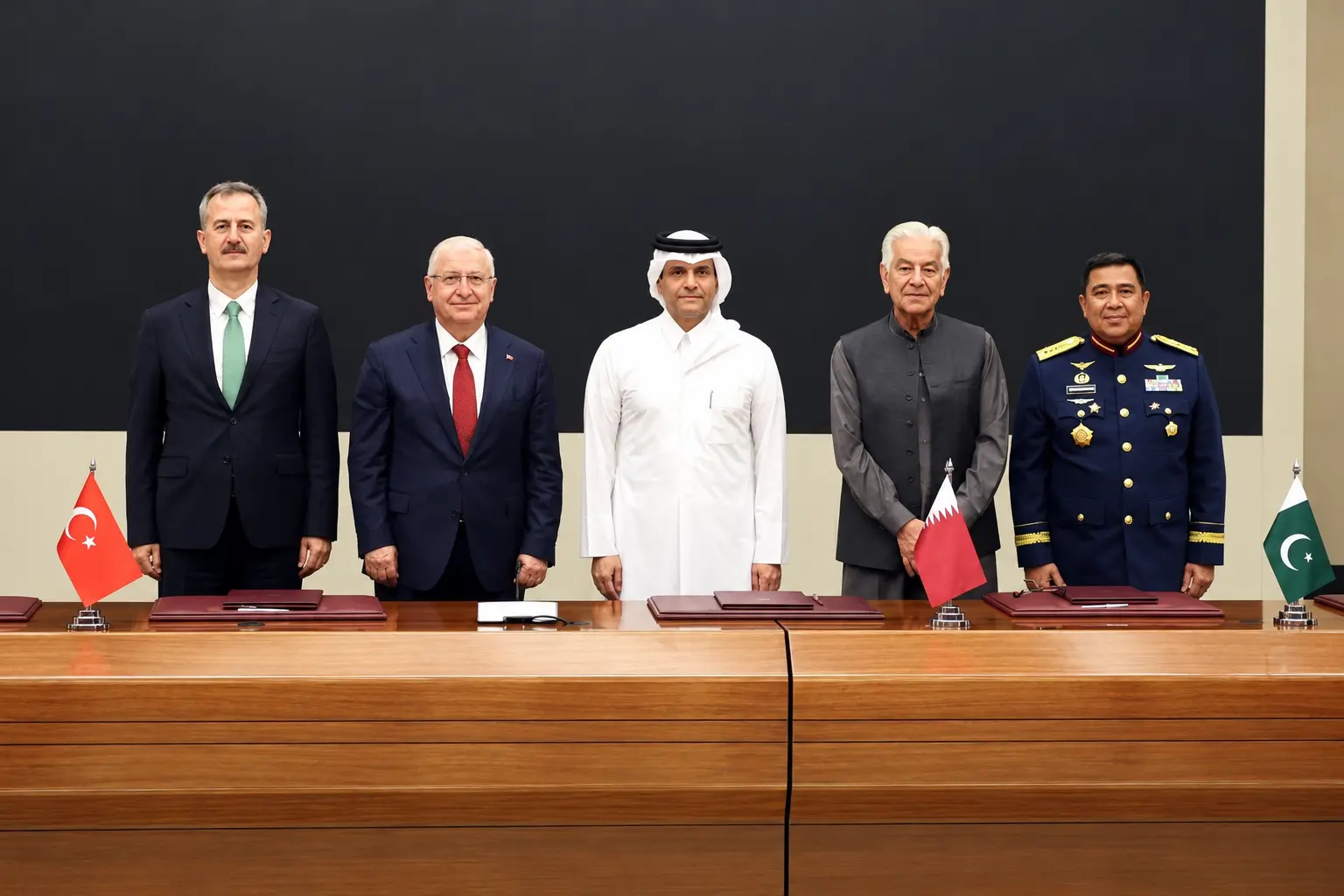
Turkey, Pakistan, Qatar and Indonesia have moved to deepen their defence partnership, signing a new agreement aimed at expanding military cooperation, strengthening domestic production capabilities and developing joint defence technologies.
The four countries signed the Badr Memorandum of Understanding in Doha on Wednesday, October 21, according to Turkey’s Defence Ministry.
The agreement signals a push towards closer industrial and technological collaboration, with an emphasis on military production, research and development, and technical training.
In a statement, the ministry described the accord as an initiative to strengthen ties between the participating countries and build partnerships that could improve their collective defence capabilities.
It also highlighted the agreement’s economic significance, pointing to opportunities for cooperation in military manufacturing and developing capabilities that could serve allied and friendly nations.
The initiative will draw on the individual strengths of the four countries’ defence industries to expand production capacity, improve integration and address shared military requirements, the ministry said.
Turkey seeks deeper defence industry partnerships
The agreement comes as Turkey expands its defence engagement with countries across the Middle East and Asia. Ankara, which has NATO’s second-largest army and an established defence industry, has been assisting Gulf nations in strengthening their security capabilities. Turkey also maintains a military base in Qatar.
The latest agreement follows another significant defence development in August, when Turkey signed a mutual defence pact with nuclear-armed Pakistan and Saudi Arabia.
Under that arrangement, an attack on one party would be considered an attack on all, according to the reported terms.
Turkey has also developed close defence industry ties with Indonesia. In July 2025, Indonesia signed a contract with Turkey to purchase 48 KAAN fighter jets, reflecting the growing scope of defence cooperation between the two countries.
Joint production and technology at the centre
Haluk Gorgun, chairman of Turkey’s Defence Industry Presidency, described the Badr memorandum as a foundation for strategic cooperation focused on joint production and technological development.
He emphasised the importance of technology sharing, collaborative development and stronger domestic manufacturing capabilities, arguing that sustainable defence partnerships should extend beyond the purchase of ready-made military equipment.
According to Gorgun, such cooperation can help countries develop their own skilled workforce and industrial infrastructure while building on one another’s strengths.
He added that Turkey expects the agreement to translate the complementary capabilities of Turkey, Qatar, Pakistan and Indonesia into tangible projects.
The Badr accord therefore places defence manufacturing, technology development and industrial collaboration at the heart of the four-nation partnership, with the stated objective of strengthening security ties and advancing shared strategic interests.