Trump-Xi talks cool US-China tensions: What about India now?
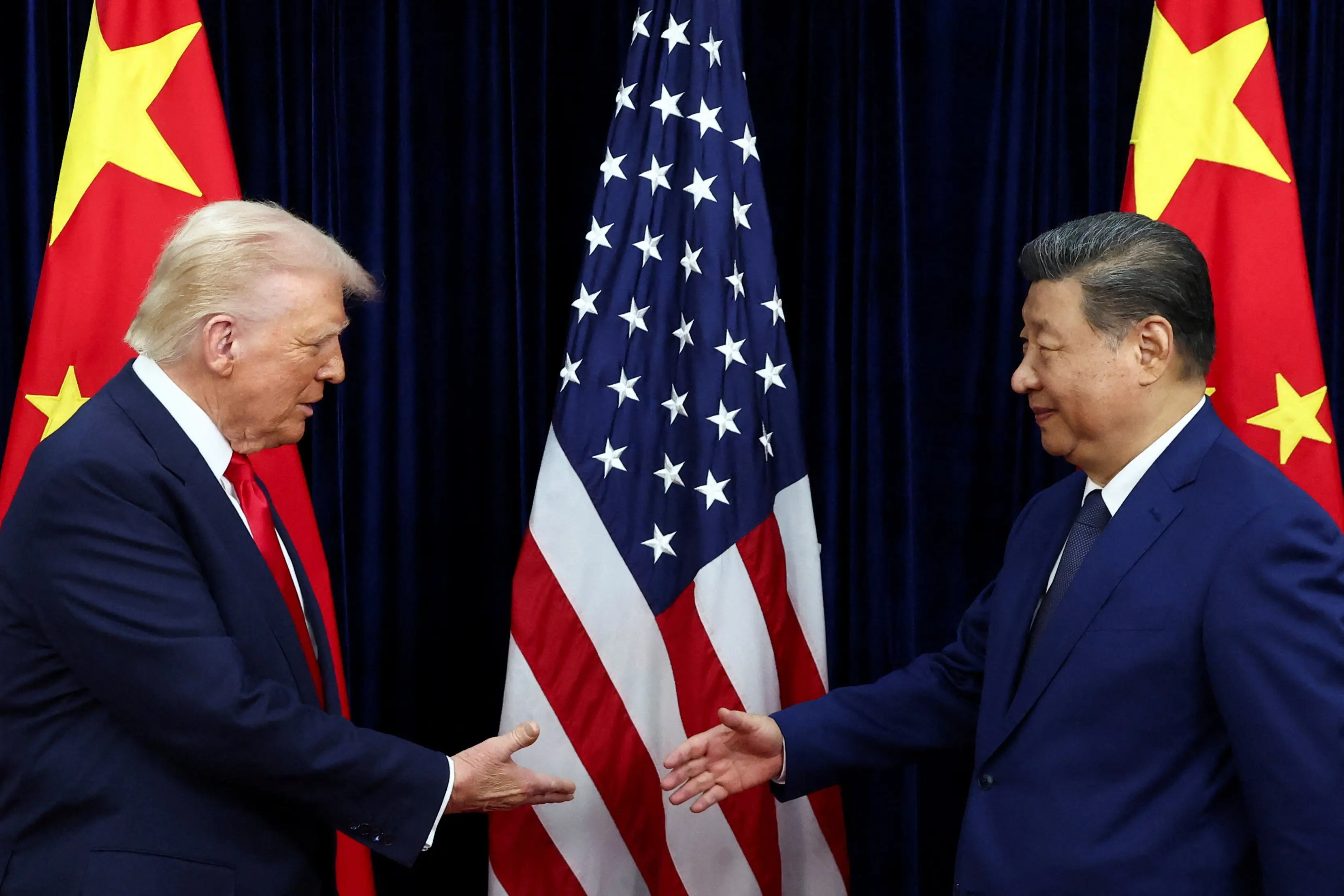
New Delhi: The much-publicised handshake between US President Donald Trump and Chinese President Xi Jinping in Busan has redrawn the contours of Asian geopolitics. Their agreement to ease trade tensions, which had rattled global markets for years, marks a turning point—one that could dilute the strategic rationale for closer India-US ties.
A handshake that reshaped Asian geopolitics
For the last decade, India has benefited from Washington’s need to balance China’s growing assertiveness. The Indo-Pacific strategy, QUAD cooperation, and deepening defence partnerships were all built on this shared concern. But with Trump 2.0 now signalling reconciliation with Beijing, New Delhi may find itself navigating a far less predictable geopolitical landscape.
The APEC summit in South Korea was dominated by Thursday’s Trump-Xi meeting. The two leaders agreed to a “temporary trade truce,” generating cautious optimism around the world. Trump, known for his scepticism of multilateralism, quickly returned to the US after the talks—leaving Xi to take centre stage at the summit.
Xi’s bid for global leadership
At the closing ceremony in Gyeongju, Xi announced that next year’s APEC meeting would be hosted in Shenzhen—a symbolic move projecting China’s ambition to lead the global economic order. Throughout the summit, Xi positioned Beijing as a defender of free trade and multilateralism, contrasting himself with Trump’s protectionist record.
“Investing in China is investing in the future,” he told business leaders at the APEC CEO forum.
During the two-day event, Xi held bilateral meetings with Canadian Prime Minister Mark Carney, Japan’s new premier Sanae Takaichi, and South Korea’s President Lee Jae Myung—each focused on repairing strained relationships and restoring economic stability after years of friction.
South Korea seeks balance amid shifting power
Xi’s meeting with South Korea’s Lee capped a broader regional recalibration. Seoul, long balancing between Washington’s security umbrella and Beijing’s economic weight, sought to reassure China that closer defence cooperation with the US would not undermine bilateral trade.
Beijing, meanwhile, is casting itself as a stabilising influence in East Asia, particularly amid renewed tensions with North Korea. The optics were clear: as Trump flew home, Xi stayed back—cementing his role as Asia’s steady hand.
The India dilemma: balancing autonomy and alignment
This apparent thaw between Washington and Beijing could complicate India’s strategic calculus. Trump’s first term saw an unprecedented strengthening of US-India ties, driven by a shared desire to contain China. But the new Trump administration appears to favour deal-making over strategic balancing, prioritising economic advantage over geopolitical commitments.
If the US is no longer intent on containing China, India could lose one of its strongest external backers in its border disputes and Indo-Pacific strategy. Analysts suggest that New Delhi must now hedge its bets—investing more in self-reliance, diversifying partnerships with Europe, Japan, and Australia, and carefully managing relations with both Washington and Beijing.
A new era of uneasy partnerships
The 2025 APEC summit in Gyeongju brought together 21 Asia-Pacific economies to discuss trade, technology, and global integration. Yet, its most defining image remains that of Trump and Xi—two leaders once at odds, now shaking hands in symbolic détente.
For India, this moment could herald a shift in strategic realities. As one former diplomat observed: “When Washington and Beijing stop competing, Delhi must start hedging.”
Whether this marks the beginning of a lasting peace or a temporary pause, one thing is clear: Trump and Xi’s reconciliation has not only cooled trade tensions but also redrawn the strategic map of Asia—leaving India to chart a careful course in a world where its biggest partners might no longer be on opposite sides.