Is Cuba next? Trump says island nation is ‘going to fail’ after Venezuela raid
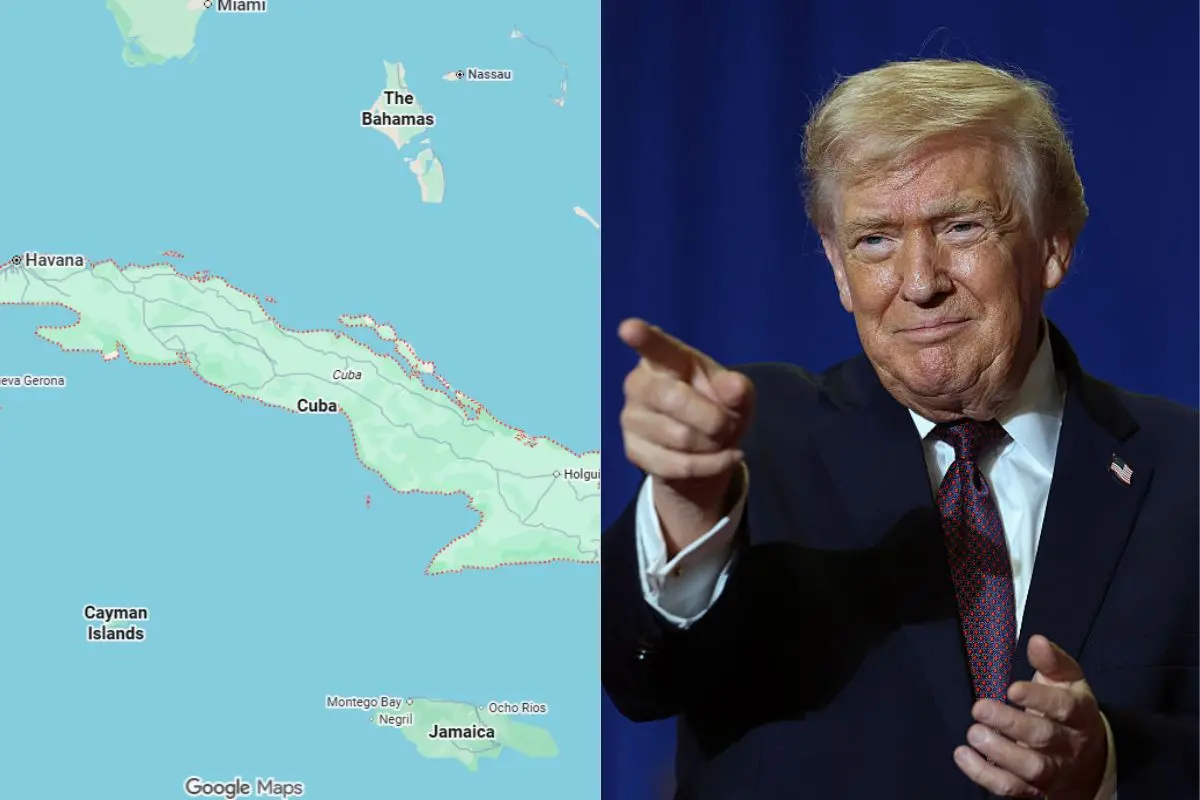
US President Donald Trump has intensified speculation about further American interventions after the dramatic capture of Venezuelan President Nicolás Maduro, openly suggesting that Cuba could be the next government to fall. Speaking as his second-term foreign policy becomes increasingly assertive, Trump declared that Havana is “ready to fall” and insisted Cuba is “going to fail”, comments that have rippled across the region.
Trump has framed his regional posture around what he calls the “Donroe Doctrine” – a reworking of the 1823 Monroe Doctrine – signalling a renewed push for US dominance in the Western Hemisphere. His remarks have raised concerns that Washington may seek to extend its strategy beyond Venezuela to other governments it views as hostile.
Cuba under pressure after Maduro’s capture
Cuba, located only 90 miles (145 km) from Florida, has relied heavily on Venezuela for subsidised oil in exchange for sending thousands of doctors and medical personnel to South America. With Maduro removed in a US-led operation earlier this month, analysts warn that the island’s already strained economy could deteriorate further.
Trump argued that Venezuela’s collapse will leave Havana exposed. In an interview with Fox News he said, “Cuba gives protection to Venezuela, and Venezuela gives Cuba money through oil – and it’s worked that way for a long time – but it doesn’t work that way anymore,” he told reporters, adding: “I think Cuba's going to fail.”
The president went on to claim that Cuba now has “no income”, saying: “I don't think we need any action. It looks like it's going down.”
US Secretary of State Marco Rubio, whose family emigrated from Cuba, did little to ease tensions, warning that officials in Havana should be at least “a little bit” concerned. “When the president speaks, you should take him seriously,” he said.
Trump’s expanding list of foreign targets
Cuba is only one of several nations now in Trump’s crosshairs. The president has issued a series of warnings to governments stretching from Latin America to the Arctic.
Mexico
Trump has revived his long-standing criticism of Mexico over immigration and drug trafficking. Since returning to office last year, he has repeatedly accused Mexican authorities of failing to curb illegal flows across the border. He told reporters that drugs were “pouring” into the United States and again floated the idea of deploying US troops – a proposal firmly rejected by President Claudia Sheinbaum.
On his first day back in office, Trump even signed an order renaming the Gulf of Mexico the “Gulf of America”.
Colombia
Just hours after the raid in Venezuela, Trump escalated a public feud with Colombian President Gustavo Petro, warning him to “watch his ass”. Washington has imposed sanctions on Petro, claiming he has allowed drug cartels to “flourish”.
The president has suggested military action remains on the table, saying a US operation targeting Colombia “sounds good to me”.
Iran
Iran, rocked by ongoing anti-government protests, has also been threatened with retaliation if authorities intensify their crackdown. “If they start killing people like they have in the past, I think they're going to get hit very hard by the United States,” Trump said.
Although outside the geographic scope of the “Donroe Doctrine”, Iran has been a sustained focus for the president. Israeli Prime Minister Benjamin Netanyahu reportedly discussed potential 2026 strikes with Trump during a recent meeting at Mar-a-Lago.
Greenland
Trump has also revived his ambition to bring Greenland under US control, citing national security and competition with Russia and China. The United States already operates Pituffik Space Base on the island, but Trump insists “We need Greenland from the standpoint of national security”.
Greenland’s Prime Minister Jens Frederik Nielsen called the idea a “fantasy”, stressing that any discussions must respect international law.
Venezuela’s oil at the heart of US strategy
The White House has been forthright about its intentions in Venezuela, whose oil reserves are among the largest in the world. Trump has said openly that he expects US control of Venezuelan energy production “for years to come”, a goal he is now taking to major American oil companies in an attempt to win corporate backing.
Energy Secretary Chris Wright stated this week that the United States would oversee Venezuela’s oil sector “indefinitely”. Trump further announced that the interim Venezuelan administration would send up to 50 million barrels of crude to the US, declaring that the proceeds “will be controlled by me”.
Years of sanctions and underinvestment have left Venezuela’s output at barely one percent of global crude production, and US companies remain wary of political instability. Washington is preparing to ship light oil to blend with Venezuela’s heavier crude and plans to authorise equipment and technical support to revive its ageing infrastructure.
(With inputs from agencies)