Strait of Hormuz: Trump says US Navy could escort tankers to stop Iranian threats
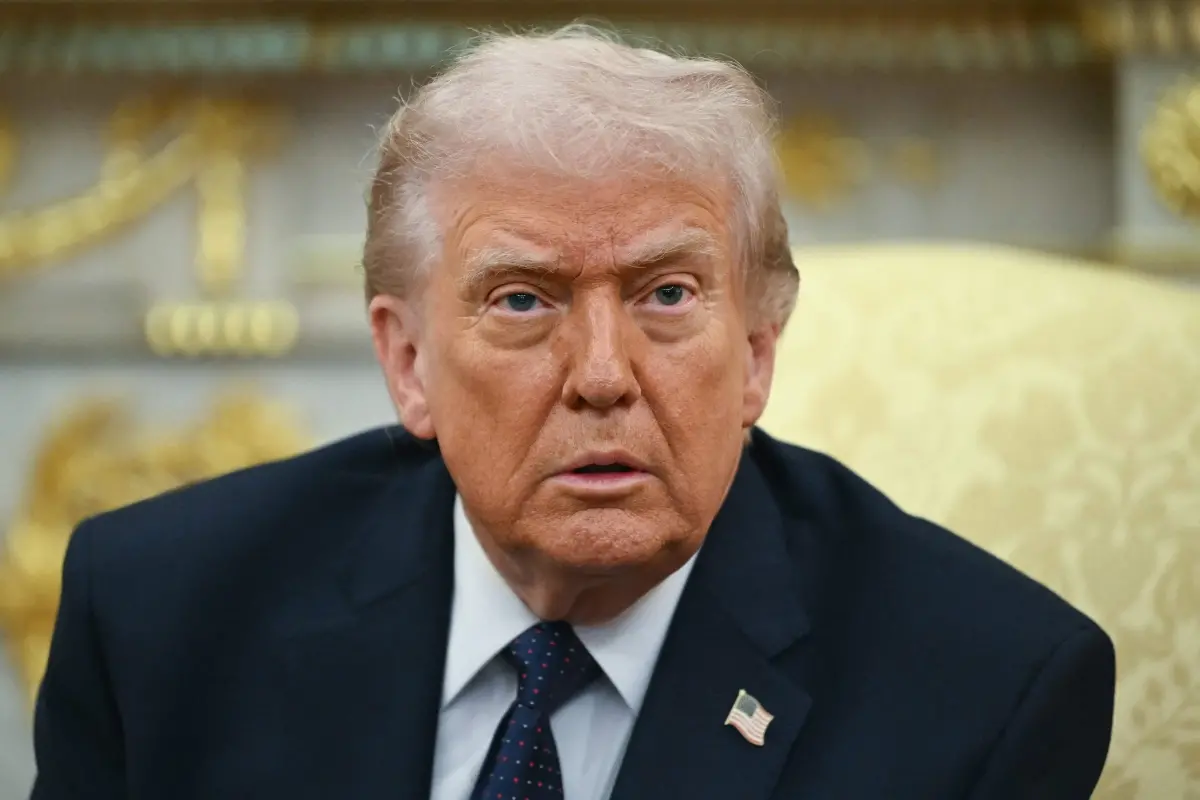
Washington: US President Donald Trump on Tuesday claimed that the U.S. Navy will provide armed escorts for oil tankers in the Persian Gulf and asserted that his decision to launch a preemptive strike on Iran was motivated by intelligence that Tehran was preparing its own offensive.
The president’s shifting justifications for "Operation Epic Fury" came as the joint U.S.-Israeli campaign entered its fourth day, causing severe volatility in global energy markets and forcing commercial shipping to bypass the Strait of Hormuz.
In an effort to stabilise the economy ahead of this year’s midterm elections, Trump announced via Truth Social that the military would secure vital shipping lanes. "If necessary, the United States Navy will begin escorting tankers through the Strait of Hormuz, as soon as possible," Trump stated. He also directed the federal government to provide insurance for commercial vessels, a move that helped Wall Street recover some losses even as crude prices continued to climb.
Contradictory Justifications
During an Oval Office meeting with German Chancellor Friedrich Merz, Trump addressed the lack of a clear endgame and denied that Israel had pressured him into the conflict. His comments appeared to diverge from those of Secretary of State Marco Rubio, who suggested Monday that Washington acted only after learning of an imminent Israeli strike.
"I think they (Iran) were going to attack first. And I didn't want that to happen," Trump said. He further suggested he had taken the lead in the alliance, stating, "So, if anything, I might have forced Israel's hand."
Trump offered a triumphant assessment of the military results thus far, claiming the Iranian military had been effectively neutralised. "Just about everything's been knocked out," he said, asserting that Iran's navy, air force, and radar infrastructure had been destroyed.
The Post-Khamenei Vacuum
The president admitted to a lack of a concrete plan for Iran’s future governance following the Saturday assassination of Supreme Leader Ali Khamenei.
"Most of the people we had in mind are dead," Trump noted, acknowledging the "worst case" scenario where a successor could prove as adversarial as the previous regime. Despite the uncertainty, administration officials emphasised that the strikes were necessary to halt a nuclear program that was "days or weeks away from a weapon."
Trump dismissed the possibility of a diplomatic resolution, declaring it "too late" for negotiations. White House officials confirmed that no back-channel communications have occurred between U.S. representatives and Tehran since the start of the assault.
Strained European Alliances
While Chancellor Merz voiced support for the operation, he expressed hope for a swift conclusion, noting that the conflict is "damaging our economies."
Trump, however, was less diplomatic regarding other European leaders. He launched a verbal broadside at British Prime Minister Keir Starmer, who initially hesitated to grant the U.S. use of British bases for the strikes. "This is not Winston Churchill that we're dealing with," Trump remarked.
The president also issued a trade threat against Spain, labelling the nation "terrible" after its left-wing government refused to allow U.S. forces to operate from Spanish territory.
With inputs from AFP