‘Make-or-break’ moment: Trump, Netanyahu to meet at Mar-a-Lago over stalled Gaza deal
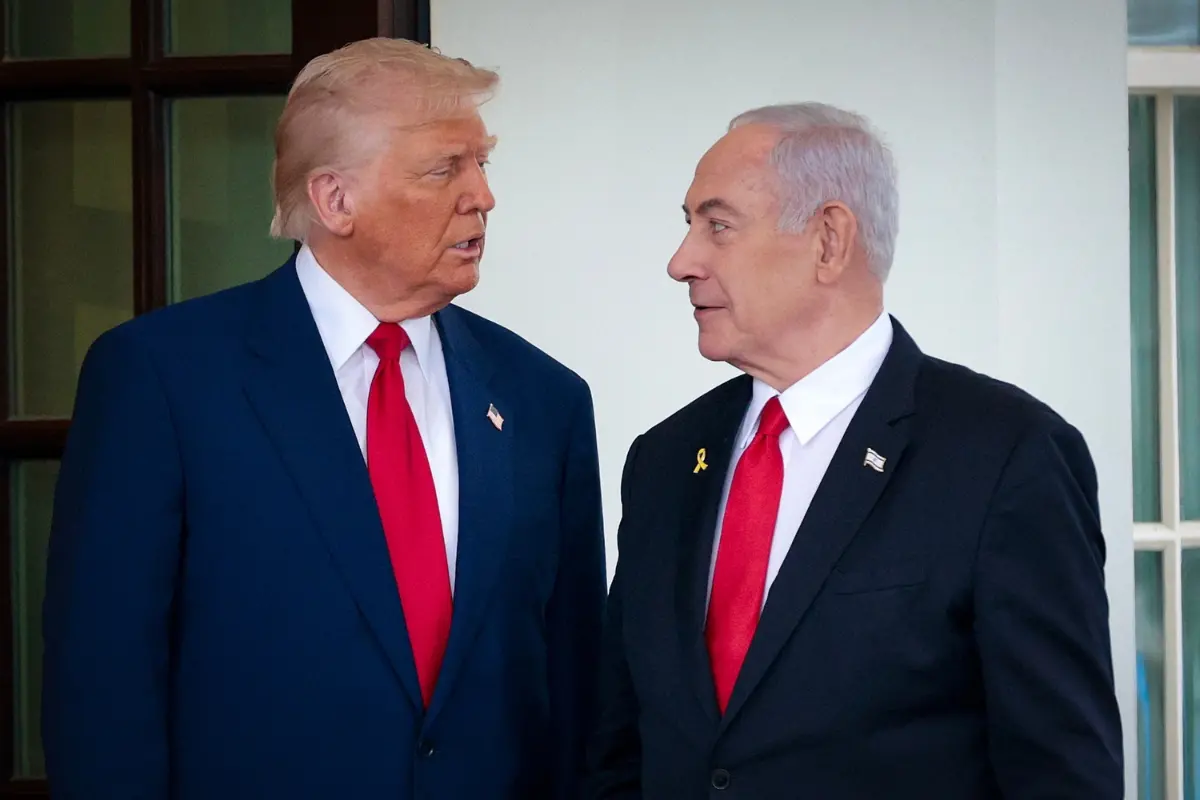
Palm Beach: President Donald Trump is set to host Israeli Prime Minister Benjamin Netanyahu at his Mar-a-Lago estate Monday, a high-stakes meeting aimed at reviving a U.S.-led Gaza ceasefire that officials fear is losing momentum before entering its most difficult phase.
The face-to-face summit offers Trump an opportunity to use his personal rapport with Netanyahu to accelerate the peace process. The meeting comes amid mounting criticism of the Israeli leader for allegedly dragging his feet on a deal that has largely held since October but has recently seen a spike in reported violations.
The first phase of the truce, which began near the two-year anniversary of the Oct. 7, 2023, attacks, saw the recovery of nearly all 251 hostages taken by Hamas. Now, negotiators are grappling with Trump’s U.N.-approved 20-point plan, which seeks to end Hamas’ governance in Gaza, a transition experts describe as a "tall order."
“This is going to be a really tall order, I think, for President Trump to get Netanyahu to agree,” said Mona Yacoubian, a senior adviser at the Centre for Strategic and International Studies. She noted that the world should watch for “what kind of pressure” Trump applies, suggesting the two leaders may hold "a broader clash of approaches to the region."
Beyond Gaza, the leaders are expected to discuss Iran. Trump has maintained that Tehran’s nuclear capabilities were “completely and fully obliterated” following U.S. airstrikes in June.
The Challenges of Phase Two
The second phase of the Trump plan envisions a demilitarised Gaza overseen by a "Board of Peace," chaired by Trump himself under a two-year U.N. mandate. Day-to-day operations would be managed by an apolitical Palestinian technocratic committee.
However, significant hurdles remain:
- Security: The plan calls for an "International Stabilisation Force." A Western diplomat, speaking on condition of anonymity, noted a “huge gulf” between the U.S.-Israel vision of a "commanding" security role and the concerns of regional and European allies who fear it would be viewed as an “occupation force.”
- Disarmament: While Hamas has suggested "freezing or storing" its arsenal, the U.S. has floated "buy-back" programs—offering cash for weapons—to ensure total disarmament.
- Reconstruction: Arab nations, including Egypt and Qatar, are pushing for further Israeli withdrawals before the deployment of international troops. Meanwhile, a U.S. map obtained by The Associated Press suggests plans for "UAE Temporary Emirates housing" within Israeli-controlled zones, though the UAE has not confirmed funding commitments.
Diplomatic Groundwork
The meeting follows intensive discussions involving U.S. Mideast envoy Steve Witkoff and Jared Kushner, who recently met with mediators from Egypt, Qatar, and Turkey. Sources indicate that progress has been hampered by a slow Israeli vetting process for the proposed Palestinian committee members and continued military strikes.
While Netanyahu was the first foreign leader to visit the Trump White House this term, Monday marks their first in-person meeting since the ceasefire’s inception in October. The members of the Board of Peace, originally expected by year’s end, may be announced following the talks, though officials say the reveal could be delayed until next month.
With inputs from AP