Trump says Israel will ‘do what I tell them’ in Iran war, signals control over ceasefire
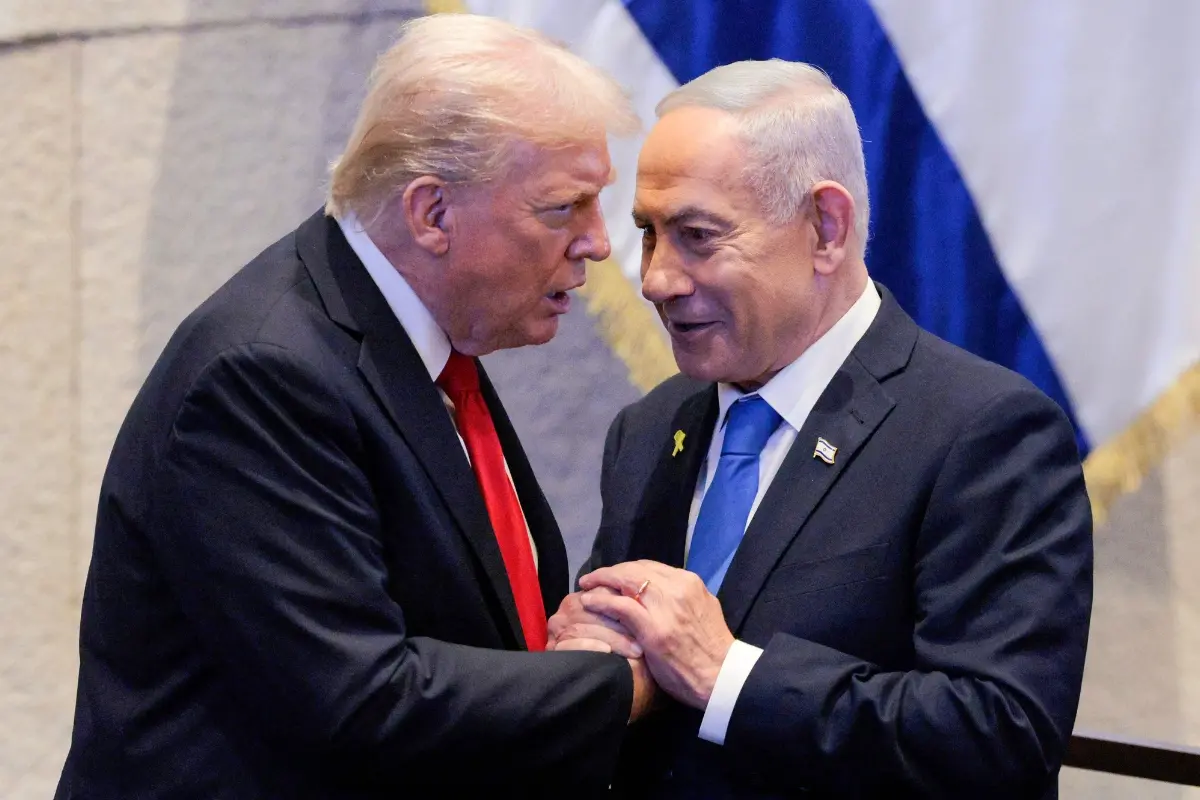
Washington DC: US President Donald Trump has said that Israel will act according to his direction in the ongoing conflict with Iran, stating that it would halt attacks if he decides to end the war.
His remarks underline strong US influence over Israel’s military strategy and come amid rapidly escalating tensions across the Middle East.
The conflict has intensified sharply, with Iran launching multiple waves of missile attacks targeting central Israel within a short span of time. Israeli air defence systems were activated repeatedly and intercepted several missiles, though some impacts were reported, causing minor damage and light injuries. Iranian officials have described these strikes as retaliation for earlier US-Israeli actions on its infrastructure.
Beyond Israel, Iran has claimed to have targeted sites in the United Arab Emirates and Bahrain, signalling a broader geographical spread of the conflict. In Bahrain, warning sirens were sounded, with authorities urging residents to move to safe locations. In Abu Dhabi, a missile was intercepted near key economic zones, with no casualties reported.
The situation has been further complicated by the involvement of Iran-backed groups. Hezbollah has claimed responsibility for launching rockets and drones into northern Israel, triggering air raid sirens and forcing civilians into shelters. This has raised concerns that the conflict could expand into Lebanon and draw in additional regional actors.
Security concerns have also intensified in Iraq. The United States Embassy in Baghdad issued a high-alert warning, stating that Iran-backed militia groups could carry out attacks in the capital within 24 to 48 hours. American citizens were advised to leave the area immediately, reflecting fears of imminent escalation beyond direct conflict zones.
Trump, while asserting that Israel would follow his lead, also acknowledged Iran’s resilience. He described the country as “very tough” and noted that it has been able to withstand sustained pressure. He further remarked that Iran has shown strong negotiating capabilities, even as military actions continue.
Meanwhile, diplomatic and strategic developments are unfolding alongside the conflict. Iran has indicated that it is working with Oman on a proposal to monitor vessel movement through the Strait of Hormuz, one of the world’s most critical oil transit routes. The proposal is aimed at ensuring safe passage, although details remain unclear. The strait, which lies between Iran and Oman, is considered an international waterway vital for global energy supplies.
Shipping patterns in the region have already begun to shift, with reports indicating that some vessels are avoiding routes near Iranian-controlled areas and moving closer to Omani waters. This reflects growing concerns among global shipping operators over safety and potential disruptions.
The economic impact of the conflict is becoming increasingly visible. Oil prices have surged amid fears of supply constraints, particularly if the Strait of Hormuz faces any disruption. Global markets have shown volatility, with investors reacting to geopolitical uncertainty and the risk of prolonged instability.
The conflict has also had human and civilian consequences. Reports from Iran indicate casualties following strikes on infrastructure, including an incident near a bridge where civilians were gathered during a public holiday. At the same time, Israeli authorities continue to manage the impact of repeated missile alerts and disruptions to daily life.
As the situation evolves, international leaders, including António Guterres, have called for urgent dialogue and restraint. The United Nations has warned that the region is at risk of a wider war if tensions are not de-escalated quickly.
With continued missile exchanges, proxy involvement, and rising global economic stakes, the conflict shows clear signs of deepening. The coming days are likely to be critical in determining whether diplomatic efforts can prevent further escalation or whether the crisis expands into a broader regional confrontation.