Trump says US won’t secure Strait of Hormuz; tells allies to ‘get your own oil’
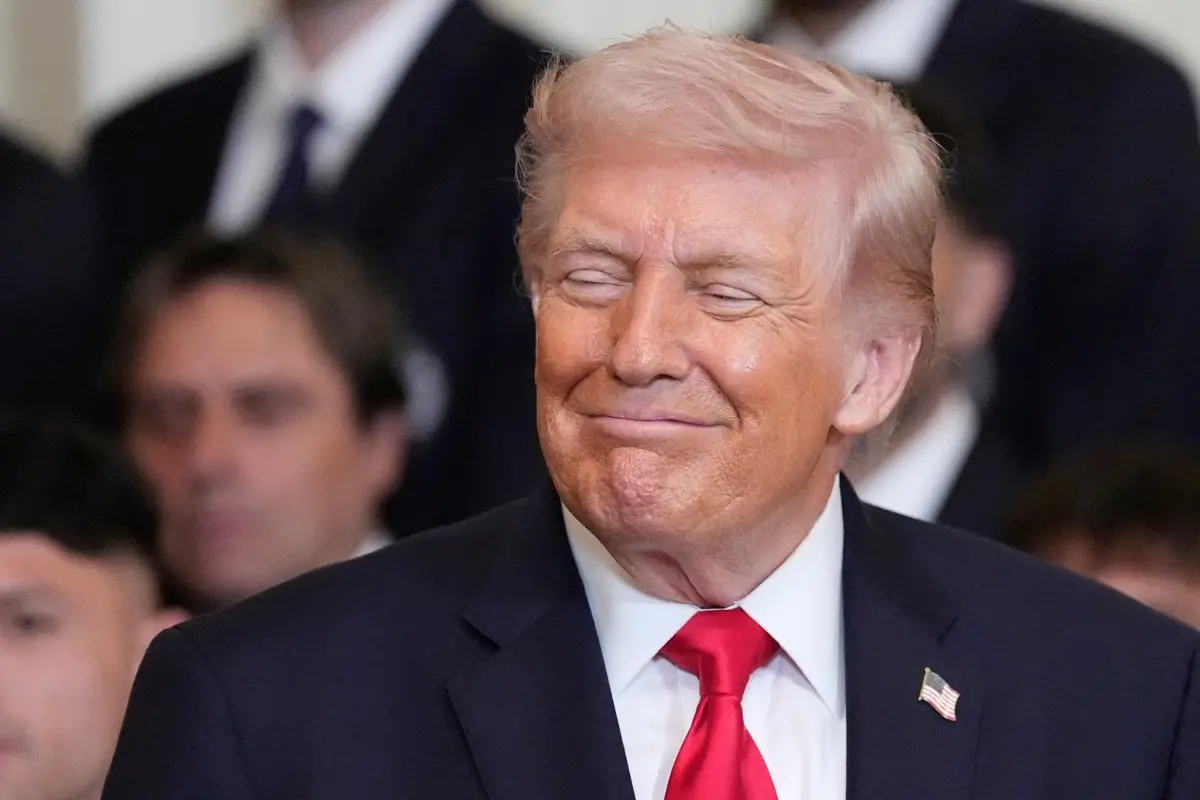
Washington: Donald Trump has sharply criticised US allies for failing to support Washington’s war effort against Iran, declaring it is not America’s responsibility to secure the Strait of Hormuz and urging partners to “get your own oil”.
Speaking on Tuesday, Trump said the US military could conclude its offensive within two to three weeks and signalled that Washington would step back from any post-conflict responsibility in keeping the vital shipping route open.
“There’s no reason for us to do this,” he said, adding that safeguarding the strait should fall to countries such as France that depend heavily on it.
The White House confirmed Trump will deliver a prime-time address on Wednesday to update the public on the war, which has now entered its second month.
Oil Prices Surge as Strait Closure Disrupts Markets
The conflict has severely disrupted global energy supplies, with Iran effectively closing the Strait of Hormuz — a key artery through which around a fifth of the world’s oil passes during peacetime.
The closure has driven Brent crude prices to about $107 per barrel, a rise of more than 45% since the war began in late February. Average petrol prices in the United States have climbed above $4 per gallon.
US strikes on the Iranian city of Isfahan reportedly triggered a massive explosion, while Tehran retaliated by attacking a Kuwaiti oil tanker in the Persian Gulf.
Trump Targets Allies Over Lack of Support
In a social media post, Trump blamed allies including the United Kingdom and France for refusing to join what he described as a critical military effort.
“You’ll have to start learning how to fight for yourself,” he wrote. “The USA won’t be there to help you anymore… Go get your own oil.”
He also singled out France for restricting the use of its airspace for military operations linked to Israel, although Paris has permitted limited use of an air base under strict conditions.
Other European nations have also distanced themselves. Spain has closed its airspace to US military flights involved in the conflict, while Italy has reportedly limited the use of certain bases, despite insisting relations with Washington remain strong.
Conflict Spreads Across the Region
The war, launched by the US and Israel, has intensified across multiple fronts. More than 3,000 people have been killed, with widespread damage to energy infrastructure and growing instability across the Middle East.
An American journalist was kidnapped in Baghdad, with US officials blaming the Iran-backed militia Kataib Hezbollah. Iraqi security forces are pursuing the abductors.
Meanwhile, the US is reinforcing its military presence, deploying the aircraft carrier USS George H. W. Bush to the region, joining other carriers already supporting operations.
Fears of Wider Escalation
Trump has warned that if a ceasefire is not reached soon or the strait is not reopened, the US could expand its offensive to include key Iranian oil infrastructure.
At the Pentagon, Defence Secretary Pete Hegseth declined to rule out further military action but said Washington does not want to escalate beyond what is necessary.
The conflict has already taken a heavy toll. US officials say 13 American service members have been killed and hundreds wounded. In Iran, more than 1,900 people have died, alongside casualties in Israel, Lebanon and other parts of the region.
Israeli forces also reported killing senior Hezbollah figures in strikes near Beirut, as fighting continues to spill into Lebanon, raising fears of a broader regional war.