Can US rename shared Canadian waters? The reality of Trump’s ‘Lake America’ order
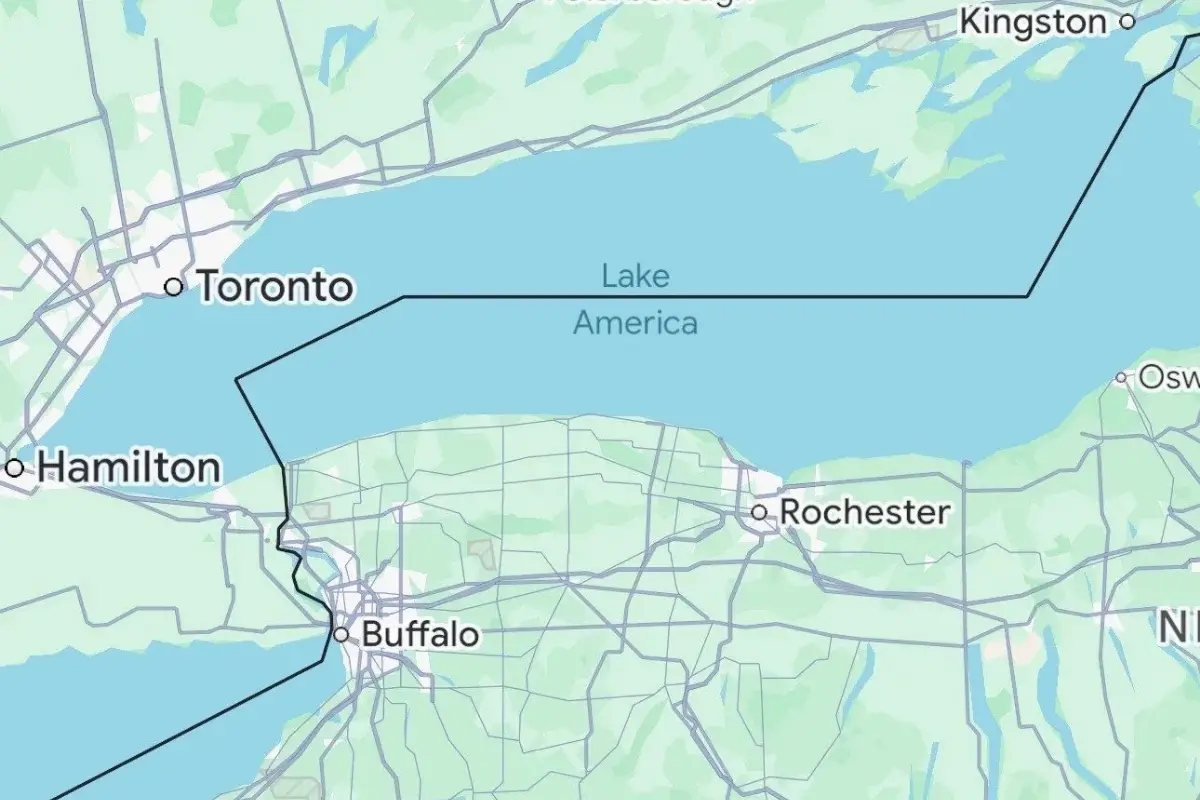
Washington: US President Donald Trump signed an executive order directing federal agencies to rename Lake Ontario as "Lake America" within official United States databases. The move, executed amid an escalating trade dispute and retaliatory tariffs between Washington and Ottawa, represents a significant geopolitical provocation using cartography as a strategic lever. The executive order mandates that the US Board on Geographic Names update federal mapping systems to adopt the new nomenclature immediately.
The Limits of Unilateral Sovereignty
Despite the executive mandate, international law and geographic naming conventions dictate that one sovereign nation cannot unilaterally rewrite the place names of another sovereign state. The executive order applies exclusively to federal records and domestic mapping within the United States. It carries zero legal authority in Canada, nor does it compel international governing bodies or foreign governments to alter their official hydrographic registries.
Canada Rejects the New Designation
Canadian leadership responded swiftly to defend the centuries-old designation. Canadian Prime Minister Mark Carney and Ontario Premier Doug Ford rejected the US decree. Prime Minister Carney highlighted on social media that the name "Ontario," derived from the Indigenous Iroquoian word kanadario meaning "sparkling" or "magnificent water," predates both modern nations by centuries. Canadian officials affirmed that the body of water will remain Lake Ontario across all Canadian federal documents, nautical charts, and school curricula.
Domestic Pushback and Border State Resistance
The renaming effort has met internal resistance within the United States, particularly from border state leadership. According to The Washington Post, New York Governor Kathy Hochul publicly dismissed the federal directive, clarifying that New York state agencies will not adopt the moniker. State leaders in Michigan and Wisconsin similarly mocked the unilateral decree, emphasising that state-level geographic boards hold independent jurisdiction over state records and regional signage.
The Splintered Reality of Digital Mapping
The ultimate impact of the cartographic war falls upon tech giants and mapmakers forced to navigate conflicting national mandates. Following a similar decree regarding the Gulf of Mexico, platforms like Google Maps utilise IP geolocation to serve different map views to users based on their national border. While US users may see "Lake America" on federal systems, international users will continue to encounter split cartographic labels, proving that while code can split digital maps, it cannot erase shared physical geography.