Trump’s new order targets transgender athletes, shaping women’s sports
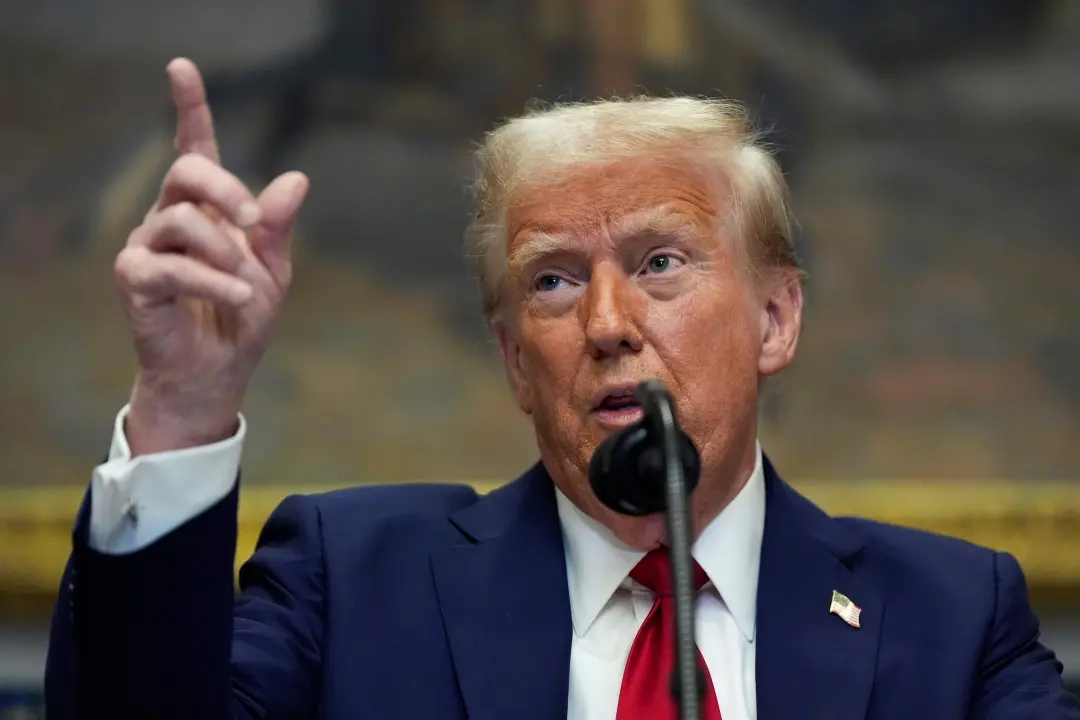
Washington: President Donald Trump is set to sign an executive order on Wednesday that would prevent people who were biologically assigned male at birth from participating in women's or girls' sports. The order, expected to be signed during a ceremony on Wednesday afternoon, marks another major move by Trump’s second administration to reshape federal policies surrounding transgender rights.
This action follows a sweeping executive order issued on his first day in office last month, which directed the federal government to define sex as either male or female and required that this definition be reflected on official documents such as passports and in policies such as federal prison assignments.
Trump found during the campaign that his pledge to “keep men out of women's sports” resonated beyond the usual party lines. More than half the voters surveyed by AP VoteCast said support for transgender rights in government and society has gone too far. Trump had been vocal during the election, pledging to rid the country of what he described as “transgender insanity,” although details on how this would be implemented were sparse.
This new executive order, which coincides with National Girls and Women in Sports Day, will address the interpretation of Title IX — the landmark law known for advancing gender equity in athletics and preventing sexual harassment in campus.
Rep. Nancy Mace, a Republican from South Carolina, supported the executive order, saying, “This executive order restores fairness, upholds Title IX's original intent, and defends the rights of female athletes who have worked their whole lives to compete at the highest levels.”
Betsy DeVos, Education Secretary during Trump’s first term, issued a 2020 policy that narrowed the definition of sexual harassment under Title IX, requiring colleges to investigate claims only if reported to specific officials. The Biden administration rolled back this policy last April, introducing new protections for LGBTQ+ students and safeguarding victims of campus sexual assault, although it did not specifically address transgender athletes.
The policy stopped short of explicitly addressing transgender athletes. Still, more than a half-dozen Republican-led states immediately challenged the new rule in court.
“All Trump has to say is, we are going to read the regulation traditionally,'” said Doriane Lambelet Coleman, a professor at Duke Law School.
How this order could affect the transgender athlete population — a number that is incredibly difficult to pin down — is uncertain.
The Associated Press reported in 2021 that in many cases, the states introducing a ban on transgender athletes could not cite instances where their participation was an issue.
When Utah state legislators overrode a veto by Gov. Spencer Cox in 2022, the state had only one transgender girl playing in K-12 sports who would be affected by the ban. It did not regulate participation for transgender boys.
“This is a solution looking for a problem,” Cheryl Cooky, a professor at Purdue University who studies the intersection of gender, sports, media and culture, told the AP after Trump was elected.
Yet the actual number of transgender athletes seems to be almost immaterial. Any case of a transgender female athlete competing — or even believed to be competing — draws outsized attention, from Lia Thomas swimming for the University of Pennsylvania to the recently completed season of the San Jose State volleyball team. AP