Trump agrees to 30-day pause on tariffs for Canada, building on Mexico deal
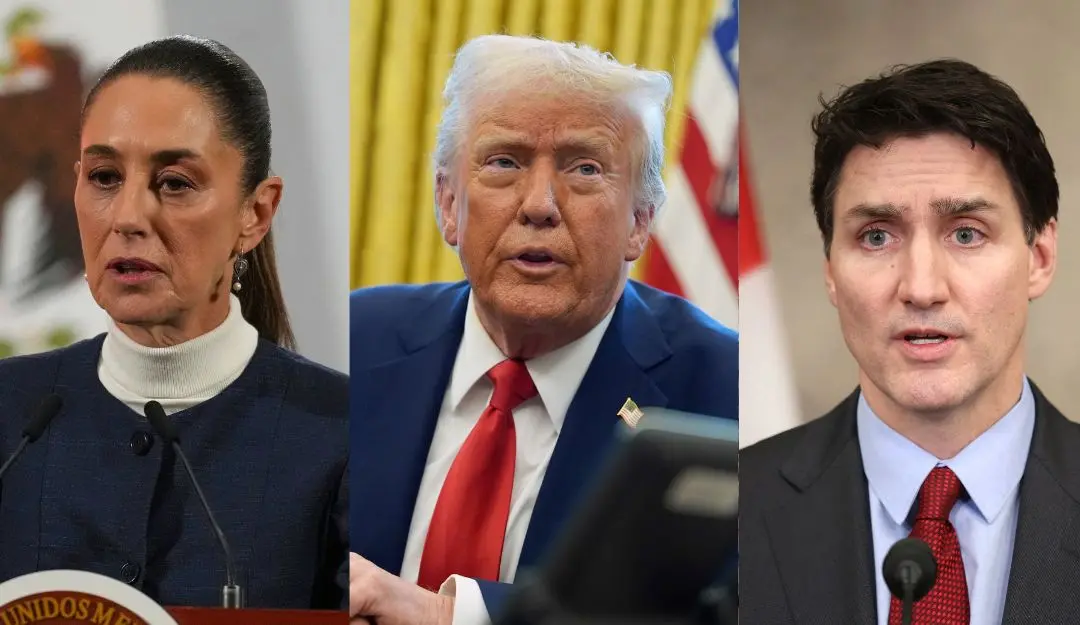
Washington: US President Donald Trump has agreed to delay the planned tariffs on Canada for one month, after reaching a similar deal with Mexico to strengthen border security and address the flow of migrants and fentanyl.
A 10 percent US tariff on Chinese imports is still set to take effect from 00:01 EST (05:00 GMT) on Tuesday.
Trump’s initial threat of imposing sweeping 25 percent tariffs on exports from Canada and Mexico had caused global stock markets to slump, with concerns over the potential for a full-blown trade war. However, after urgent talks between Trump, Canadian Prime Minister Justin Trudeau, and Mexican President Claudia Sheinbaum, a temporary solution was reached.
Trump announced that following "very friendly" discussions with Sheinbaum, he had agreed to "immediately pause" the tariffs on Mexico. As part of the deal, Mexico pledged to send 10,000 troops to secure the US-Mexico border.
Tensions had been higher between the US and Canada, but after two calls between Trump and Trudeau, the US President announced a 30-day halt to the tariffs. Trump said, "Canada has agreed to ensure we have a secure Northern Border, and to finally end the deadly scourge of drugs like Fentanyl that have been pouring into our Country."
Canada to deploy border officers
Trudeau confirmed that Canada would deploy nearly 10,000 frontline officers to secure the border, list drug cartels as terrorists, appoint a "Fentanyl Czar," and crack down on money laundering. However, some questioned the scale of these measures, as Canada had already deployed 8,500 personnel as of December 2024.
While Trump has paused tariffs for Canada and Mexico, China remains a target. Trump confirmed that a further 10 percent duty on Chinese imports would be imposed, with talks between Washington and Beijing expected to take place "probably in the next 24 hours" to avoid further tariffs.
Global economic reactions
Trump’s tariff threat had significant repercussions on the global economy, with Wall Street indices falling sharply before recovering following the announcement of the Mexico tariff delay. European stock markets in London, Paris, and Frankfurt finished lower, while the Mexican peso and Canadian dollar fell against the US dollar. Oil prices surged, even as Trump limited the levy on Canada's energy imports to avoid rising fuel costs.
Canada had strongly opposed the tariffs, with Ontario’s government banning US companies from bidding on billions of dollars in contracts. Additionally, Canada cancelled a deal with Elon Musk's Starlink, a company associated with Trump.
Political, economic fallout
The US President has escalated pressure on Canada, even suggesting that the country could become the 51st US state. Meanwhile, Canada faces political instability, with Prime Minister Trudeau's government facing a crisis over the tariff threats. This has led to the announcement of potential elections as early as April.
Trump has emphasised that tariffs are a central tool in his second-term policy agenda. Despite experts’ concerns that tariffs will ultimately be passed on to American consumers, Trump has maintained that foreign exporters will bear the brunt of the costs. He has also previously used tariffs as leverage in negotiations, such as when he threatened to impose tariffs on Colombia to secure US military access.
Agency