What does the PM’s removal mean for Thailand’s future?
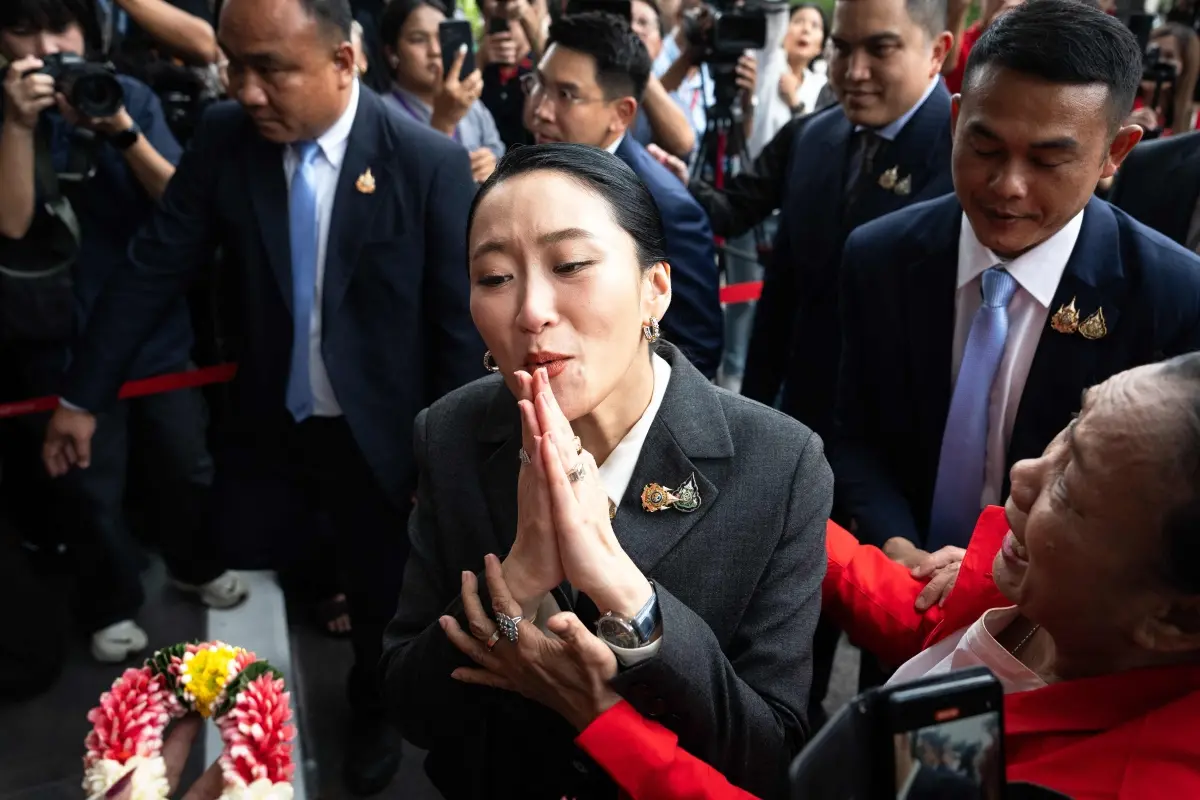
Bangkok: Thailand faces fresh political uncertainty after another prime minister was removed by court order. Paetongtarn Shinawatra was ousted following controversy over her approach to the ongoing border dispute with Cambodia.
Why was Paetongtarn Shinawatra dismissed?
The Constitutional Court, by a majority of six judges against three, found that Paetongtarn had not met the ethical standards expected of a prime minister, leading to both her removal and the dissolution of her cabinet. This event follows last year’s court decision to remove Srettha Thavisin, her immediate predecessor, in a similar case about ethics.
The focus of the latest ruling was a phone conversation in June between Paetongtarn and Hun Sen, Cambodia’s former leader and the father of the country’s current premier.
Hun Sen is a longtime friend of Thaksin Shinawatra, Paetongtarn’s father, who was himself elected as Thailand’s prime minister twice before being forced from power in a coup. During their call, Paetongtarn called Hun Sen “uncle” and referred to a Thai military officer as her “opponent”. Many in Thailand, particularly pro-royalist and pro-military conservatives critical of the Shinawatra family, were angered by the call.
What reaction did her actions spark?
Conservative legislators accused Paetongtarn of disrespecting the military and being weak in facing Cambodia. Even within her government, her most significant coalition ally, the Bhumjaithai party, left in protest, nearly causing her government’s collapse. Nevertheless, she managed to hold on until a group of senators brought a case before the Constitutional Court, which resulted in her removal.
Who is leading the country now?
At the moment, Phumtham Wechayachai serves as acting prime minister with a caretaker cabinet, who will remain until a new government can be formed.
How will thailand choose its next leader?
A new prime minister could be chosen as soon as next week, but there is no standout successor to Paetongtarn. According to the constitution, only those who were nominated as potential prime ministers in the 2023 general election can be selected.
Four of these candidates are not eligible: three are barred by court decisions, and one’s party did not secure enough MPs to qualify. The final four eligible candidates include Prayut Chan-O-Cha, a former general who led the coup in 2014 and served as prime minister until 2023, and Anutin Charnvirakul, the head of the Bhumjaithai party.
(Agency inputs)