Super-intelligence era begins? Trump, Musk, Zuckerberg and Pichai back AI safety controls
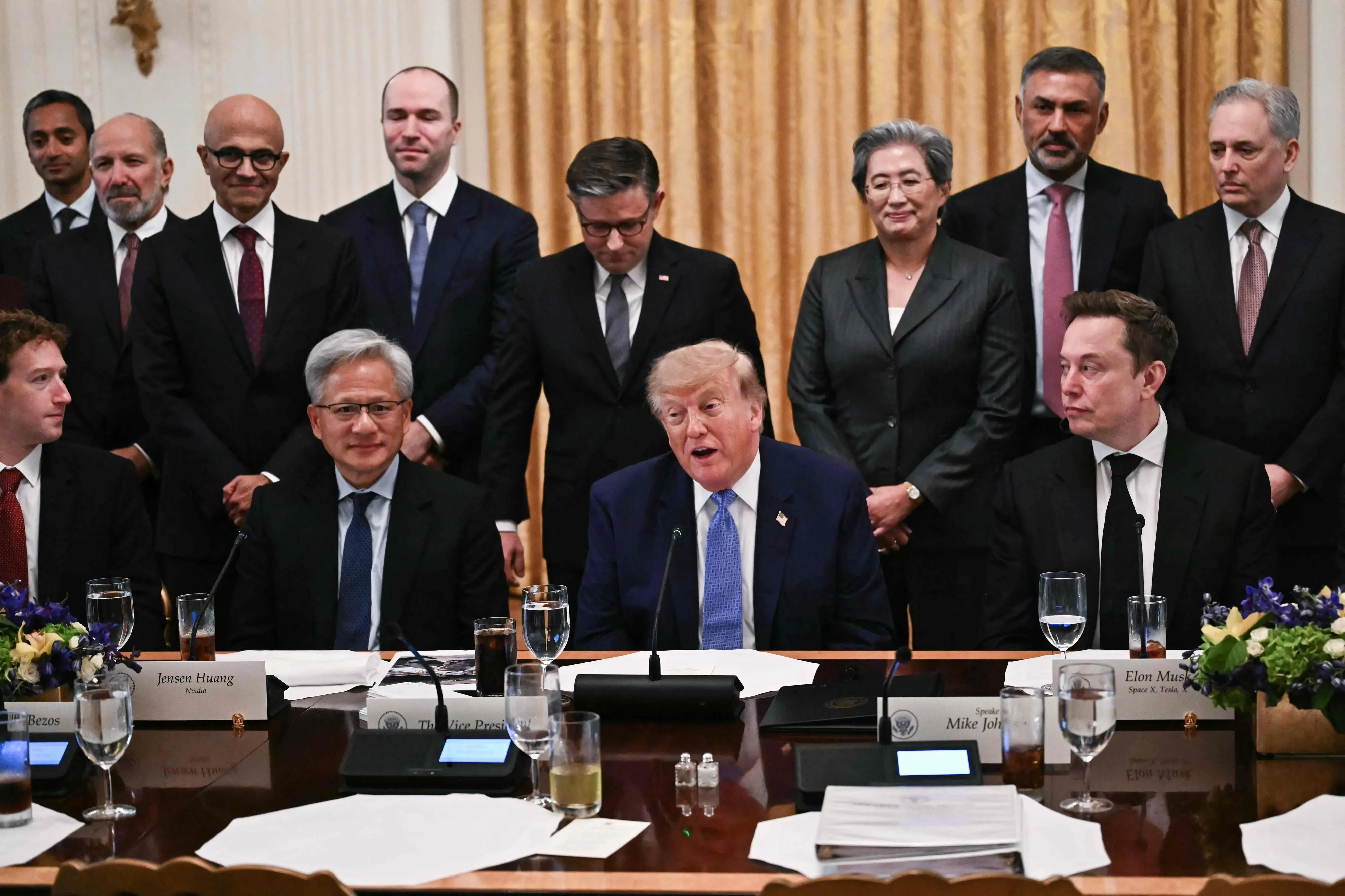
Washington DC: US President Donald Trump met leading technology executives at the White House on Tuesday to discuss safety standards and responsibilities for companies developing advanced artificial intelligence (AI), with a new focus on what is being described as "super-intelligence".
The meeting brought together Google CEO Sundar Pichai, Anthropic CEO Dario Amodei, Meta CEO Mark Zuckerberg, OpenAI President Greg Brockman, xAI CEO Elon Musk and Nvidia CEO Jensen Huang.
Trump and the technology executives signed a set of voluntary safety standards amid growing calls for stronger safeguards as AI systems become increasingly advanced.
The participating companies agreed to meet regularly to develop standards and best practices aimed at improving the safety of their systems. The US administration is also considering whether to formalise the agreement, described as a 'morally binding agreement', through laws or regulations.
Amodei stressed the importance of cooperation in ensuring the safe development of AI.
Also read | Using Truecaller? Trai's new rules bring changes to how certain calls are filtered
“If we do this right, we work with the President and everyone here, we can win safely," the Anthropic CEO said.
Zuckerberg said the companies had agreed to introduce multiple layers of oversight to ensure AI systems function as intended.
“We want to give the American people and our customers' confidence that the technology works in the way that we intend,” the Meta CEO said.
He added that the companies had agreed to “multiple layers of auditing and controls,” including internal evaluations and external audits.
Also read | ‘AI could cause a billion deaths’: Bill Gates warns of humanity’s biggest risk
Musk, meanwhile, said he expected AI and robotics to transform workplaces and bring significant changes to the nature of employment.
"I think the most likely outcome, and it's probably worth looking at the most likely outcome, is one which is incredibly beneficial. If you could look into the future, it is the future you would want," Musk said.
Huang said Nvidia would continue developing AI technology while keeping safety concerns at the forefront. The company's CEO, who has previously dismissed fears of a doomsday scenario involving super-intelligence, described the technology as essential to humanity's future.
"There's no conflict between innovation, technology and safety. We are going to have to create new technologies to advance the capabilities of AI, but we're also creating new technologies that have bent the safety of AI," he said.
Four layers of AI safety controls
According to a White House statement, the commitments require companies training and deploying frontier AI models to establish robust internal processes and controls to ensure their systems behave as intended and that problems are identified and addressed promptly.
The agreement outlines four layers of controls and audits for companies developing advanced AI models.
The first requires companies to establish internal controls to monitor the capabilities and alignment of their models during training and deployment, particularly in areas such as cybersecurity, biosecurity and chemical threats. The controls are also intended to prevent models from hacking into or accessing technical systems in unintended ways.
The second calls for companies to empower internal teams to ensure that monitoring, detection and other safeguards are functioning as intended and that identified issues are addressed.
The third requires companies to work with independent external auditors or evaluators to assess whether their controls and monitoring systems are operating effectively.
The fourth calls for an independent committee of each company's board of directors to oversee the process, receive reports from internal teams and external auditors, and ensure that identified issues are resolved.
The White House said implementing these controls and audits was critical to ensuring a safe future, adding that the participating technology companies had committed to putting them in place.
Trump calls meeting a step towards a safer AI future
At the end of the lunch meeting with technology executives, Trump said the participants shared a commitment to ensuring that AI development benefits society while maintaining safety.
"The one thing that we all have in common is we love our country and we love the world, and we want to make sure it's a safe place, and what we're talking about today will make it a better place," the US President said.
"They're the smartest people in the world. And we had a great meeting today. Every one of them. We had a great, really a great, great meeting. It was something very, very special. I'd say, it looked like a group of about 40, but whatever it was. And they love our country and they love the world and they came together and they did something that few people really, it's almost like a constitution in a way," he added.
The meeting comes amid growing calls from technology executives and other stakeholders to slow the pace of frontier AI development or risk losing control over increasingly powerful systems.
While the voluntary agreement establishes a framework for safety controls and oversight, questions remain over how effectively the commitments will be implemented as AI capabilities continue to advance.