Sudan gold mine collapse: Death toll rises to 82 in unregulated West Kordofan cave-in
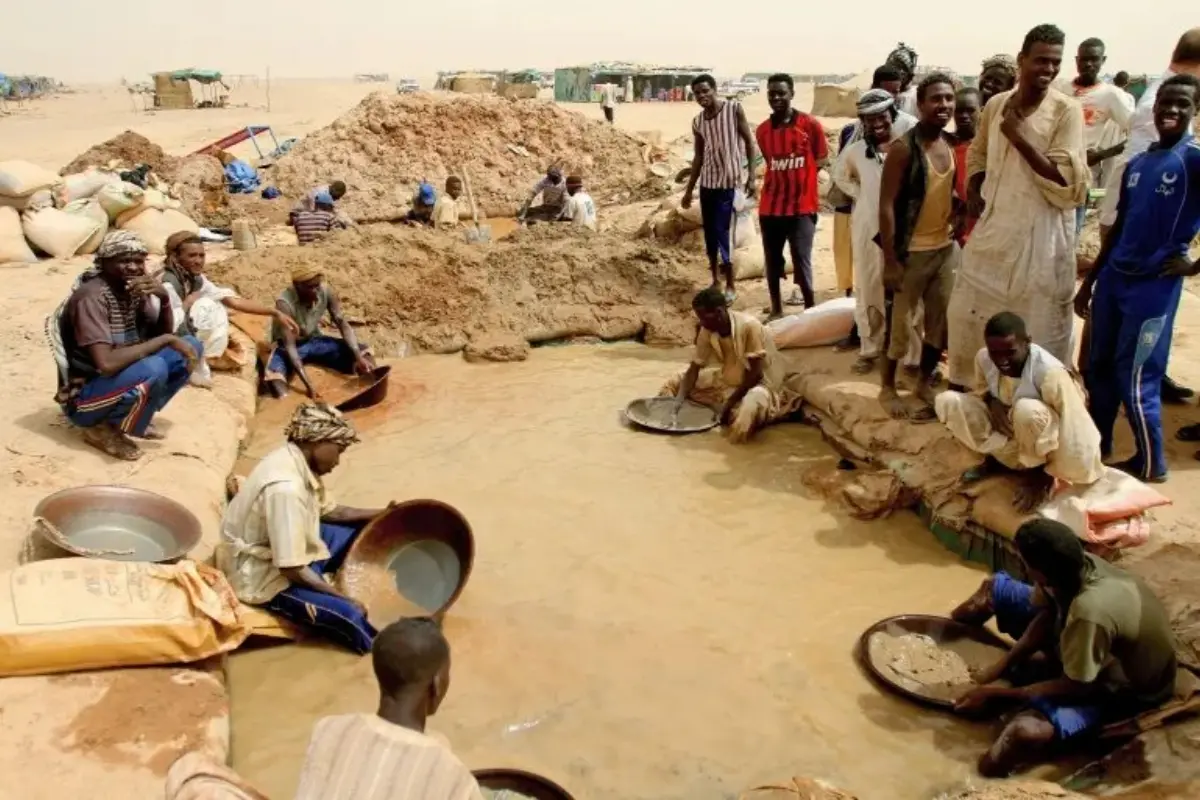
Cairo: The death toll following the collapse of an informal gold mine in an isolated region of Sudan has climbed to 82, according to local officials and activists, as rescue teams struggled on Wednesday to search for missing individuals amidst a severe shortage of equipment.
The incident marks the latest disaster to strike a nation mired in a devastating armed conflict.
Eyewitnesses stated that the cave-in occurred at the al-Zara gold mine in Nuhud, a town situated in West Kordofan state. The territory is controlled by the paramilitary Rapid Support Forces (RSF), which have been engaged in war against the Sudanese armed forces for over three years.
Suleiman Abu Hmeida, a member of the Emergency Response Rooms, confirmed that emergency workers had recovered 82 bodies by Wednesday afternoon.
“But dozens remain unaccounted for,” Abu Hmeida told The Associated Press.
The Emergency Response Rooms operates as a grassroots volunteer network monitoring the conflict and providing humanitarian support to local communities throughout war-torn Sudan.
A local administrative official also corroborated that 82 bodies had been pulled from the site.
According to the official, the structural failure began Sunday in a single mine shaft before cascading through adjacent interconnected shafts. He noted that search efforts are being severely hampered by the availability of only one privately owned forklift to clear debris.
The official spoke on condition of anonymity as he was not authorised to brief the press.
“The collapse is massive, and the situation is very dire,” Khairal-Sayed Gabara, a survivor of the collapse, told AP via telephone, adding that essential heavy machinery required to clear the fallen earth and rubble was unavailable.
“We do not have the machinery to lift dirt and stones and search for survivors at depths of more than 30 meters (98 feet),” he said. “There were dozens of people working in the mine.”
The al-Zara site is among thousands of small-scale, artisanal mines scattered across Sudan, which has been engulfed in a conflict that has pushed portions of the population to the brink of famine.
Despite Sudan's status as a major gold producer, fatal mining cave-ins remain frequent across the country, where occupational safety standards are rarely enforced. A mine collapse in 2023 left 14 miners dead, while a 2021 incident claimed 38 lives.
Al-Amin Suliman, another survivor, stated that 60 bodies had been brought to the surface by Wednesday morning.
“There are still people stuck inside,” he said.
The Sudan Doctors Network, a medical organisation tracking the humanitarian impact of the war, previously reported that 67 bodies had been extracted from the wreckage, predicting the death toll would rise as search teams continue working to locate trapped workers. The group stated the mine, an informal operation using unregulated labour, lacked fundamental safety and protective infrastructure.
Earlier, survivors reached by phone alongside the medical network had indicated the disaster occurred Tuesday evening.
The Kordofan Observatory monitoring group reported that at least 70 miners were killed or missing at the location, which spans over 1 kilometre (0.6 miles) across terrain composed of fragile, sandy soil. It categorised the workforce as informal and unregulated.
Significant quantities of gold are illegally exported out of the country to fund the paramilitary RSF, which controls primary gold-mining areas in the Darfur and Kordofan regions, according to United Nations experts.
Sudan plunged into full-scale civil war in April 2023 following the outbreak of fighting between the RSF and the Sudanese military.
The ongoing conflict has claimed at least 59,000 lives, according to figures compiled by Armed Conflict Location & Event Data, though international relief agencies emphasise that the actual death toll is likely considerably higher.