South Korean investigators 'confront security service' in standoff over arrest of President Yoon
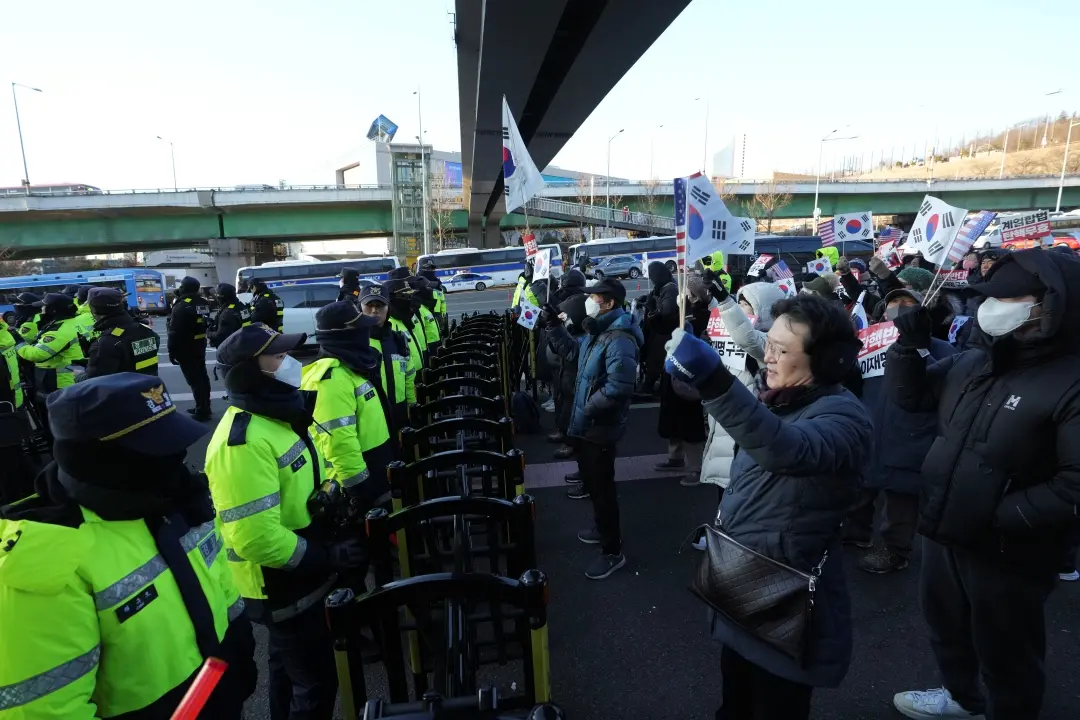
Seoul: South Korean investigators faced a tense standoff on Friday while trying to arrest impeached President Yoon Suk Yeol at his residence. The investigation stems from a controversial and failed martial law declaration that shook the country. However, security forces reportedly blocked the arrest attempt, leading to a confrontation between the authorities.
President Yoon, who has been suspended from his duties by lawmakers, would make history as the first sitting South Korean president to be arrested if the warrant is carried out. The investigation centers around Yoon’s botched martial law announcement on December 3, which briefly raised fears of a return to military rule in the country. The president faces serious charges, including possible imprisonment or, in the worst-case scenario, the death penalty.
Investigation and standoff at the presidential residence
"The execution of the arrest warrant for President Yoon Suk Yeol has begun," stated the Corruption Investigation Office (CIO), the agency leading the probe into Yoon’s martial law attempt. As CIO investigators, including senior prosecutor Lee Dae-hwan, attempted to execute the warrant, they encountered significant resistance.
Local media reported that investigators were initially blocked by a military unit inside the residence but later moved past the barriers to face members of the Presidential Security Service, who are tasked with protecting the president. The situation raised questions about whether Yoon’s security detail would allow the execution of the warrant.
Legal team challenges arrest warrant
Yoon’s legal team quickly condemned the attempt to arrest him, calling the warrant “illegal and invalid.” Yoon’s lawyer, Yoon Kap-keun, argued that executing the warrant was unlawful. “There is no lawful basis for executing this warrant,” Yoon’s lawyer asserted.
Yoon’s legal team had already filed an injunction with the constitutional court to block the arrest warrant. They also submitted an objection to the Seoul court that issued the order. However, CIO head Oh Dong-woon warned that anyone obstructing the arrest could face prosecution. Along with the arrest warrant, a search warrant for Yoon’s official residence and other locations was also issued.
Police deployed to prevent clashes
The tense situation prompted a large police presence outside Yoon’s residence in central Seoul. Hundreds of uniformed police and dozens of police buses lined the streets to prevent potential clashes. In total, around 2,700 police officers and 135 buses were deployed after Yoon’s supporters clashed with anti-Yoon demonstrators the day before.
Yoon has remained inside the presidential compound since a court approved the arrest warrant earlier this week. He has vowed to “fight” authorities attempting to question him over the martial law fiasco.
Supporters of the impeached president staged chaotic protests on Thursday and camped outside his residence overnight. Some even held prayer sessions, chanting slogans like "Illegal warrant is invalid" and "Yoon Suk Yeol, Yoon Suk Yeol" as they waved red glow sticks.
One protester, Rhee Kang-san, told reporters, “We are rooting for the president to survive this arrest attempt. Many of us stayed overnight to show support, and we will continue to do so today.”
This incident recalls similar cases in the past, where arrest warrants for lawmakers were blocked by party members or supporters. In 2000 and 2004, police were unable to carry out arrest warrants due to resistance from political allies who blocked enforcement for the seven-day period the warrants were valid.
Agency