South Korea's Yoon avoids arrest as deadline passes, extension requested
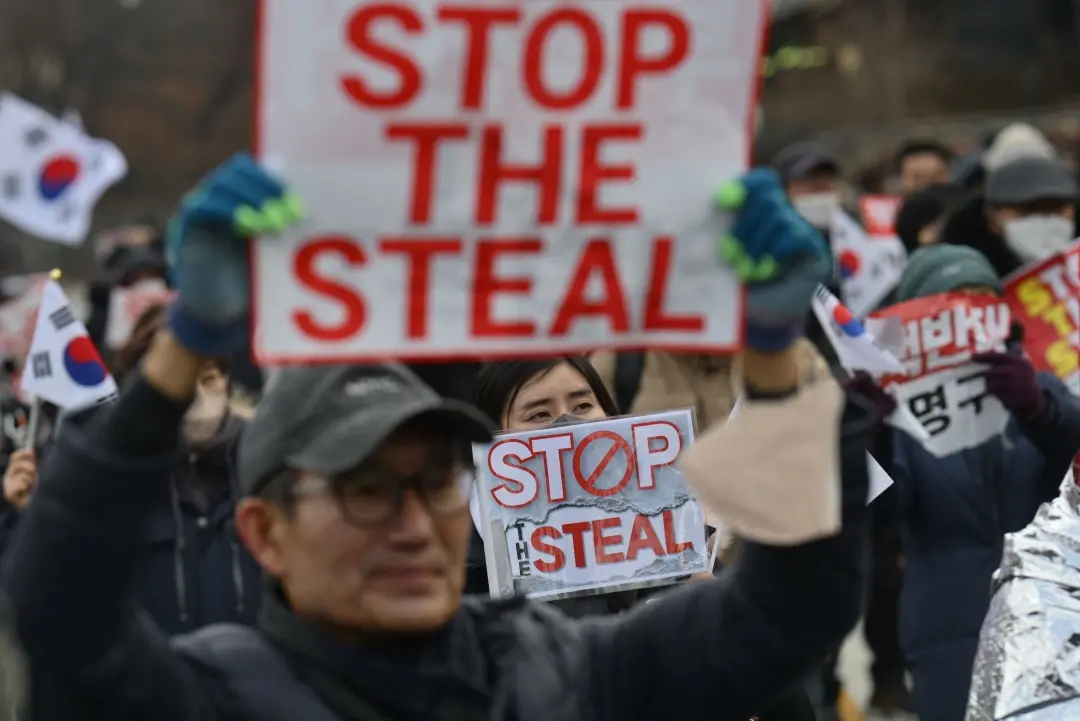
Seoul: Impeached South Korean President Yoon Suk Yeol narrowly avoided arrest on Monday after a court-imposed deadline expired, but anti-corruption investigators are seeking more time to detain him.
Yoon, a former prosecutor, has refused to face questioning three times regarding a controversial martial law decree from last month. He remains at his residence, heavily guarded, preventing authorities from carrying out his arrest.
Investigators with the Corruption Investigation Office (CIO) requested an extension to the arrest warrant for Yoon, which had expired at 3:00 p.m. GMT on Monday. They also sought police support to assist in detaining anyone helping to shield Yoon. "The Joint Investigation Headquarters today refiled a warrant with the Seoul Western District Court to extend the arrest warrant for defendant Yoon," the CIO stated late Monday.
Court decision pending
The court has yet to announce its decision on the new warrant request. However, CIO deputy director Lee Jae-seung expressed confidence that the extension would likely be approved, saying the chance of a rejection was "very low."
Authorities have encountered difficulties in their attempts to detain Yoon. On Friday, when investigators attempted to enter his residence, they were met with hundreds of security personnel. A police official noted that they would consider arresting any security staff from the Presidential Security Service if the new warrant is executed. The opposition Democratic Party has called for the disbandment of Yoon's security service, further escalating tensions.
If authorities manage to detain Yoon, who has already been suspended from office, he would become the first sitting president in South Korea's history to be arrested. However, even if arrested, Yoon would only be held for 48 hours unless an additional warrant is issued or he is released.
While Yoon remains untouchable for now, the investigation has shifted to military officials involved in the failed martial law plan. On Monday, the special investigation unit indicted Defense Intelligence Commander Moon Sang-ho for insurrection and abuse of power.
Potential consequences for Yoon
Yoon faces serious charges, including insurrection, which could result in a prison sentence or even the death penalty if convicted for temporarily suspending civilian rule. This caused a severe political crisis in South Korea.
Despite the mounting pressure, Yoon and his supporters remain defiant. "We will protect the Presidential Security Service till midnight," said Kim Soo-yong, 62, one of the protest organizers. "If they get another warrant, we will come again."
Earlier on Monday, dozens of lawmakers from Yoon's People Power Party gathered outside his residence, with police blocking nearby roads. Anti-Yoon protester Kim Ah-young, in her 30s, expressed frustration, stating, "I've been here longer than the CIO now. It doesn't make sense why they can't do it. They need to arrest him immediately."
Legal challenges to the warrant
The initial arrest warrant was issued after Yoon refused to respond to questions about his martial law decree. His legal team has repeatedly argued that the warrant is "unlawful" and vowed to pursue further legal action.
U.S. Secretary of State Antony Blinken arrived in Seoul on Monday. While he did not meet with Yoon, Blinken praised South Korea's democratic resilience during a joint news conference with Foreign Minister Cho Tae-yul. However, the focus quickly shifted to North Korea, which launched a suspected intercontinental ballistic missile while Blinken was in Seoul.
Impeachment trial scheduled for January 14
South Korea's Constitutional Court has scheduled Yoon’s impeachment trial for January 14. If Yoon does not attend, the trial will proceed in his absence. Key evidence, including reports showing that Yoon disregarded objections from his cabinet ministers over the martial law decree, could play a significant role in the case.
The Constitutional Court has up to 180 days to determine whether Yoon should be dismissed from office or have his powers restored. Notably, former South Korean presidents Roh Moo-hyun and Park Geun-hye did not attend their own impeachment trials.
As the situation unfolds, the nation remains divided over Yoon’s future, with protests and legal battles intensifying. The outcome of the investigation and the impeachment trial will shape the country’s political landscape in the coming months.
Agency