Why South Korea suspended flights and delayed stock trading for a university entrance exam
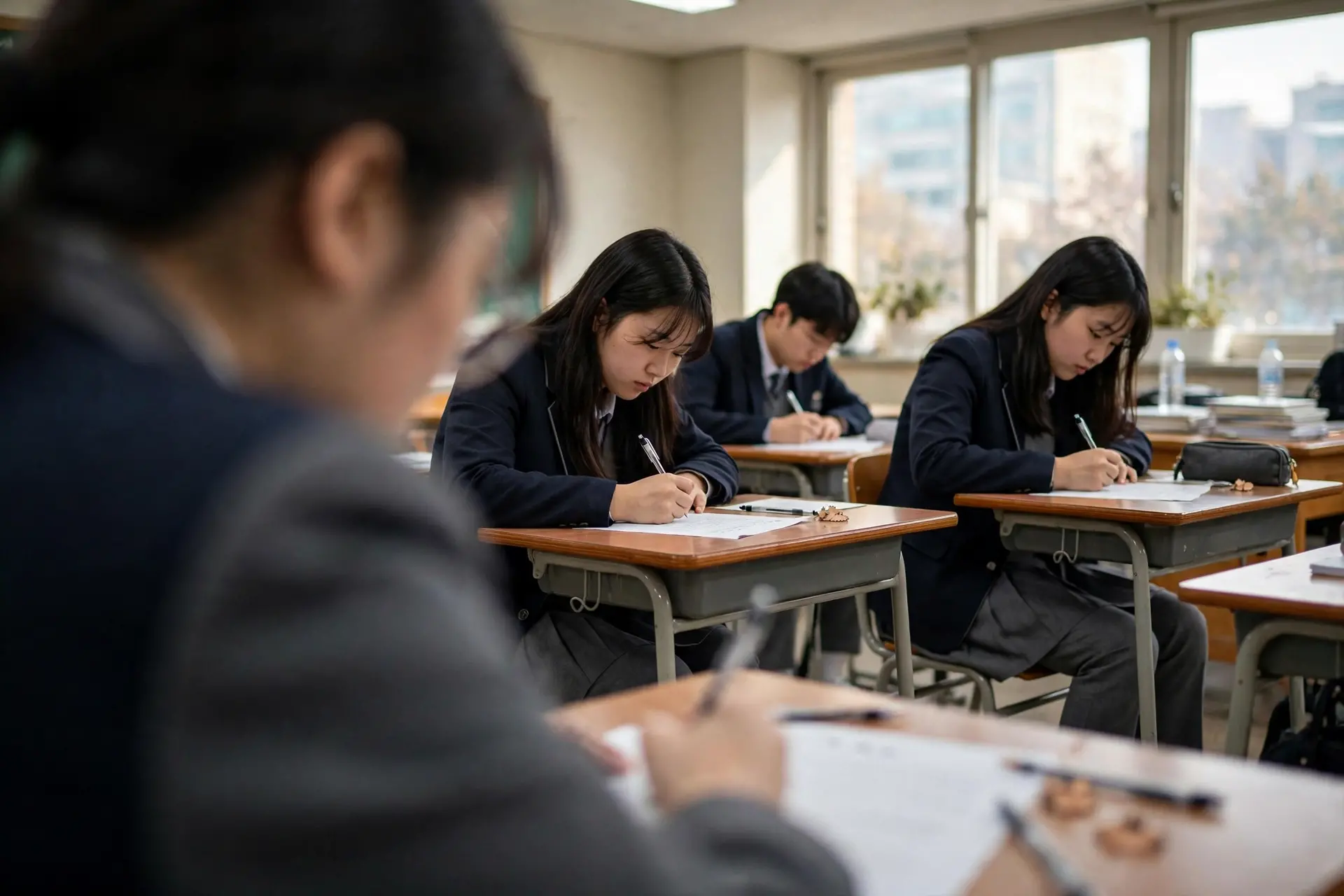
Seoul: South Korea temporarily suspended aircraft take-offs and landings for 35 minutes on Thursday, delayed stock market trading and restricted Wi-Fi networks near examination centres as hundreds of thousands of students sat the country's fiercely competitive university entrance examination.
The extraordinary measures were part of a nationwide effort to ensure a disturbance-free examination day and prevent cheating, particularly through artificial intelligence (AI) and concealed electronic devices.
Known as Suneung, the College Scholastic Ability Test (CSAT) is a crucial examination that can determine students' access to prestigious universities and influence their future career prospects.
A total of 5,51,864 candidates registered for this year's examination, which was conducted at 1,312 centres across the country.
Flights suspended during English listening test
The most striking measure was the temporary restriction on air traffic during the English listening section of the examination.
Take-offs and landings were suspended across South Korea between 1.05 pm and 1.40 pm to prevent aircraft noise from disturbing candidates. Aircraft already in the air, except those responding to emergencies, were required to maintain an altitude of at least 3 km above the ground.
The country also adjusted its regular business and transport schedules. The Korea Exchange opened an hour later than usual, at 10 am, and extended trading until 4.30 pm.
Offices and businesses were encouraged to delay their opening hours to ease morning traffic. Seoul's subway network added 27 services, while police officers were available to escort students who risked arriving late.
Military exercises near examination centres were also restricted during relevant examination periods.
Also read | No more visa-free entry to Malaysia for Indians from 2027: What travellers need to know
AI cheating fears prompt unprecedented security measures
This year's examination was held amid growing concerns over the use of AI-powered devices to cheat in high-stakes tests.
The government stepped up security following the confession of the top scorer in South Korea's national tax accountant examination that he had used a concealed camera, a smartphone and generative AI to obtain answers.
The revelation raised concerns about possible cheating in other examinations, including professional licensing tests and law school admissions.
Authorities deployed around 8,400 additional personnel, including specialists in smart devices and examination supervisors, alongside approximately 75,000 invigilators.
Wi-Fi networks inside examination centres and public Wi-Fi networks near schools were restricted. Candidates were also asked to bring only pencils, with other permitted stationery supplied by examination centres.
Invigilators inspected spectacles for concealed cameras, while stickers were placed over clothing buttons to prevent the use of miniature cameras hidden inside them. Metal detectors could also be used on candidates suspected of carrying unauthorised devices.
Emergency phone alerts expose concealed smartphones
Authorities used nationwide emergency mobile phone alerts to identify candidates who had failed to surrender their smartphones before entering examination halls.
The alerts were designed to sound even when phones were on silent mode, making concealed devices easier to detect.
President Lee Jae Myung also promised a reward of at least $75,000 for people reporting examination misconduct. Authorities have proposed increasing the ban on candidates caught cheating from one year to 10 years, with criminal proceedings also possible.
Also read | Trump, Xi and Putin issue 'Declaration Towards Peace' after trilateral talks, agree on UN reforms
Why Suneung is so important in South Korea
The nearly nine-hour Suneung examination is widely regarded as one of the most consequential days in South Korea's education system. Its results can influence admission to prestigious universities, future employment opportunities and social prospects.
The examination covers Korean, mathematics, English, Korean history and elective subjects, including a second foreign language or classical Chinese.
Students often spend years preparing for the test, attending private supplementary education institutions known as hagwons alongside regular schooling. Those who fail to secure admission to their preferred universities can retake the examination the following year.
The intense competition surrounding Suneung explains why the country makes extraordinary arrangements every November to give candidates a few hours of uninterrupted examination time.