Should Trump get the Nobel Peace Prize? Here's what people think
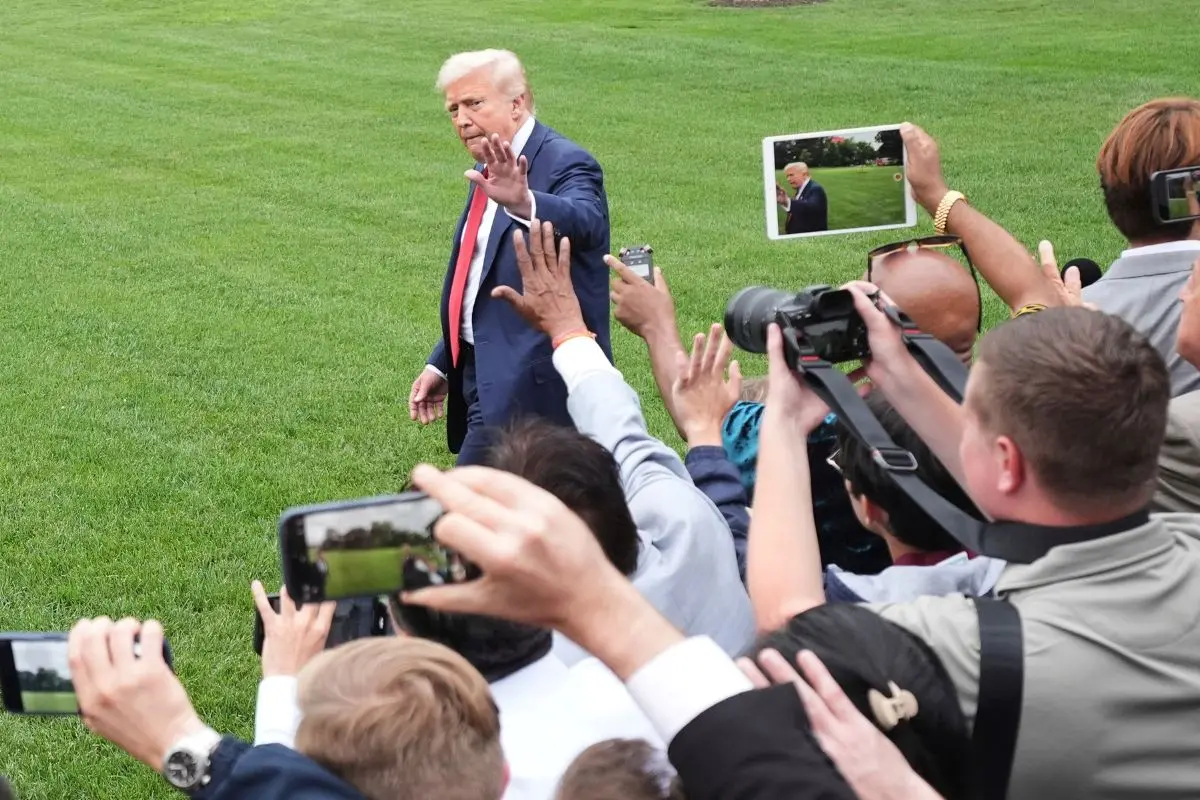
Since his return to the White House in January 2025, US President Donald Trump has made no secret of his ambition to secure the world’s most prestigious peace honour, the Nobel Peace Prize. His administration, allies, and even some foreign leaders have continued to make the case for why he deserves it, while critics remain deeply sceptical.
What is Trump’s team saying?
“It’s well past time that President Trump was awarded the Nobel Peace Prize,” White House press secretary Karoline Leavitt declared on 31 July, triggering a flurry of disbelief and mockery among critics.
Leavitt claimed that since taking office in January, Trump has “brokered, on average, one peace deal or ceasefire per month.” She listed a variety of examples, from India and Pakistan, to Egypt and Ethiopia, to Serbia and Kosovo, as proof of Trump’s peacemaking record.
She also referenced US military strikes on Iran’s nuclear facilities as further evidence of Trump’s commitment to global peace.
Notably absent from her remarks, however, were the ongoing wars in Ukraine and Gaza, the latter being fuelled in part by US military aid to Israel.
Who has nominated Trump?
For some world leaders, endorsing Trump for the Nobel Prize has become a kind of diplomatic gesture. Pakistan and Israeli Prime Minister Benjamin Netanyahu have both nominated him.
At a White House meeting in early July, a journalist asked several visiting African presidents from Liberia, Senegal, Mauritania, Guinea-Bissau, and Gabon, whether Trump deserved the award. The responses were all flattering, and Trump appeared delighted. “We could do this all day long,” he said with a smile.
An Israeli-American law professor, Anat Alon-Beck, also submitted Trump’s name to the Norwegian Nobel Committee, praising his “extraordinary leadership” and “strategic brilliance,” particularly in relation to peace efforts and the release of hostages from Gaza.
What do critics say?
Many observers find the idea of awarding Trump a Nobel Peace Prize implausible.
Emma Shortis, a US history and politics researcher, argued: “Nominating Trump for the Nobel Peace Prize is like entering a hyena in a dog show.” She added, “Of course Trump does not deserve it.”
Trump, however, disagrees.
“I deserve it, but they will never give it to me,” he told reporters in February during a meeting with Netanyahu. He later posted on his social media platform, Truth Social, saying: “No, I won’t get a Nobel Peace Prize no matter what I do, including Russia/Ukraine, and Israel/Iran, whatever those outcomes may be. But the people know, and that’s all that matters to me!”
What fuels Trump’s obsession?
According to Garret Martin, a professor of international relations at American University, Trump has long craved public recognition and is especially fond of prestigious accolades. “He would welcome this major international recognition,” Martin said.
Martin also noted that Trump has been in a decade-long rivalry with Barack Obama, who famously won the Nobel Peace Prize in 2009. Trump has repeatedly made reference to Obama’s win, saying: “If I were named Obama, I would have had the Nobel Prize given to me in 10 seconds.”
How does the Nobel nomination process work?
Tens of thousands of people are eligible to nominate someone for the Peace Prize, from lawmakers and ministers to certain university professors, former laureates, and committee members themselves.
Nominations are due by 31 January, and the winner is announced in October, this year, on the 10th. The full list of nominees is confidential, unless individuals choose to publicise their selections. In 2025, the total number of nominations stands at 338.
Some betting sites have even placed Trump in second position, just behind Yulia Navalnaya, the widow of Russian opposition leader Alexei Navalny.
What’s the broader context?
Only a handful of US presidents have received the Nobel Peace Prize; Theodore Roosevelt, Woodrow Wilson, Jimmy Carter, and Barack Obama.
The decision to award it to Obama just months into his presidency sparked significant debate, a legacy Trump often invokes to bolster his own case.
The award has not always been uncontroversial. Henry Kissinger, who won in 1973 for efforts to end the Vietnam War, remains one of the most disputed recipients in the history of the prize.
(With agency inputs)