Senate rebels against Trump: Will he be stopped from attacking Venezuela?
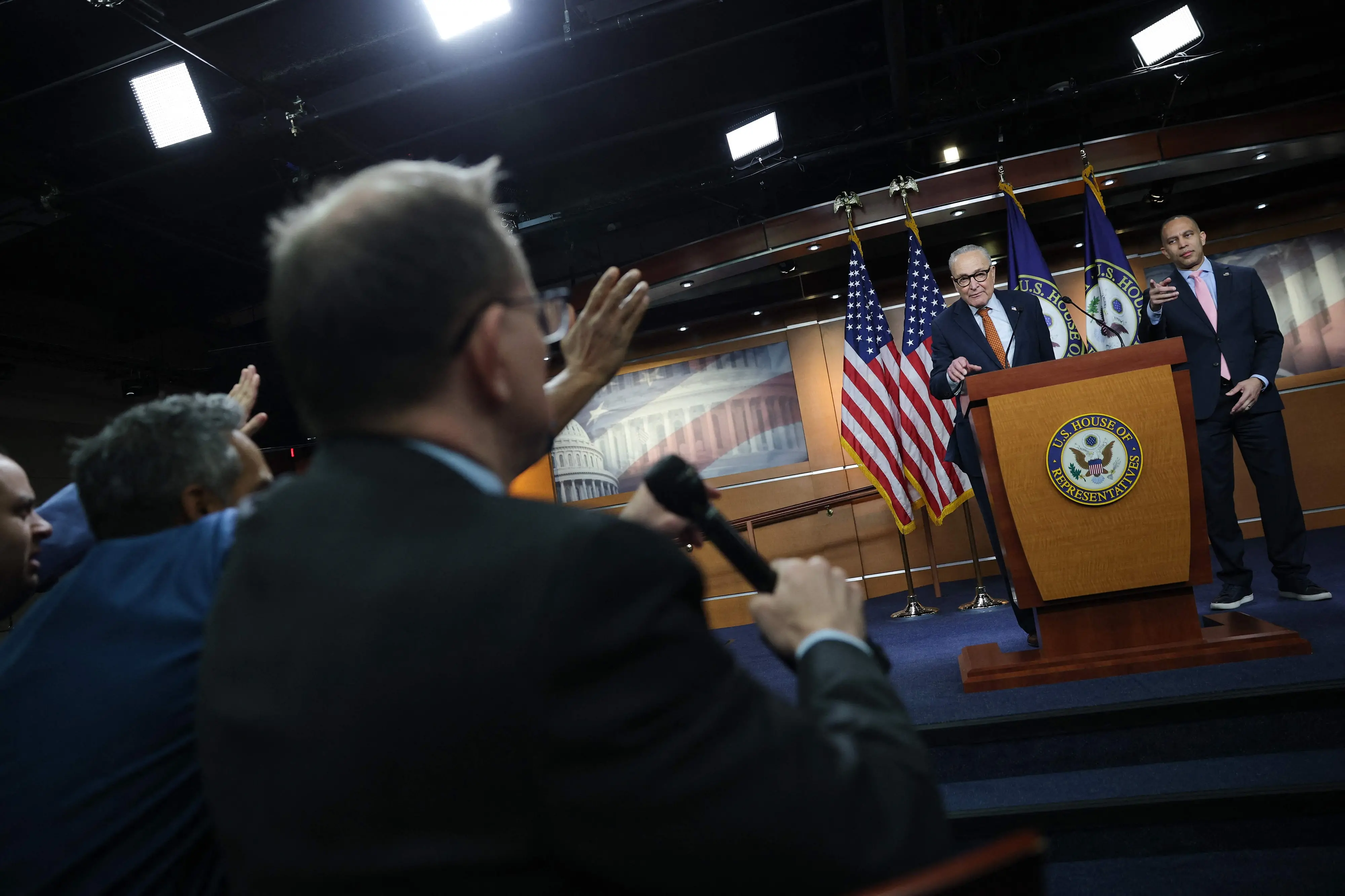
Washington DC: The U.S. Senate on Thursday approved a procedural measure aimed at preventing President Donald Trump from conducting further military operations in Venezuela without explicit congressional authorisation.
The vote, 52-47, reflected a rare break from party lines, with five Republican senators joining Democrats in backing the war powers resolution. Key backers included Sens. Tim Kaine (D-Va.), Rand Paul (R-Ky.), Susan Collins (R-Maine), Lisa Murkowski (R-Alaska), Todd Young (R-Ind.), and Josh Hawley (R-Mo.), with Senate Minority Leader Chuck Schumer (D-N.Y.) leading the Democratic push.
Why did the Senate vote on Venezuela military action?
The vote was triggered by the U.S. military’s capture of Venezuelan President Nicolás Maduro. Lawmakers argued that the Constitution requires congressional approval for prolonged military operations, and many feared the president had exceeded his authority. The measure reflects concern over unilateral military decisions and potential overreach by the executive branch.
The procedural measure passed 52-47, with five Republicans—Rand Paul, Susan Collins, Lisa Murkowski, Todd Young, and Josh Hawley—joining Democrats in support. Key leaders included Sens. Tim Kaine (D-Va.) and Senate Minority Leader Chuck Schumer (D-N.Y.). Opponents argued that the operation to capture Maduro was a law enforcement action, not a military intervention, and fell within Trump’s powers as commander-in-chief.
Thursday’s vote is procedural but signals significant bipartisan support for limiting presidential war powers. If fully passed, the resolution would require the president to obtain congressional approval before taking any further military action in Venezuela, and could serve as a precedent for oversight on future international operations.
Are there broader implications beyond Venezuela?
Yes. Senators are increasingly concerned about Trump’s intentions in other regions, including Greenland, Cuba, Mexico, and Colombia. Bipartisan statements have urged respect for sovereignty and international law, and further resolutions are planned to curb potential unilateral actions in these territories.
The measure must pass the House of Representatives and survive a potential presidential veto to become law. While procedural hurdles remain high, the vote demonstrates that some Republican lawmakers are cautious about extended foreign military campaigns and the costs—both legal and political—associated with them.
It is unusual for Senate Republicans to publicly oppose a president from their party on military operations. This vote illustrates growing unease among some members about Trump’s claims of authority to act without Congress, particularly given ongoing U.S. operations and plans to control Venezuela’s oil reserves.
How does this impact U.S.-Venezuela relations?
While the U.S. asserts control over Venezuelan oil and maintains military presence, the resolution highlights tensions in Congress and concern over long-term oversight. Critics argue unilateral action could inflame international relations, while proponents stress the necessity of protecting national security and enforcing law enforcement objectives.