Salman Rushdie stabbing: Attacker convicted on federal terrorism charges, faces life in US prison
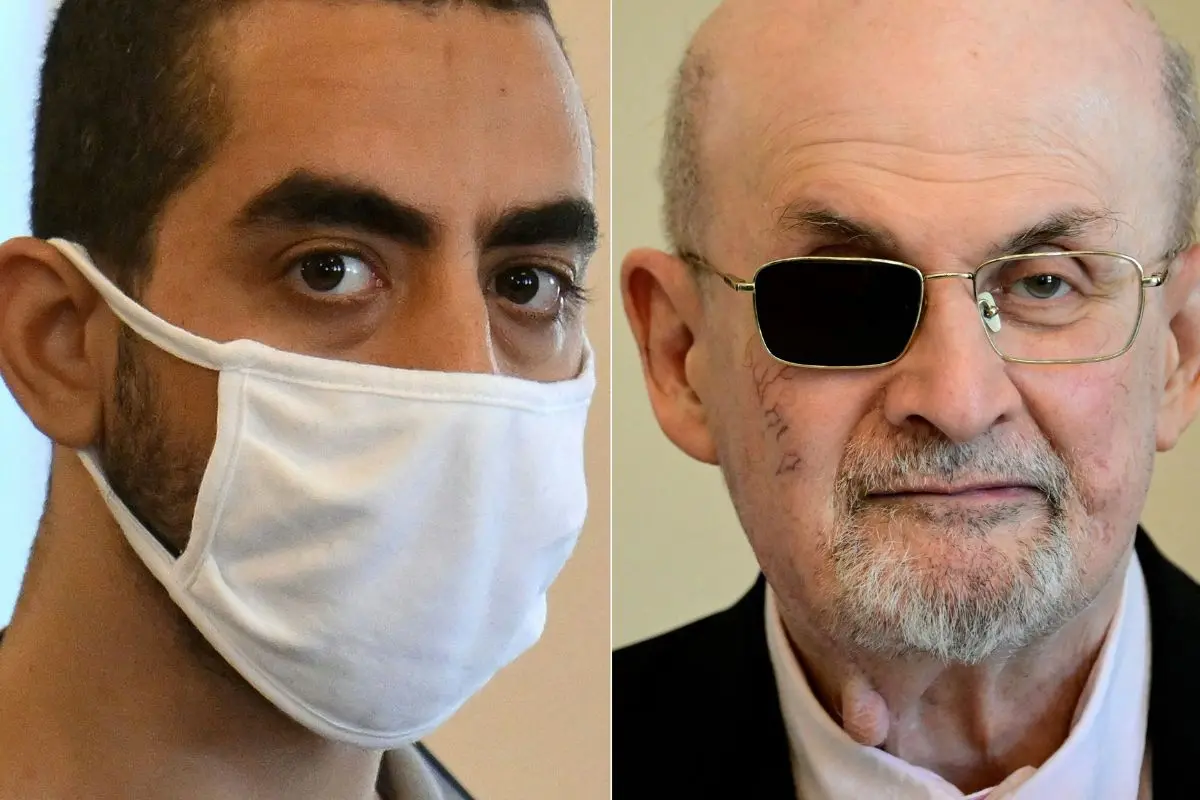
Nearly four years after Salman Rushdie was stabbed on stage during a literary event in New York, the man behind the brutal attack has now been convicted on federal terrorism charges, bringing fresh legal consequences in one of the world's most high-profile assaults on a writer.
A federal jury on Wednesday found 28-year-old Lebanese American Hadi Matar guilty of engaging in an act of terrorism for the August 2022 knife attack that nearly killed the celebrated novelist and permanently blinded him in one eye.
He was also convicted of providing material support to Hezbollah, the Iran-backed Lebanese militant group, after investigators recovered related material from his residence.
Announcing the verdict, US Attorney Michael DiGiacomo said Matar had 'chosen to align his values with the terroristic values of the leaders of Iran' and spent months planning the assault.
Federal prosecutors argued that Matar acted in response to the decades-old fatwa issued in 1989 by Iran's then Supreme Leader Ayatollah Ruhollah Khomeini, which called for Rushdie's execution over his novel 'The Satanic Verses'. Prosecutors said the decree was reaffirmed in 2017 by Iran's late Supreme Leader Ali Khamenei and later endorsed in a 2006 speech by Hezbollah chief Hassan Nasrallah.
The attack unfolded at the Chautauqua Institution in Mayville, New York, where Rushdie had been scheduled to speak at a conference focused on free expression.
Matar rushed onto the stage and repeatedly stabbed the author with a six-inch blade before being restrained.
Rushdie appeared in court during the federal trial, recalling the assault that changed his life forever.
When asked whether he believed Matar had acted because of the fatwa, the author replied, 'I had no knowledge of that. I have my suspicions.'
Matar had already been convicted of attempted murder in New York state court and sentenced to 25 years in prison. Following the latest federal conviction, he now faces the possibility of a life sentence.
He is scheduled to be sentenced on November 3, although his attorney, Nathaniel Barone II, has indicated that an appeal will be filed.
Before his trials, Matar told a reporter that he believed Rushdie had 'attacked Islam.'
Rushdie, who spent years living under tight security after the fatwa was issued, reflected earlier this year on the dangers facing culture and free expression.
'For the authoritarian, culture is the enemy. Whether that's journalism or universities or music or writing,' he said, describing violence as a weapon used by 'the unscrupulous using the ignorant' to silence voices.