Russia-Ukraine peace talks in Abu Dhabi last nearly 4 hours; major differences remain
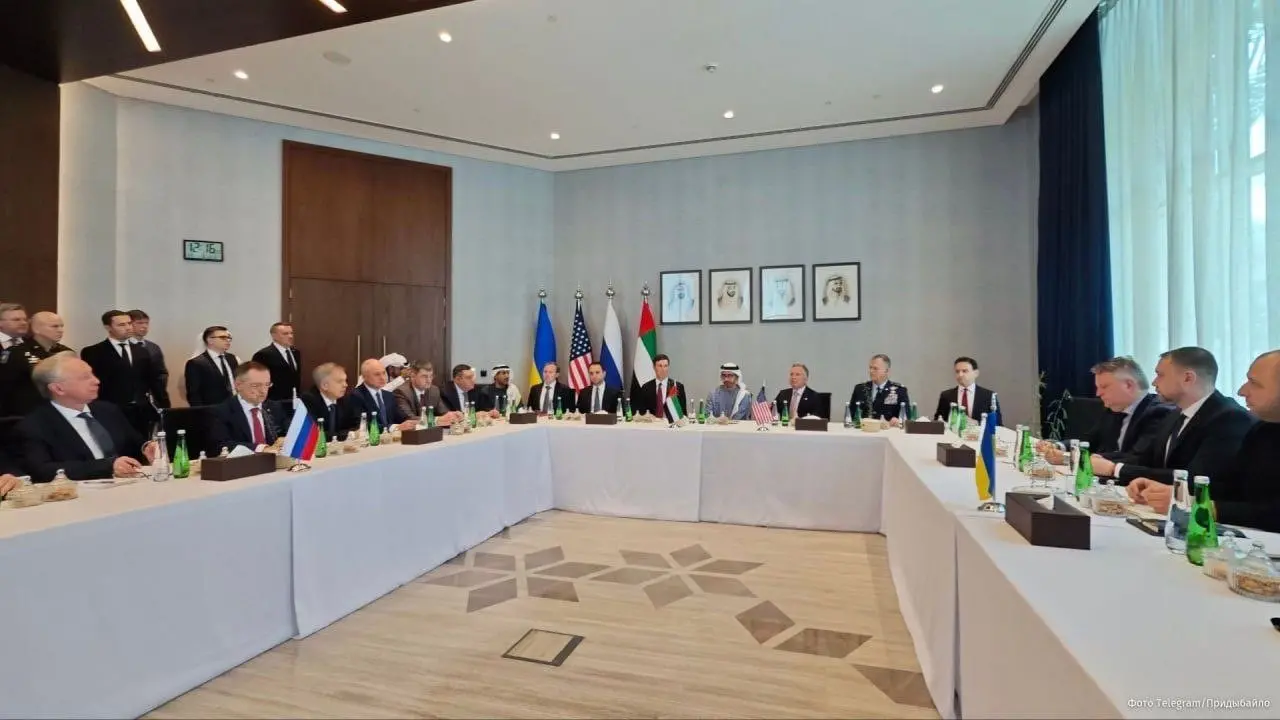
Abu Dhabi: Fresh US-mediated peace talks between Russia and Ukraine in Abu Dhabi concluded their first session after nearly four hours on Tuesday, with Washington seeking to bridge differences between the two sides and find a way to end the nearly five-year war.
The two-day trilateral negotiations, involving Russia, Ukraine and the United States, are the first such meeting since February. Discussions are focused on future security guarantees and arrangements to prevent a renewed conflict.
The talks are expected to resume on Wednesday, according to Ukraine's Foreign Intelligence Service press office, while Russian news agency RIA Novosti reported that the first day's discussions lasted nearly four hours.
US President Donald Trump's special envoy Steve Witkoff and son-in-law Jared Kushner are leading Washington's efforts to broker a settlement. Kushner said he believed the discussions had produced some promising ideas for bridging the differences between Moscow and Kyiv.
The negotiations come amid continuing military exchanges and little sign of a breakthrough on the battlefield. Three previous rounds of talks earlier this year failed to produce significant progress.
Kushner seeks a new framework for lasting peace
Addressing the opening session, Kushner said the US wanted to build on previous diplomatic efforts.
"We take what's worked, we try to identify what's failed, why we're in this position and hopefully create a new framework that leads us for decades, if not centuries, of peace," he said.
He added that there were "some good ideas how to bridge" the differences between the two sides.
US General Alexus Grynkewich, a NATO commander who was also present, referred to progress made through earlier military-to-military dialogue in a trilateral format.
Ukraine's delegation, led by Rustem Umerov, thanked Washington for its efforts to end the conflict.
"Our people are waiting to end this war. And we hope that we will achieve the lasting peace for Ukraine," Umerov said.
Russia's delegation is headed by Vladimir Medinsky, an aide to President Vladimir Putin. Medinsky expressed hope that the meeting would advance efforts towards peace in the interests of both countries.
Also read | Modi speaks to Zelenskyy ahead of Ukraine-Russia-US talks; India reiterates offer to help end war
Putin, Zelenskyy remain far apart on key demands
Despite the renewed diplomatic engagement, Russia and Ukraine remain divided over the conditions for a settlement.
Putin wants Ukraine to withdraw its troops from four regions claimed by Moscow, abandon its ambition to join NATO and accept restrictions on its military capabilities. He has also called for changes concerning the Russian language and the Moscow-affiliated Orthodox Church in Ukraine.
Moscow has rejected calls for a general ceasefire, arguing that it would allow Ukrainian forces to regroup and replenish their weapons.
Ukrainian President Volodymyr Zelenskyy, meanwhile, has ruled out voluntarily surrendering territory or accepting restrictions on the country's military and security arrangements with Western partners.
Kyiv maintains that an immediate ceasefire should precede negotiations on a wider settlement. It has also argued that territorial questions can be resolved only through direct talks between Putin and Zelenskyy, an idea Moscow has rejected.
Fresh drone attacks continue as talks begin
The negotiations are taking place against a backdrop of continued attacks by both countries, with neither side showing signs of scaling back its military operations.
Ukraine's air force said Russia launched 162 drones of various types and a ballistic missile at Ukraine overnight.
Russia's Defence Ministry, meanwhile, said its forces shot down 155 Ukrainian drones over eight Russian regions and the Crimean Peninsula.
The armies remain largely deadlocked along the front line, while long-range strikes have continued.
German Chancellor Friedrich Merz expressed limited expectations about the negotiations, saying he did not have "overly high expectations" for the talks.
Also read | Ukraine honours Melania Trump for role in brokering ceasefire with Russia
US pushes for wider European security agreement
Washington has also indicated that a possible settlement could extend beyond the immediate Russia-Ukraine conflict.
Trump last week described a broader European security arrangement as a major agreement that would involve more than Ukraine.
Kushner said a comprehensive and lasting settlement would require direct engagement between Russia and European partners on wider security arrangements affecting the region.
Moscow has welcomed the US approach of placing collective security on the agenda. Russian Foreign Minister Sergey Lavrov said his country supported the proposal to discuss broader security concerns as part of efforts to resolve the conflict.
However, some European Union members view Washington's proposals as too accommodating towards Moscow.
Russia has objected to European representatives participating in the current trilateral negotiations, although it has indicated that EU representatives could join discussions at a later stage.
With major differences over territory, NATO membership and security guarantees still unresolved, the Abu Dhabi negotiations face the challenge of turning renewed diplomatic engagement into concrete progress towards ending the war.