Russia may put nuclear weapon in Earth's orbit as satellite threat raises alarm
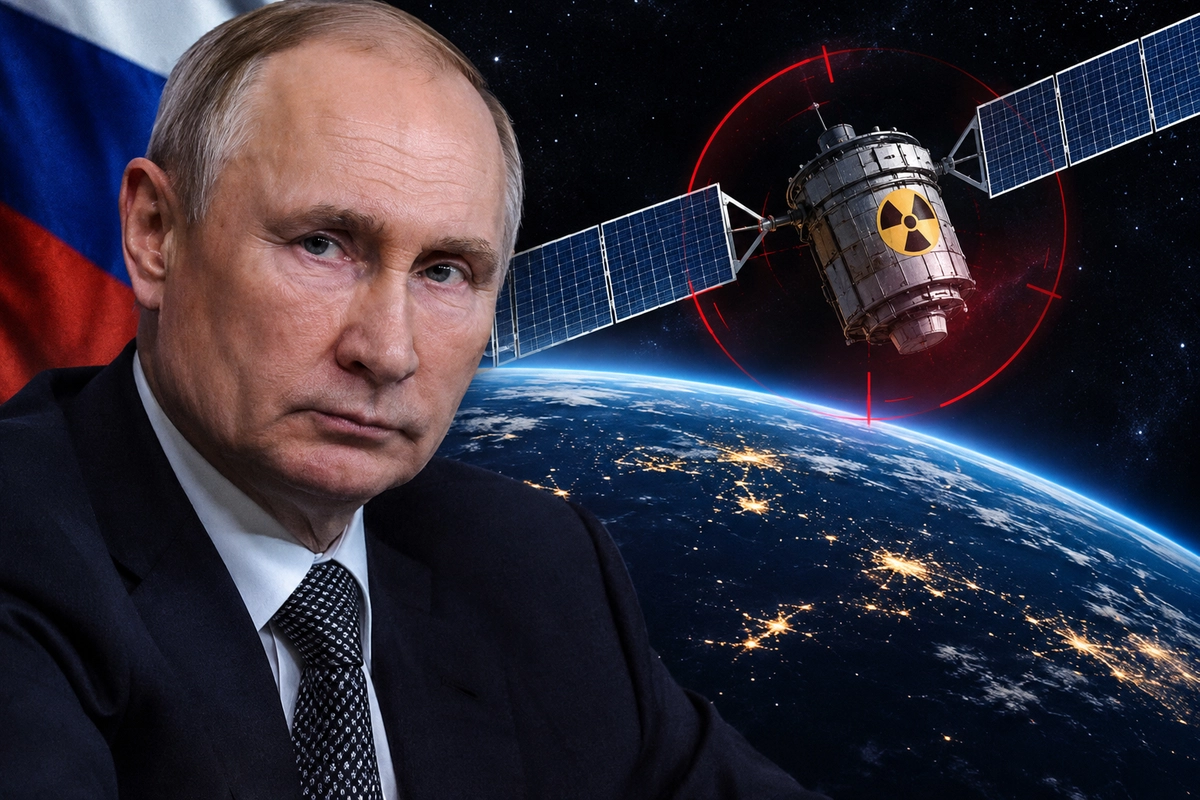
Russia's reported preparations to launch a nuclear-armed satellite into Earth's orbit have raised concerns about a threat that extends far beyond the battlefield.
If Western intelligence assessments are accurate, Moscow's reported Sputnik-S programme could expose thousands of satellites, including those operated by Russia itself, to the destructive effects of a nuclear explosion in space.
The warning, reported by German broadcasters NDR and WDR and newspaper Süddeutsche Zeitung on November 23, suggests that the satellite could be launched as early as December 2026.
Western intelligence agencies reportedly believe the spacecraft has already been assembled and stored in the Moscow region for several years.
The development is particularly concerning because modern life depends heavily on satellites for communication, navigation, weather forecasting, financial transactions and military surveillance.
A nuclear explosion in orbit could disrupt several of these interconnected systems simultaneously.
However, the reported launch remains an intelligence assessment, not a confirmed military operation.
Russia has rejected the allegations, describing them as part of a propaganda campaign and maintaining that its space activities comply with international obligations.
A nuclear explosion in space could have consequences far beyond the battlefield
Unlike a conventional anti-satellite missile, which targets an individual spacecraft, a nuclear weapon detonated in orbit could affect multiple satellites across a much wider area.
The resulting radiation and electromagnetic effects could damage or disable spacecraft without distinguishing between military and civilian operators.
One of the biggest concerns is the potential impact on low Earth orbit, where thousands of satellites operate.
These include SpaceX's Starlink network, which provides internet connectivity across several regions and has played an important role in Ukraine's military communications during the ongoing war with Russia.
A nuclear detonation could expose satellites within its range to intense radiation, damaging their electronic components.
The effects could extend beyond the immediate explosion, as energetic particles become trapped in Earth's magnetic field, creating an artificial radiation belt.
This could leave satellites vulnerable for months or even years, making it difficult to restore services simply by launching replacement spacecraft.
The consequences would not necessarily be limited to Western space infrastructure. Russian and Chinese satellites could also be damaged, depending on the explosion's location and altitude.
Even the International Space Station, which operates in low Earth orbit and has Russian participation, could face increased radiation risks.
The scale of the potential damage remains uncertain. Experts have pointed out that the number of satellites in orbit and their dependence on sensitive electronic systems have increased dramatically since the nuclear tests conducted during the Cold War.
The 1962 US Starfish Prime nuclear test offers a glimpse of what could happen.
The explosion, conducted approximately 250 miles above Earth, disrupted electrical systems in Hawaii and damaged satellites, including Telstar 1.
At the time, the number of operational satellites was only a fraction of today's orbital population.
Why Russia's reported plan could create a global security crisis
The reported Sputnik-S programme also raises questions about the future of international space security.
For decades, countries have relied on agreements intended to prevent the militarisation of space from escalating into a nuclear confrontation.
The 1967 Outer Space Treaty prohibits countries from placing nuclear weapons or other weapons of mass destruction in Earth's orbit. Russia is a signatory to the agreement.
The 1963 Partial Nuclear Test Ban Treaty also prohibits nuclear explosions in outer space.
If Moscow places a nuclear warhead in orbit, it would violate the Outer Space Treaty, regardless of whether the weapon is subsequently detonated.
The strategic logic behind such a weapon is also difficult to separate from its potential consequences.
Disabling satellite networks could weaken an adversary's military communications and surveillance capabilities.
However, the indiscriminate nature of a nuclear explosion could make it impossible to contain the damage to one country's infrastructure.
This is what makes the reported development particularly dangerous. Russia could undermine the same satellite-dependent systems that support its military, economy, and civilian services.
There is also the question of whether such a weapon would actually offer Moscow a sustainable military advantage.
A nuclear explosion in orbit could trigger international condemnation, intensify tensions with NATO and potentially damage relations with countries that have extensive interests in space, including China.
For now, there is no independent confirmation that Sputnik-S has been launched or that its reported nuclear payload has been publicly verified.
Moscow has denied the allegations, while Western intelligence assessments have heightened concerns about possible deployment before the end of 2026.
The larger issue, however, goes beyond whether Russia launches one satellite.
As countries become increasingly dependent on orbital infrastructure, turning space into a potential nuclear battlefield could threaten systems that the entire world relies on, including nations that have no direct role in the conflict.