Protesters storm Sheikh Hasina's father's home in Dhaka, set it on fire during her speech
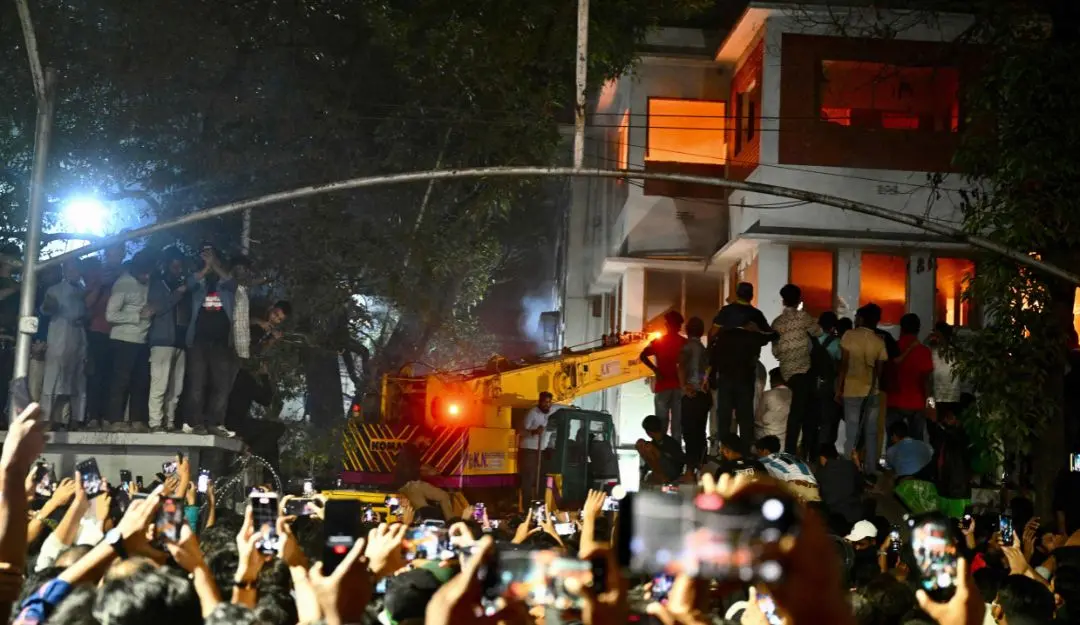
Dhaka: Thousands of protesters in Bangladesh have stormed and destroyed a family home once linked to exiled former Prime Minister Sheikh Hasina, as anger grows over her leadership and alleged authoritarianism. The attack on the house, which symbolised the country’s independence, comes after a speech Hasina planned to deliver from exile in neighbouring India.
The property in the capital, Dhaka, was the home of Sheikh Mujibur Rahman, Hasina’s late father and the country’s independence leader. It was here in 1971 that Rahman declared Bangladesh's formal break from Pakistan. He was assassinated at the house in 1975, and Hasina later transformed the home into a museum.
Since fleeing Bangladesh during a deadly student-led uprising against her 15-year rule, the house has become a symbol of division, with Hasina’s critics seeing it as a representation of the alleged authoritarianism she presided over. The attack on the building marks a significant escalation in the unrest since Hasina's departure.
Protests sparked by Hasina’s speech
The violence erupted after Hasina, who fled to India in 2024, prepared to give a speech to her supporters. She had been accused of suppressing dissent during her rule, and many protesters believed that her planned address would signal the beginning of a month-long protest campaign by her Awami League political party. Protesters warned that they would "bulldoze" the building if Hasina proceeded with her speech.
As Hasina began speaking, protesters stormed the house and began dismantling its brick walls. They later brought a crane and excavator to demolish the building. In response, Hasina stated, "They do not have the power to destroy the country’s independence with bulldozers. They may destroy a building, but they won’t be able to erase the history."
She also called on Bangladeshis to resist the country’s new leadership, accusing them of coming to power through “unconstitutional” means.
Student leader warns of ‘fascism’
Hasnat Abdullah, a student leader, posted on Facebook, warning media outlets not to cover Hasina’s speech. He announced, “Tonight Bangladesh will be freed from the pilgrimage site of fascism.” Many protesters joined in chanting slogans calling for Hasina's execution, accusing her of causing hundreds of deaths during the violent uprising last year. The unrest marked some of the worst upheaval Bangladesh had seen since independence.
The protests also saw slogans aimed at India, with critics of Hasina accusing the neighbouring country of complicity in her rule. In response to the violence, an interim government led by Nobel Peace laureate Muhammad Yunus has called for Hasina’s extradition, although India has yet to respond.
Reports from the Daily Star on Thursday revealed that a wave of attacks overnight targeted homes and businesses belonging to Hasina’s supporters in the Awami League. The Yunus-led interim government has accused Hasina of widespread corruption and human rights abuses during her time in office, which began in 2009.
Ongoing conflict, human rights concerns
Hasina’s Awami League has responded by accusing the interim government of human rights violations and suppressing minority groups. Human Rights Watch has praised some of the interim government’s reform measures but also reported a worrying resurgence of security force abuses against Awami League supporters, including journalists.
A new report from the group last month highlighted incidents where police have been arbitrarily detaining individuals and filing mass criminal complaints against unnamed suspects. These actions allow the police to intimidate and threaten virtually anyone with arrest, the report claimed.
Agency