Pope Leo XIV heads to Turkey, Lebanon on debut trip amid regional turmoil
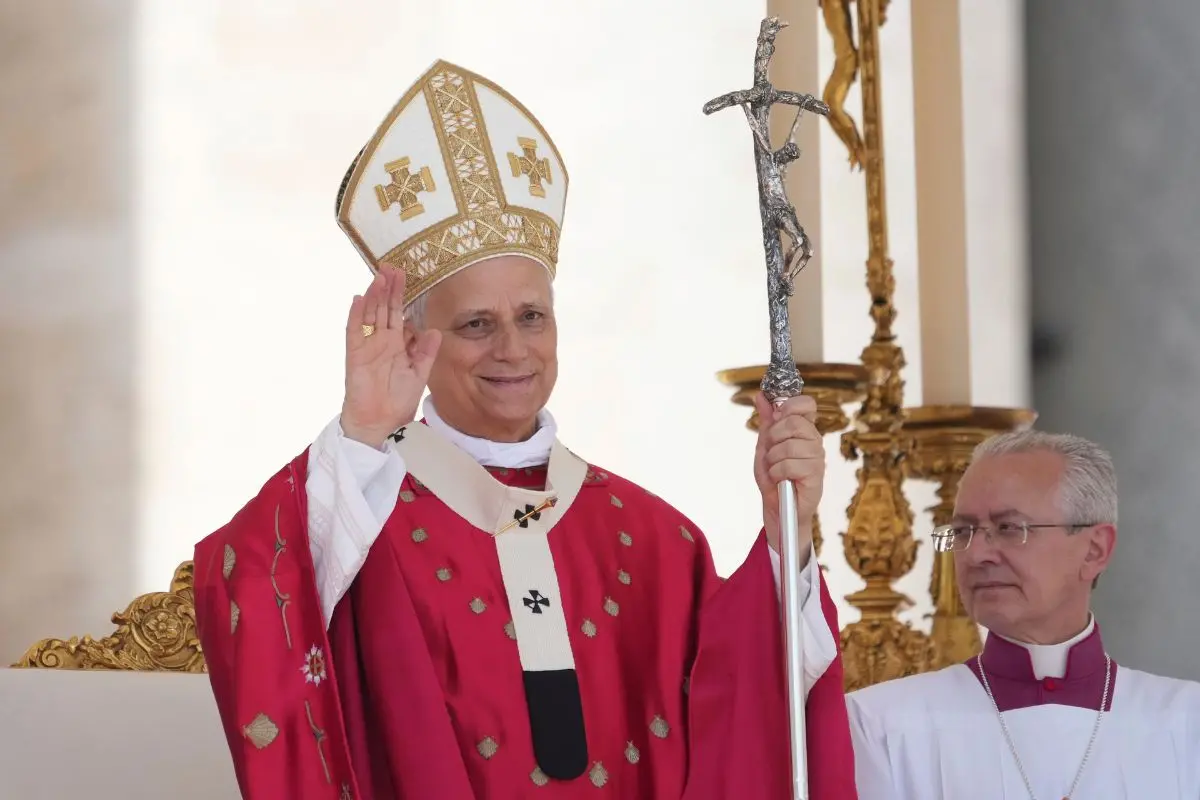
Vatican City: Pope Leo XIV is embarking on his first foreign trip, a pilgrimage to Turkey and Lebanon that would be delicate under any circumstances but is even more sensitive now because of tensions in the Middle East and the intense media attention surrounding the first American pope.
Leo is completing a journey that Pope Francis had planned to mark an important anniversary with the Orthodox Church in Turkey. In Lebanon, he aims to encourage a long-suffering Christian community and support Lebanese of all faiths who are still seeking justice over the 2020 Beirut port explosion.
Leo, who spent 12 years as superior of his Augustinian religious order and two decades as a missionary in Peru, says he enjoys travelling. In recent weeks, he has shown diplomatic and linguistic skill while responding to reporters’ questions.
The trip is receiving extensive coverage from United States media, with major networks such as ABC, CBS, NBC and Fox, along with CNN and the BBC, included in Leo’s travelling press pool. They are following his speeches, homilies and prayers at a critical time for negotiations to end Russia’s war in Ukraine and maintain a ceasefire in Gaza.
Vatican correspondents and journalists from Lebanon and Turkey complete a papal press corps of about 80 reporters, with many more on a waiting list after being denied seats on the papal plane due to limited space.
“Anytime the pope travels, it is a big deal,” said Natalia Imperatori-Lee, associate professor of theology at Fordham University in New York.
She said it is an even bigger development for an American pope undertaking his first foreign journey, especially in a saturated American media environment where Leo has become a foil to the Trump administration and its crackdown on immigrants.
“He is still driving coverage here because of his engagement with one of the most important issues we are facing, which is migration,” said Kim Daniels, director of the Initiative on Catholic Social Thought and Public Life at Georgetown University. She added that because of this, “I think this trip will drive attention again to the peripheries and to the vulnerable.”
Why is Leo speaking in English and French?
Leo plans to deliver all his remarks in Turkey in English. In Lebanon, he will speak in English and French. He is setting aside Italian, the usual working language of the Vatican, in favour of languages that are more widely understood.
What will reporters expect on the Pope’s flight home?
All eyes will be on Leo’s in-flight press conference on 2 December during his return to Rome. These sessions often produced Pope Francis’ most memorable remarks during his twelve-year papacy, beginning in 2013 when he famously said “Who am I to judge” in response to a question about a purportedly gay priest.
Leo has shown himself to be more careful and diplomatic than Francis. However, “maybe he will do something crazy like a ‘Who am I to judge?’” said Imperatori-Lee.
What is the purpose of the Turkey visit?
The main reason for travelling to Turkey, the first stop from 27 November to 2 December, is to mark the 1,700th anniversary of the Council of Nicaea, Christianity’s first ecumenical council.
Leo will pray with Ecumenical Patriarch Bartholomew, the spiritual leader of Orthodox Christians, at the site of the 325 AD gathering in present-day Iznik. They will also sign a joint declaration as a public expression of Christian unity.
Eastern and Western churches were united until the Great Schism of 1054, which was caused largely by disagreements over the primacy of the pope.
“We all understand that 1,000 years of division has inflicted a deep wound that cannot be healed easily,” Bartholomew told the Greek daily Kathimerini recently. “We have an obligation, however, to strive to heal that wound, mend the injuries, bridge the distances and restore unity.”
The visit offers several opportunities for Leo to address regional tensions, Catholic-Muslim relations and the declining Christian population in the Middle East.
Clergy in the region say the Vatican’s strong support for Palestinians in Gaza during the Israel-Hamas war, first under Francis and now under Leo, has strengthened the church’s credibility among ordinary Muslims.
“In a moment when many Western powers hesitated on the question of Gaza, Francis, and then Leo, was very strong. He did not go to Gaza but everything he could have said it seems he said,” said the Rev. Paolo Pugliese, superior of the Capuchin friars in Turkey.
However, regional conflicts continue. Israel launched an airstrike on Lebanon’s capital on Sunday that killed Hezbollah’s chief of staff and four others.
The strike has increased security concerns that frequently accompany papal trips. Organisers insisted that Leo would remain safe.
“It happened, but it does not affect the places or where the pope is going,” said Bishop George Bacouni, archbishop of the Melkite Greek Catholic Archeparchy of Beirut.
The Vatican said no extra security measures had been introduced, although spokesman Matteo Bruni declined to comment on whether Leo's vehicles were bulletproof.
Leo will not visit southern Lebanon, which was heavily affected by last year’s conflict between Israel and Hezbollah and has seen intensified strikes in recent weeks. Christian groups from the south had requested a papal visit and even circulated a new petition this week.
In Beirut, Leo may only be disturbed by Israeli drones that fly overhead, organisers said.
Why is the Beirut Port blast a key moment?
The highlight of Leo’s Lebanon visit will take place on 2 December when he spends time in silent prayer at the site of the 2020 Beirut port explosion.
The blast killed at least 218 people, injured more than 6,000 and destroyed large parts of the city. It was caused when hundreds of tonnes of ammonium nitrate exploded in a warehouse, leading to billions of dollars in damage.
Lebanese citizens were furious, believing the tragedy resulted from government negligence during a wider economic crisis caused by decades of corruption and financial misconduct. The investigation has stalled repeatedly, and five years later, no official has been convicted.
There is hope that Leo will call for accountability from Lebanon’s political leaders and insist that there can be no peace without truth and justice.
Such an appeal “could shake up our various political leaders, because we continue to live under the pressure of a social crisis, an economic crisis, in a country where the various leaders hear neither the cry of the poor, nor the cry of the unfortunate, nor the cry of citizens,” said Monsignor Cesar Essayan, apostolic vicar of Beirut for Latin rite Catholics.
What does the Pope hope to tell young Lebanese?
Another significant moment will come when Leo meets young Lebanese. He is expected to offer encouragement amid the decades-long wave of emigration from the country and acknowledge widespread disappointment in the failures of older generations.
“Many families feel that they are surviving the day by day with really very little visibility on the future,” said Marielle Boutros, project coordinator in Lebanon for Aid to the Church in Need. “So this visit of His Holiness, it is not simply symbolic. It is a really concrete sign that Lebanon is not forgotten.”
AP inputs