16 killed by Hurricane Milton, yet Florida residents refuse to leave
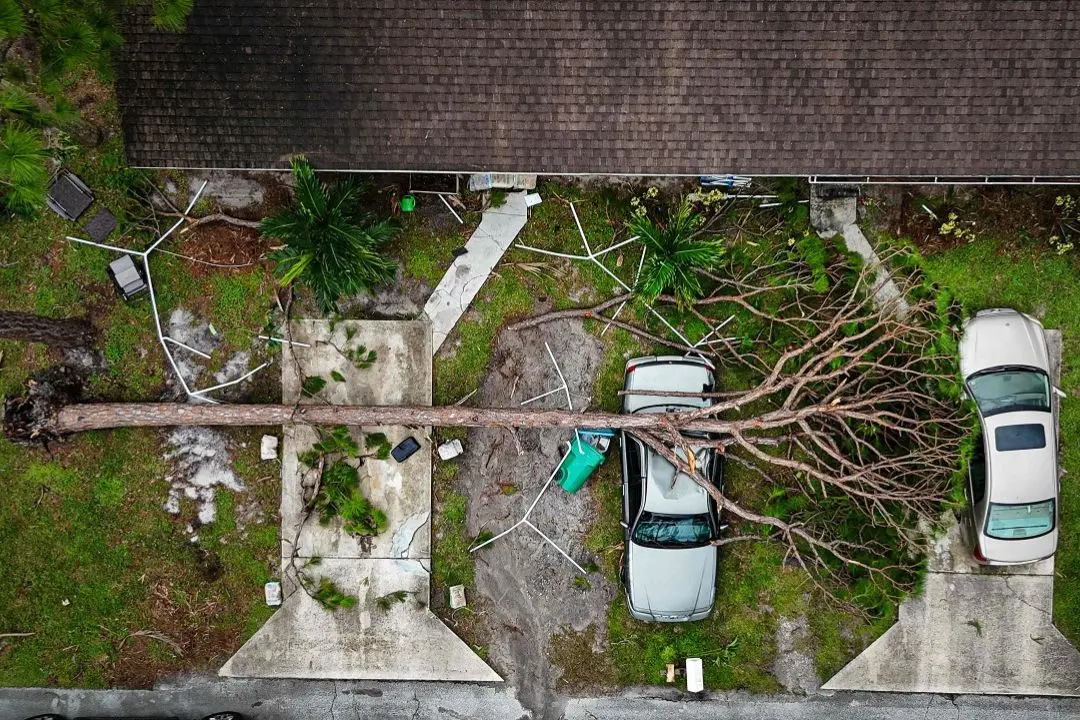
Siesta Key: The death toll from Hurricane Milton has risen to at least 16, as officials in Florida reported on Friday. Over two million households and businesses remain without power, with several areas still submerged in floodwaters. The state's residents are now left to rebuild their lives after the devastating storm.
"There's places where water is continuing to rise," warned Governor Ron DeSantis on Friday. He added that while the storm was "significant," it thankfully did not reach the worst-case scenario feared.
Costly damage and political debate
In a White House briefing, President Joe Biden revealed that experts have estimated the cost of the damage to be around $50 billion. The federal response to Hurricane Milton, following closely behind Hurricane Helene two weeks earlier, has become a politically charged issue. Biden is expected to visit Florida on Sunday.
Amid concerns over whether the federal response is adequately funded, Biden urged Congress to step up its efforts, particularly to assist small businesses. The Small Business Administration, which supports families and businesses impacted by disasters, warned on Friday that it is overwhelmed by the scale of the catastrophe and rapidly depleting its resources.
Former President Donald Trump, meanwhile, falsely claimed that hurricane response funds had been diverted to care for migrants, a statement that received backlash from both Democratic and Republican officials.
When asked whether Trump was solely responsible for spreading misinformation, Biden responded, "No... but he has the biggest mouth."
Destruction across Siesta Key and beyond
Siesta Key, a picturesque barrier island near Sarasota where Hurricane Milton made landfall, now resembles a desolate landscape. Streets remain flooded, with fallen trees and debris—including household items left behind after Hurricane Helene—scattered across the roads.
John Maloney, 61, who runs a home remodelling company, shared his view of the destruction: "It's just terrible. But I think we'll rebuild again." Tornadoes, rather than flooding, were responsible for many of the storm’s deaths. Six people died in St. Lucie County, four in Volusia County, and the remaining casualties were spread across Pinellas, Hillsborough, Polk, Orange, and Citrus counties.
Impact on infrastructure
The storm also left significant damage to infrastructure. Power lines were downed, the Tampa baseball stadium’s roof was shredded, and homes were inundated. In Sarasota, around 100 vehicles lined up at one of the few petrol stations still operational, with some residents carrying jerry cans on foot.
Resident Dave Stone explained, "We got word that they got fuel here, so here we are, and so is everybody else today."
Search and rescue efforts continue
Search operations are ongoing, with DeSantis confirming that 1,600 people had been rescued. In a dramatic rescue, the Coast Guard saved a boat captain who survived the storm 30 miles (48 kilometres) offshore by clinging to a cooler in the Gulf of Mexico.
Climate change worsens the storm
Climate experts reported that human-induced climate change made Hurricane Milton wetter and windier than it would have otherwise been. According to the World Weather Attribution group, what would have been a Category 2 storm developed into a more destructive Category 3 due to climate factors.
Resilience in the face of destruction
Despite the devastation, residents like Kristin Hale are determined to stay. Hale, 42, who runs a restaurant on Siesta Key, weathered Hurricane Milton but remains steadfast in her love for Florida.
"You persevere when you live in Florida," she said as she cleared debris from her restaurant. "When you live in paradise, that's what you pay for. We are blessed."
Even with the increasing frequency of hurricanes, Florida continues to attract new residents. The state, vulnerable to climate change, ranked second in the US for new residents in 2023, behind only Texas. Rising home insurance premiums, however, are a growing concern, with Florida homeowners paying 421% more than the national average, according to Insurify.
For many, the appeal of the sunshine state outweighs the risks. Resident Victoria Thoma, who settled along Florida's west coast after living in Connecticut, echoed this sentiment: "Being near the water is just something special. Nothing can replace that."
No intention to leave
Even after enduring Hurricane Milton, residents like Matt Fueyo are reluctant to leave their homes. Fueyo, a boat rental company owner, is adamant about staying in Siesta Key, saying, "Siesta Key is very powerful. There's a good energy here, there's good people here. This is a very special place."
For others, like Chicago resident Andy Johnson, who was visiting family in Sarasota during the storm, the experience was harrowing. However, Johnson acknowledged the resilience of Florida residents: "People here are strong. They just rebuild every time."
AFP