Pentagon says it has reduced number of Brigade Combat Teams in Europe from four to three
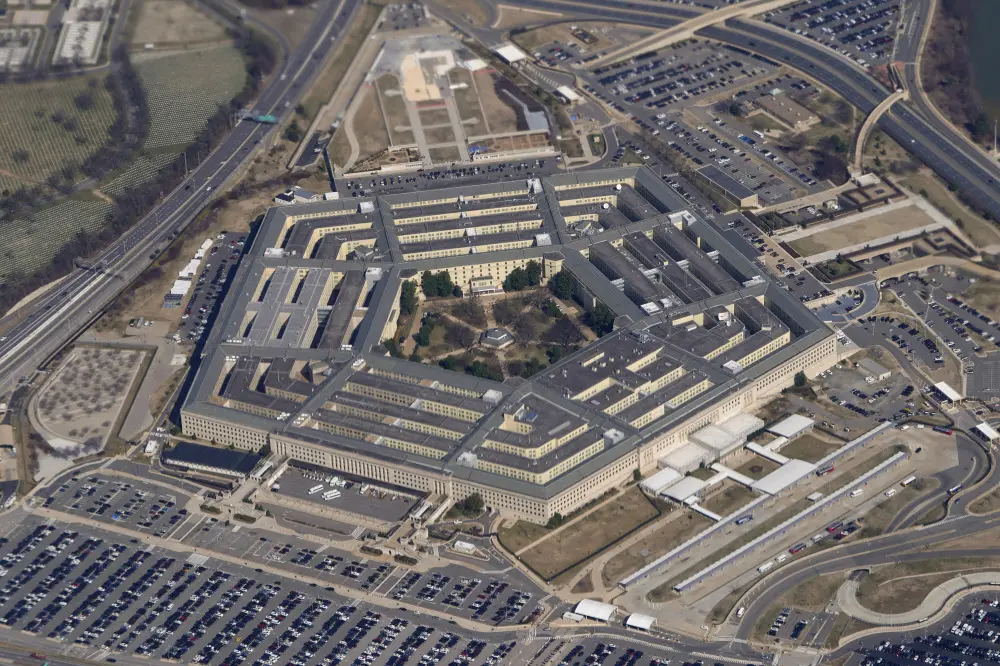
Washington: The Department of Defense said Tuesday it was reducing the number of US troop brigades in Europe from four to three, taking the deployment back to 2021 levels, as Washington pressures the continent to do more for its own defense.
The Pentagon "has reduced the total number of Brigade Combat Teams (BCTs) assigned to Europe from four to three," it said in a statement. A BCT comprises 4,000-4,700 personnel, according to a Congressional report.
The statement said that the reduction was resulting in a "temporary delay" of the deployment of US forces to Poland.
That announcement was preceded earlier Tuesday by US Vice President JD Vance saying that a planned deployment of 4,000 troops to Poland had been delayed rather than canceled.
"The Department will determine the final disposition of these and other US forces in Europe based on further analysis of US strategic and operational requirements, as well as our allies' own ability to contribute forces toward Europe's defense," the Pentagon statement said.
Also read: US approves massive defence package for India covering Apache Helicopters, M777 guns
The reduction in brigade combat teams is the culmination of weeks of anticipation about US force reduction in Europe, and Washington's insistence that its allies on the continent invest more in their own defense.
President Donald Trump has appeared determined to punish allies who have failed to back the US-led war against Iran or contribute to a peacekeeping force in the crucial Strait of Hormuz.
The Pentagon announced at the beginning of May that Washington would pull 5,000 troops from Germany.
Rubio heads to NATO meeting
Secretary of State Marco Rubio will travel this week to a NATO foreign ministers meeting in Sweden, where U.S. plans to reduce troop levels in Europe coupled with President Donald Trump’s often inconsistent stance on the alliance have created concern while the world grapples with the fallout from the Iran war and rising energy prices.
The State Department said Tuesday that Rubio would attend the NATO meeting in Helsingborg on Friday, one of the last senior-level NATO gatherings before alliance leaders meet at a summit in Ankara, Turkey, in July.
Rubio will then travel on to India and plans to visit four cities, including Kolkata, Agra, Jaipur and New Delhi, where he will see Indian officials and is expected to meet with his Indian, Australian and Japanese counterparts, the other three members of the so-called “Quad” grouping of Indo-Pacific democracies.
In Sweden, Rubio will echo previous U.S. demands “for increased defense investment and greater burden sharing in the alliance,” the State Department said in a statement.
It added that he would also focus on Arctic issues and meet with NATO's Arctic members “to discuss our shared economic and security interests in the Arctic and our strengthened posture in the High North.”
The statement did not mention Greenland by name, but Trump has rankled Europeans with persistent talk about wanting to take over the Danish territory. Trump's special envoy for Greenland, Louisiana Gov. Jeff Landry, visited the island this week.
Greenland’s Prime Minister Jens-Frederik Nielsen said Monday that he had a respectful and positive meeting with Landry, but that he made it clear that the Greenlandic people insist on self-determination.
“The Greenlandic people are not for sale. Greenlandic self-determination is not something that can be negotiated,” Nielsen was quoted by Danish TV 2 as saying after meeting Landry.
For Europeans nervous about Trump, Rubio's presence at transatlantic meetings has often been welcomed because of his less antagonistic nature and calm demeanor.
He has been dispatched on several such missions this year, including to the Munich Security Conference in February, and more recently to Italy, where he met with Italian officials and the pope after Trump criticized the pontiff for his stances on crime and the Iran war.
Ahead of the NATO foreign ministers meeting, the alliance's top military officer said Tuesday that he doesn’t expect any more drawdowns of American troops from Europe — at least not anytime soon — beyond the 5,000 that Trump announced would leave the continent.
The remarks by U.S. Lt. Gen. Alex Grynkewich follow Trump’s surprise announcement of the move early this month. The U.S. leader has bickered with allies over the Iran war and called for changes.
The Pentagon later said it would draw down thousands of troops in Europe by canceling deployments to Poland and Germany as opposed to yanking out forces already stationed there.
Asked Tuesday about Trump’s plans regarding troop levels in Poland, Vice President JD Vance said the administration’s focus is on promoting “European independence and sovereignty.” He also disputed that the U.S. is reducing troop levels in Poland.
“What we did is that we delayed a troop deployment that was going to go to Poland,” Vance told White House reporters. “That’s not a reduction. That’s just a standard delay in rotation that sometimes happens in these situations.”
Chief Pentagon spokesman Sean Parnell later Tuesday also said it was a “temporary delay” of the deployment of U.S. forces to Poland, which he called a “model U.S. ally.” He said the delay was a result of the U.S. reducing the number of brigade combat teams assigned to Europe from four to three and he indicated the Pentagon still needed to decide which troops to station where.
Trump’s announcement blindsided NATO and came despite U.S. promises to coordinate military moves with its allies and avoid creating security gaps.
Trump was notably angry at Germany, after Chancellor Friedrich Merz said the United States was being “humiliated” by the Iranian leadership and criticized what he called a lack of U.S. strategy in the war. (Agencies)