Who is Hussein al-Sheikh: Mahmoud Abbas' close confidant and new Vice President of Palestine
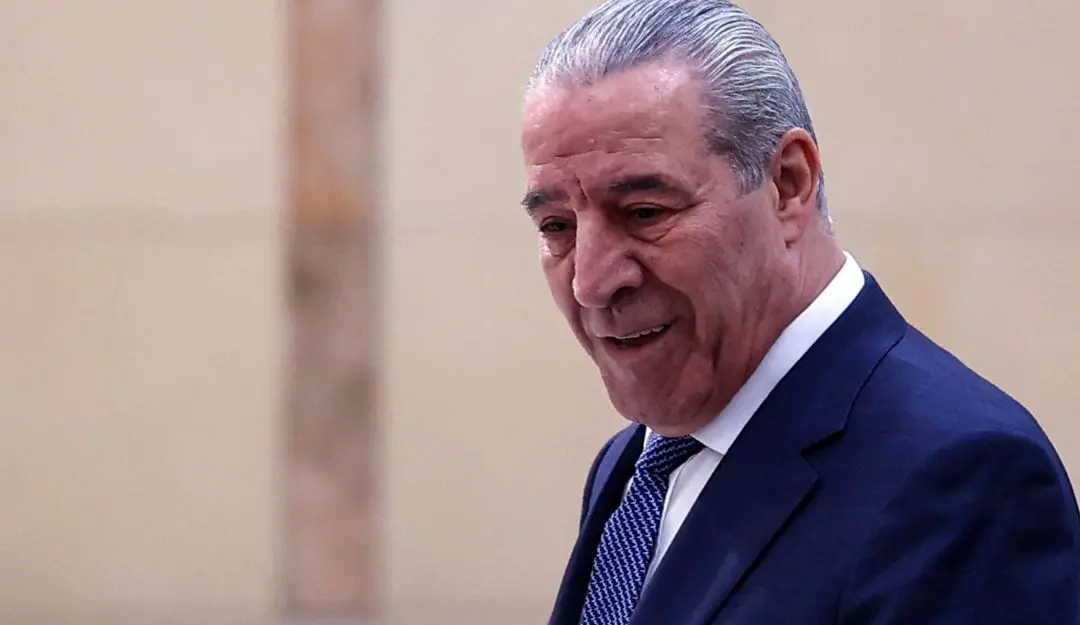
Ramallah: Palestinian President Mahmoud Abbas has taken a significant step toward naming a successor by appointing veteran aide Hussein al-Sheikh as the new vice president of the Palestine Liberation Organisation (PLO). While the appointment does not guarantee al-Sheikh will assume the presidency, it positions him as the front-runner among Fatah’s senior politicians prepared to lead after the 89-year-old Abbas.
Decades of political and security experience
Born in the West Bank city of Ramallah, al-Sheikh is one of Abbas’ closest aides and confidants.
Now 64, al-Sheikh is a veteran of Palestinian politics and the security forces. In his youth, he spent 11 years in Israeli prisons — an experience seen as enhancing his credibility among both political and security circles. Over the decades, he has steadily risen through the ranks, most recently serving for the past three years as secretary-general of the PLO’s executive committee.
The appointment comes amid increasing pressure on Abbas to reform the Palestinian Authority (PA) and strengthen its role in postwar Gaza. As part of a series of recent reforms, the Fatah movement last week approved the creation of the PLO vice president role. Under the new arrangement, should Abbas die or become incapacitated, the vice president would assume his duties in a caretaker capacity. However, permanent leadership would require a fresh appointment by the PLO’s 16-member executive committee, whose members include many veteran politicians with ambitions of their own.
An unpopular choice among Palestinians
Despite his strong position within the leadership structure, al-Sheikh remains deeply unpopular with the Palestinian public. Many view the Fatah leadership as a closed circle disconnected from the realities faced by ordinary Palestinians. The secretive nature of the appointment is unlikely to improve the image of the PLO, which critics accuse of being stagnant and out of touch.
Polling shows that imprisoned leader Marwan Barghouti remains the most popular Palestinian figure, though he is currently serving multiple life sentences in an Israeli prison. Israeli authorities have ruled out his release in any potential swap deal.
Strong regional ties and political influence
Al-Sheikh’s influence extends beyond Palestinian politics. As Abbas’ main liaison with Israel, he controls the crucial process of arranging travel permits for Palestinians, including those for VIP leaders. This role grants him considerable leverage over political rivals.
Additionally, he maintains good working relationships with Israel and influential Gulf nations — a factor that strengthens his regional standing at a time when Palestinian leadership is under renewed international scrutiny.
Al-Sheikh faces a complex political landscape. The PLO remains at odds with Hamas, which won the last national elections in 2006 and seized control of Gaza a year later. Hamas has remained outside the PLO framework, and repeated reconciliation attempts have failed.
The PLO oversees the Palestinian Authority, which administers semi-autonomous areas in the Israeli-occupied West Bank. Al-Sheikh is responsible for civilian affairs, making him the primary contact with Israel on civilian affairs. Being in charge of civilian affairs makes al-Sheikh one of the Palestinian Authority's most powerful figures.
As Israel’s war against Hamas continues and discussions of potentially relocating Palestinians from Gaza emerge, al-Sheikh will be under mounting pressure to foster unity among Palestinian factions.
In a 2022 interview with The Associated Press, al-Sheikh defended his much-criticised role in security coordination with Israel, calling it a necessary evil.
“I am not a representative for Israel in the Palestinian territories,” he said. “We undertake the coordination because this is the prelude to a political solution for ending the occupation.”
(With inputs from AP)