Pakistan's 100,000 olive cuttings for Maldives face pushback: 'Wrong tree for a tropical island'
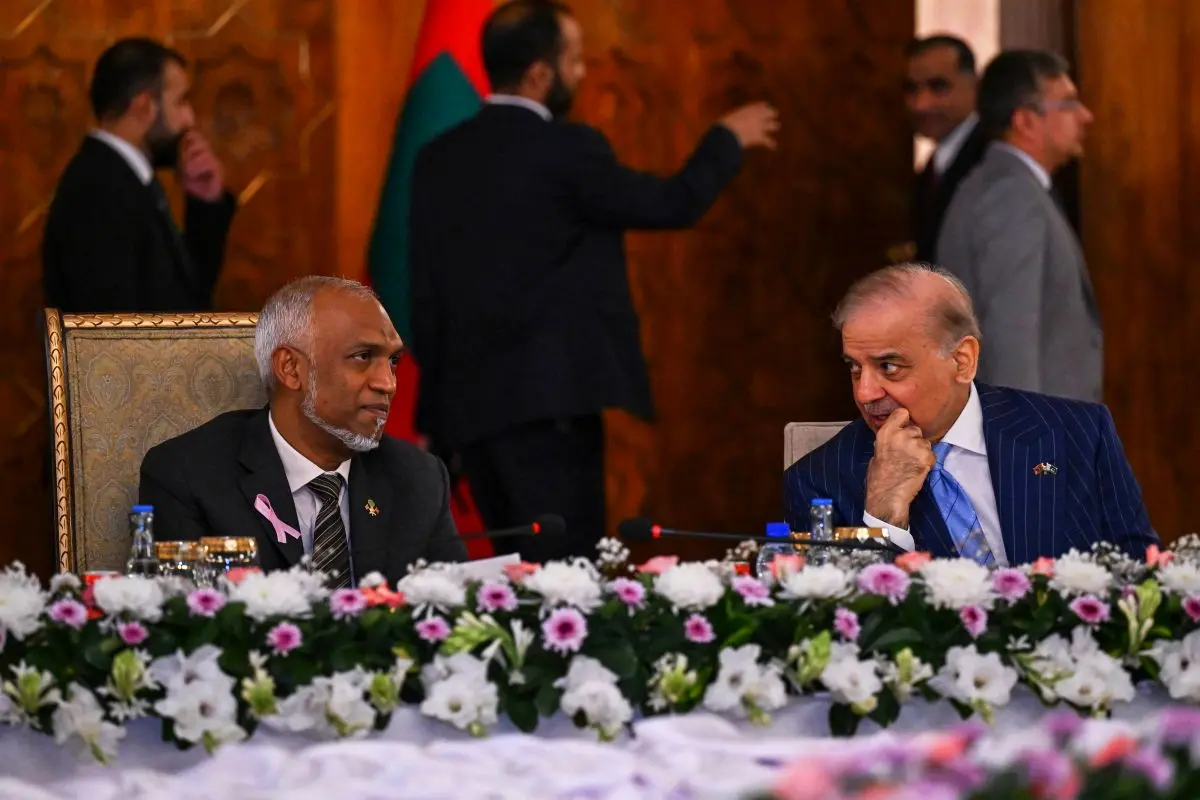
Pakistan's pledge to donate 100,000 olive cuttings to the Maldives’ Five Million Tree Initiative has drawn criticism from agriculture and climate experts, who argue that olives are poorly suited to the island nation’s hot, humid, low-lying tropical environment.
Prime Minister Shehbaz Sharif announced the contribution during Maldivian President Mohamed Muizzu’s state visit to Islamabad, alongside a pledge of 100,000 seeds of other plant species.
Speaking at a joint press stakeout with President Muizzu, Sharif said Pakistan would support the Maldives’ effort to plant five million trees by contributing olive cuttings and seeds, to be supplied over the next 12 months depending on plant availability.
Pakistan also offered technical help to establish nurseries and produce one million plants over three years.
The announcement was part of a wider package of 20 MoUs and agreements covering trade, investment, defence, education, health, fisheries, information technology and climate cooperation. Islamabad and Male also set a target of raising bilateral trade from about $13.9 million to $200 million within two years.
President Muizzu welcomed the donation, calling it an “invaluable” contribution to his government’s five-year tree-planting initiative and describing climate change as a direct threat to the Maldives’ security, development and future.
Why critics call it counterproductive
Critics say the problem is not the gesture but the species. Olive trees are Mediterranean crops adapted to hot, dry summers, cooler winters and a pronounced seasonal cycle.
The Maldives has uniformly high temperatures, high humidity, intense rainfall in parts of the year and sandy coral soils -- conditions that make large-scale olive cultivation highly uncertain.
Olives also generally require winter chilling to flower and fruit reliably. In the Maldives, where temperatures remain tropical through the year, trees may survive in sheltered conditions but are unlikely to become productive, reducing the initiative’s value as either a food-security or climate-resilience measure.
Environmental commentators argue that planting 100, olive cuttings could divert attention, water, nursery space and maintenance resources from species better suited to the country’s ecology -- such as coconut, breadfruit, pandanus, sea hibiscus, beach almond, mangrove-associated species and other salt- and wind-tolerant native plants.
'Symbolism over ecology'
Critics have framed the pledge as an example of climate diplomacy being driven by diplomatic optics rather than ecological fit. They point out that the Maldives’ vulnerability is not simply a shortage of trees, but sea-level rise, coastal erosion, freshwater scarcity, coral-reef degradation and limited land for agriculture.
A tree-planting programme in such an environment, they argue, should begin with species selection based on survival rates, salt tolerance, storm resilience, freshwater needs and benefits to coastal protection. Olive trees offer none of those proven advantages in the Maldivian context.
There is also concern that imported cuttings could introduce pests or diseases if biosecurity, quarantine and nursery certification are not rigorous. Experts say any large-scale plant transfer should be accompanied by trial plots, monitoring and clear survival targets before mass planting.
What could work instead
Supporters of a more locally grounded approach say Pakistan’s assistance would be more useful if it funded native-species nurseries, coastal greenbelts, mangrove restoration where appropriate, rainwater harvesting, composting and technical training for Maldivian growers.
They also suggest that Pakistan’s pledge could still be salvaged if the olive cuttings are treated as a small pilot project in controlled conditions, while the bulk of the five-million-tree target relies on climate-appropriate tropical and coastal species.
For Islamabad, the olive pledge reinforces its effort to present itself as a partner in climate resilience and South-South cooperation. For Male, it adds international support to a high-profile environmental pledge during Muizzu’s first presidential visit to Pakistan in 11 years.
But the controversy underscores a broader lesson for tree-planting diplomacy: the success of such initiatives is measured not by the number of cuttings announced, but by whether the right species survive, grow and deliver ecological benefits in the places they are planted.