Pakistan repays USD 3.45 billion UAE loan; Saudi aid timing draws attention
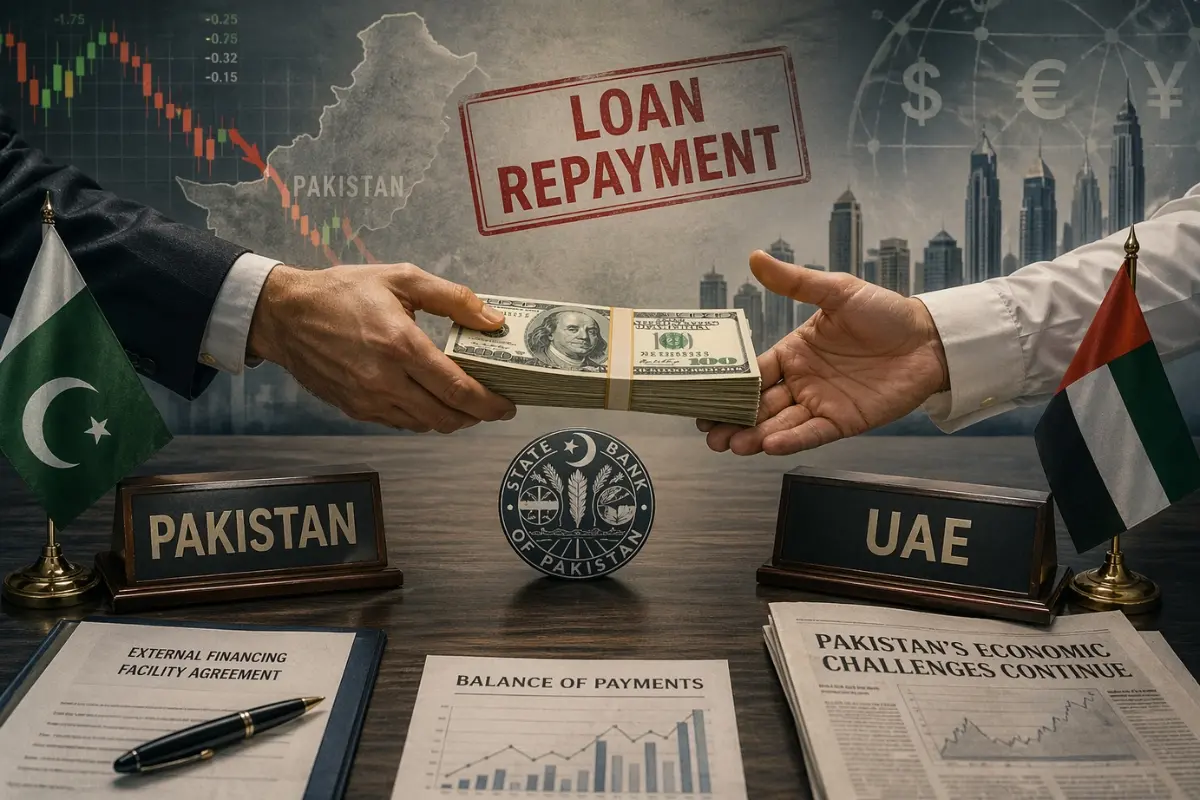
Islamabad: Pakistan has fully repaid USD 3.45 billion to the United Arab Emirates, marking the closure of a key external financing arrangement that had supported the country’s foreign exchange reserves since 2019.
The State Bank of Pakistan (SBP) confirmed that the final repayment was made on April 23, 2026, completing the settlement of all outstanding deposits.
The repayment included USD 1 billion returned to the Abu Dhabi Fund for Development (ADFD), while the remaining USD 2.45 billion had already been repaid in the preceding week.
Background of the UAE financial support
The funds were originally extended by the UAE in 2019 as part of emergency financial assistance to help Pakistan manage balance of payments pressures and stabilise its foreign exchange reserves. Such deposits are typically used by countries facing external account stress to support liquidity and maintain currency stability.
Over the years, these deposits were rolled over multiple times, forming an important part of Pakistan’s short-term external financing cushion.
Failure to roll over the facility in 2026
In March 2026, Pakistan was unable to secure an agreement with the UAE to extend or roll over the USD 3.5 billion facility. This marked a shift in the usual pattern of renewals that had helped Pakistan manage repayment pressures in previous years. The development raised concerns among analysts about near-term financing gaps and external sector vulnerability.
The repayment to the UAE comes shortly after Pakistan received USD 3 billion in financial assistance from Saudi Arabia. The support was disbursed in two tranches, with the second tranche of USD 1 billion received on April 21, 2026. The timing of inflows and outflows highlights Pakistan’s reliance on bilateral support alongside multilateral financing arrangements.
Regional tensions and repayment request
Reports indicated that the UAE had sought immediate repayment of its deposits amid heightened geopolitical uncertainty in West Asia, following escalating tensions linked to the US-Israel conflict involving Iran. Such developments have added volatility to regional financial and diplomatic conditions.
Pakistan’s external sector remains under pressure due to high import requirements, energy price fluctuations, and limited access to global capital markets. The country continues to rely on International Monetary Fund-supported reform programmes aimed at improving fiscal discipline and stabilising macroeconomic indicators.
Despite recent inflows from allied countries, analysts continue to flag external financing risks as a structural challenge, particularly if rollover arrangements become less predictable in the future.
(With PTI inputs)