‘Any attempt to shut Indus river supply is an act of war…': Pakistan warns India
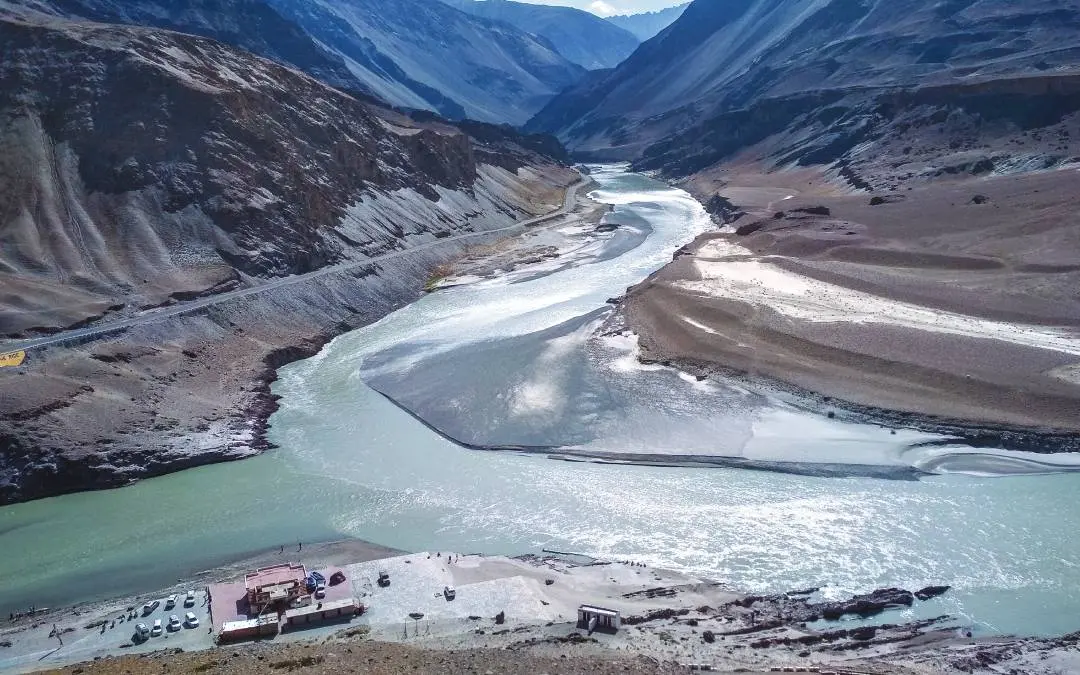
Islamabad: Pakistan on Thursday warned that any move by India to block or divert the flow of the Indus River system would be seen as an “act of war,” intensifying tensions between the two nuclear-armed neighbours in the wake of the deadly terror attack in Pahalgam, Jammu and Kashmir.
"Any attempt to stop or divert the flow of water belonging to Pakistan as per the Indus Waters Treaty... will be considered as an act of war and responded with full force across the complete spectrum of national power," a statement from Prime Minister Shehbaz Sharif's office said after a rare national security committee meeting.
The warning from Islamabad came as India announced the temporary suspension of the Indus Waters Treaty (IWT), a landmark water-sharing agreement brokered by the World Bank in 1960. The pact governs the distribution of water from the six-river Indus basin and has long been regarded as a key stabilising mechanism between the two countries, particularly vital for Pakistan’s agrarian economy.
Escalation after Pahalgam terror attack
The sharp escalation follows Tuesday’s brazen terror attack in Pahalgam, in which 26 people — mostly Indian tourists and one Nepali national — were killed. In response, India unveiled a raft of retaliatory measures, including downgrading diplomatic ties, expelling Pakistani military attachés, and suspending all operations at the Attari land border crossing.
New Delhi has also revoked all valid visas issued to Pakistani citizens, effective from 27 April, and said medical visas will remain valid only until 29 April. The Ministry of External Affairs (MEA) further instructed Pakistani nationals currently in India to leave before their visas expire, while strongly advising Indian citizens against travelling to Pakistan.
Airspace and border closures
In a countermeasure, Pakistan on Friday closed its airspace to Indian aircraft and temporarily shut the Wagah border crossing — key routes for movement and trade between the nations — further fuelling the diplomatic standoff.
Islamabad announced that all visas issued to Indian nationals under the SAARC Visa Exemption Scheme (SVES) stand suspended and are deemed cancelled with immediate effect, except for Sikh religious pilgrims. Indian nationals currently in Pakistan under SVES, excluding Sikh pilgrims, have been directed to leave the country within 48 hours.
Pakistan also declared the Indian Defence, Naval and Air Advisors in Islamabad persona non grata. The officials have been ordered to exit Pakistan immediately and no later than April 30, 2025. Pakistan also formally closed its airspace to all Indian flights, and suspended the Simla agreement.
Indus waters treaty at risk
India’s decision to suspend its commitments under the Indus Waters Treaty marks a significant shift in regional policy. Under the agreement, India retains control over the eastern rivers — Sutlej, Beas and Ravi — while Pakistan receives the western rivers — Indus, Jhelum and Chenab. While the treaty allows India limited non-consumptive use of the western rivers, it does not include provisions for unilateral suspension.
Legal experts and water analysts caution that India’s move could severely impact Pakistan’s water security, particularly during critical cropping periods. However, they also note that India currently lacks the infrastructure to fully exploit its share of the western rivers — a process that may take years or even decades to materialise.
(With inputs from PTI)