Pakistan Army rejects Imran Khan death reports after journalist cites fears among senior officers
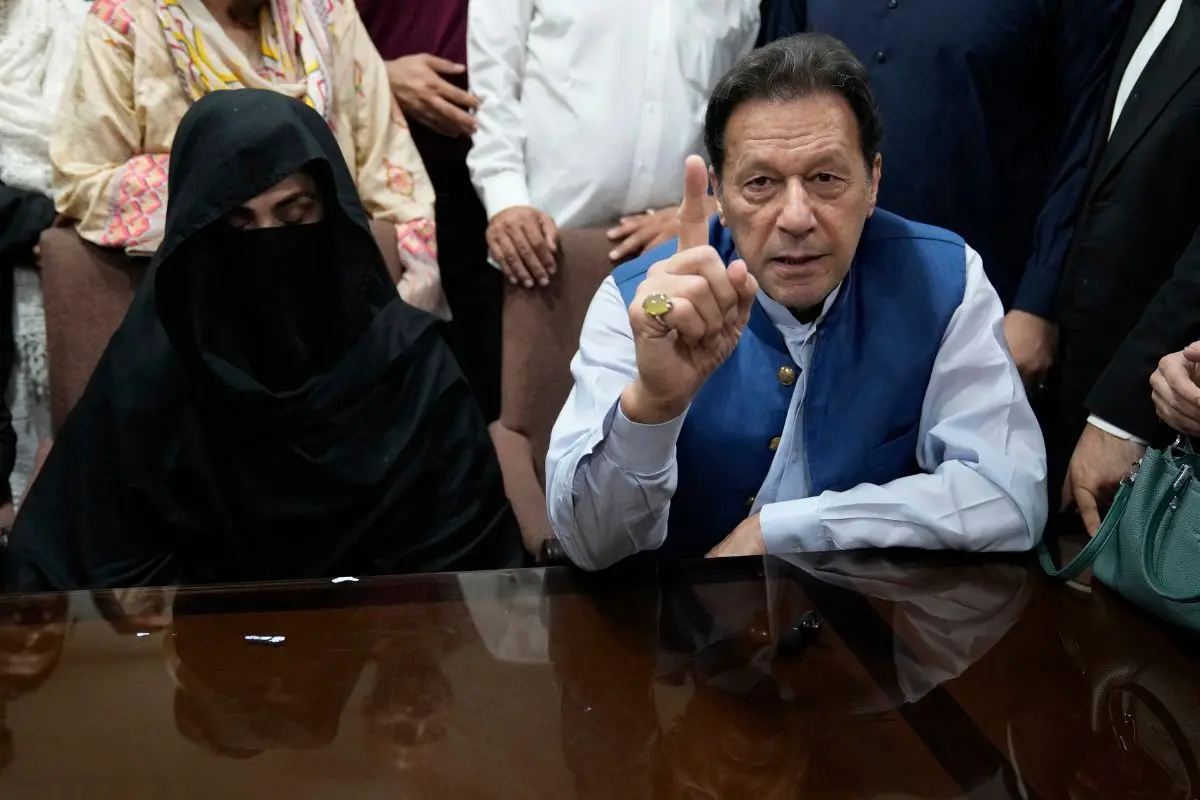
A report claiming that former Pakistan prime minister Imran Khan had died in custody has set off a political and media storm in Pakistan, forcing the country’s military to publicly reject the allegation and prompting the journalist behind the claim to significantly walk back his original version.
Journalist Wajahat Saeed Khan had published a two-part series on August 11 titled ‘Is Khan still with us’ and ‘What happens after Khan’.
In his initial account, he said an unnamed source at the General Headquarters of the Pakistan Army had told him that Khan had died while in custody.
The claim quickly fuelled speculation about the 72-year-old Pakistan Tehreek-e-Insaf leader, who has remained imprisoned for years and whose health and access to family and medical care have repeatedly become subjects of concern.
However, Khan subsequently issued a lengthy clarification, stressing that his sources had not actually confirmed the former prime minister’s death.
'Let’s be very clear. They did not confirm that Imran Khan is dead,' he said in a subsequent video.
According to the journalist, three senior Pakistan Army officers had expressed serious concern about Khan’s fate but had not supplied evidence establishing that he had died. He said the officers described a 'profound paralysing fear that the worst may have happened or is likely to happen'.
Khan maintained that his reporting was intended to pressure authorities into producing evidence that the imprisoned former prime minister was alive, rather than to make an authenticated declaration of his death.
'What did we achieve today?' he asked, arguing that the controversy had pushed the authorities to respond and provide what he described as proof of life.
The journalist said his reporting was based on conversations with senior officials associated with the Army’s General Staff, Military Intelligence and C4I directorates, along with a junior commissioned officer.
He said the officers were based at the Army headquarters in Rawalpindi.
According to his account, the conversations pointed to an unusually high level of secrecy surrounding Khan’s imprisonment and anxiety among some military personnel about his condition and whereabouts.
He alleged that the military had been 'uncharacteristically, terrifyingly and chillingly silent and tight-lipped' and claimed that a small group of intelligence operatives reporting directly to the army chief was overseeing the operation.
Khan also described what he portrayed as an increasingly militarised security arrangement at Adiala jail, where Imran Khan is imprisoned.
He alleged that a military intelligence unit had assumed a significant role in the prison’s operations and that sophisticated surveillance equipment had been deployed around the facility.
He further claimed that authorities were preparing for the possibility of Khan’s supporters attempting to storm the prison.
Yet, even while making these claims, Khan repeatedly stressed that his information did not constitute proof that the former prime minister had died.
'They were making assessments based on personal fear and the ongoing chatter in their professional circles,' he said, describing the information as 'not actual evidence-based, quantified, authenticated or documented facts but fear and speculation'.
The controversy took another turn when Pakistan’s military public-relations wing, the Inter-Services Public Relations Directorate, rejected the reporting as false.
The response was significant because the journalist said it broke what he described as months of silence surrounding Khan’s condition.
'I am glad that the ISPR has responded, fake or whatever, because that means Imran is alive,’ Khan said.
He also claimed that members of Bushra Bibi’s family had reported seeing Imran Khan on CCTV during a prison visit, saying they had seen him walking without assistance.
At the same time, he said the family had reported serious health concerns, including vision loss and severe blood-pressure spikes, and claimed Khan had recently been taken to a hospital. Similar concerns about his health have previously been reported in local and international media.
Imran Khan was elected Pakistan’s Prime Minister in 2018 before being removed from office in April 2022 following a parliamentary vote of no confidence.
He was first arrested on May 9, 2023, triggering mass protests, and was arrested again on August 5 that year. He has remained in jail since then.
Khan was acquitted in January 2025 in cases involving official secrets and his marriage to Bushra Bibi Khan, but remained imprisoned while serving a 14-year sentence in a corruption case.
Bushra Bibi was sentenced to seven years in the same case. In December 2025, Khan and Bushra Bibi received additional 17-year prison sentences in a separate case involving state gifts.
Amnesty International said on August 4 that Pakistani authorities had denied Khan a fair trial, subjected him to prolonged solitary confinement and restricted his access to medical care and visits.
The organisation also said he had not been allowed to meet his family for more than eight months and that his vision had reportedly deteriorated significantly.
For now, the central claim remains unverified. Pakistan’s military has rejected reports of Khan’s death, while the journalist who initially sparked the speculation has acknowledged that his sources never possessed authenticated evidence that the former prime minister had died.